How to Cool a Studio Flat Without Air Conditioning (UK Guide 2026)
How to Cool a Studio Flat Without Air Conditioning UK
How to cool a studio flat without air conditioning UK is a common question during summer heatwaves. Small flats heat up quickly, especially if they are south-facing, poorly insulated or located in upper floors of buildings. The good news is that you don’t always need an air conditioner to reduce indoor temperatures.
Overall, learning how to cool a studio flat without air conditioning UK properly can reduce indoor temperatures without investing. This guide explains practical, low-cost methods that actually work in small UK studio flats.
1. Block Heat Before It Enters
The biggest mistake people make is trying to cool a room after it has already overheated.
Instead:
- Keep blinds or blackout curtains closed during peak sunlight hours
- Use reflective window film to reduce heat gain
- Close windows during the hottest part of the day
Direct sunlight is often the main cause of overheating in studio flats. According to the UK Met Office, indoor temperatures can rise significantly during prolonged heatwaves.
2. Ventilate Strategically (Not Constantly)
Opening windows at the wrong time can make things worse.
In the UK, the best cooling airflow happens:
- Early morning
- Late evening
- Overnight
Create cross-ventilation by opening windows on opposite sides of the flat if possible. If you only have one window, use a fan to push warm air out during cooler evening hours.
3. Use Fans the Smart Way
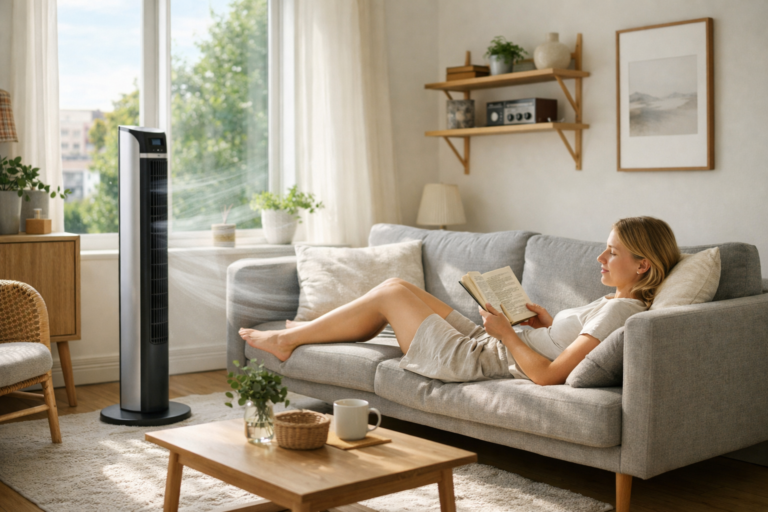
Fans do not lower temperature — they move air. But used properly, they can feel significantly cooler.
Tips:
- Place a bowl of ice in front of a fan
- Position the fan facing outward in a window to extract hot air
- Use pedestal fans to circulate air vertically
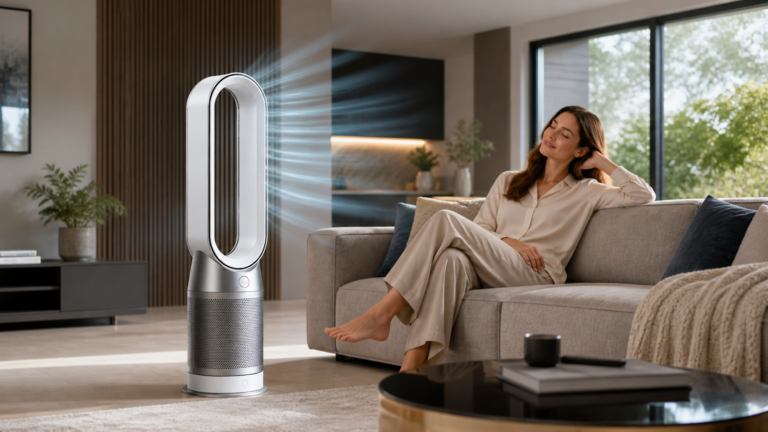
High-quality cooling fans can significantly improve air circulation — see our guide to the best cooling fans for studio flats UK.
4. Reduce Internal Heat Sources
Small studio flats trap heat from everyday appliances.
To cool more effectively:
- Avoid using ovens during hot days
- Switch off unused electronics
- Replace old light bulbs with LED lighting
- Cook with a microwave or air fryer instead of a full oven
Even laptops and televisions can raise room temperature in compact spaces.
5. Manage Humidity Levels
Humidity makes rooms feel warmer than they actually are.
If your studio flat feels sticky or heavy:
- Use a dehumidifier
- Improve ventilation
- Avoid drying clothes indoors
In humid conditions, airflow alone may not solve the problem — here’s whether a dehumidifier or fan is better for a studio flat.
You can read more in our guide to best dehumidifiers for studio flats UK.
6. Improve Airflow Around Furniture
Large furniture placed against walls can trap heat and reduce airflow.
In small studio flats:
- Keep space between walls and furniture
- Avoid blocking windows
- Raise beds slightly to improve circulation
Small layout adjustments can make a noticeable difference.
7. Use Cooling Fabrics & Bedding
At night, comfort matters most.
Switch to:
- Lightweight cotton bedding
- Breathable mattress covers
- Light summer duvets
Thicker materials trap heat and make rooms feel warmer than they are.
Extra Tip: Cool Floors & Surfaces
Hard floors and surfaces can retain heat throughout the day. If your studio flat has laminate or tile flooring, lightly misting the floor in the evening and improving airflow can help cool the room faster. Keeping doors inside the flat open also allows trapped heat to circulate more effectively.
When You Might Need Air Conditioning
If your studio flat:
- Is consistently above 28°C
- Has no cross-ventilation
- Is south-facing with full sun exposure
- Retains heat overnight
Then a compact portable unit may be necessary.
But in many cases, applying several of the methods above reduces indoor temperature by 2–5°C — enough to stay comfortable.
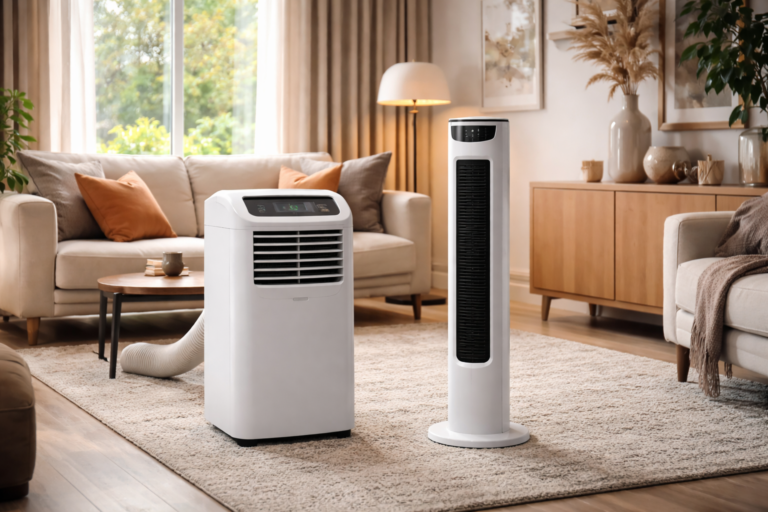
If you’re comparing options, see our guide on best portable air conditioners for studio flats UK to understand when fans are enough and when stronger cooling is needed.
Final Thoughts
Learning how to cool a studio flat without air conditioning UK is about managing heat entry, airflow and humidity. In small spaces, simple changes like blocking sunlight, improving ventilation timing and reducing internal heat sources can dramatically improve comfort.
Before investing in expensive cooling equipment, try these practical steps first. Many UK studio flats can stay manageable during summer with smart adjustments alone.