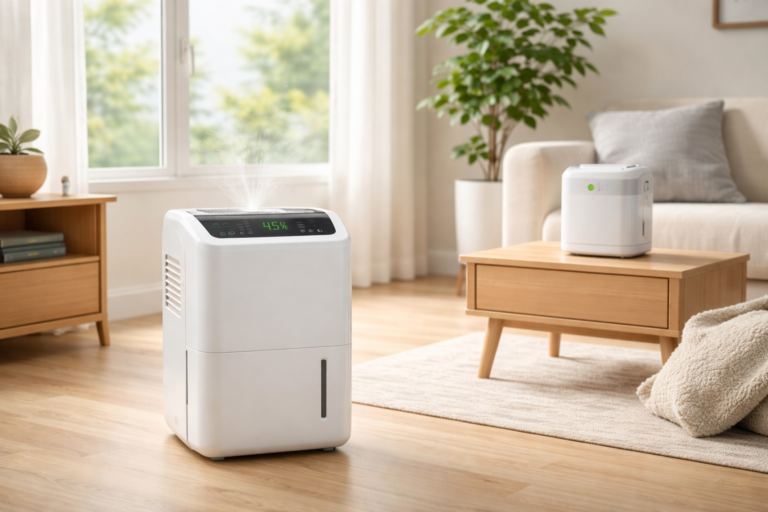
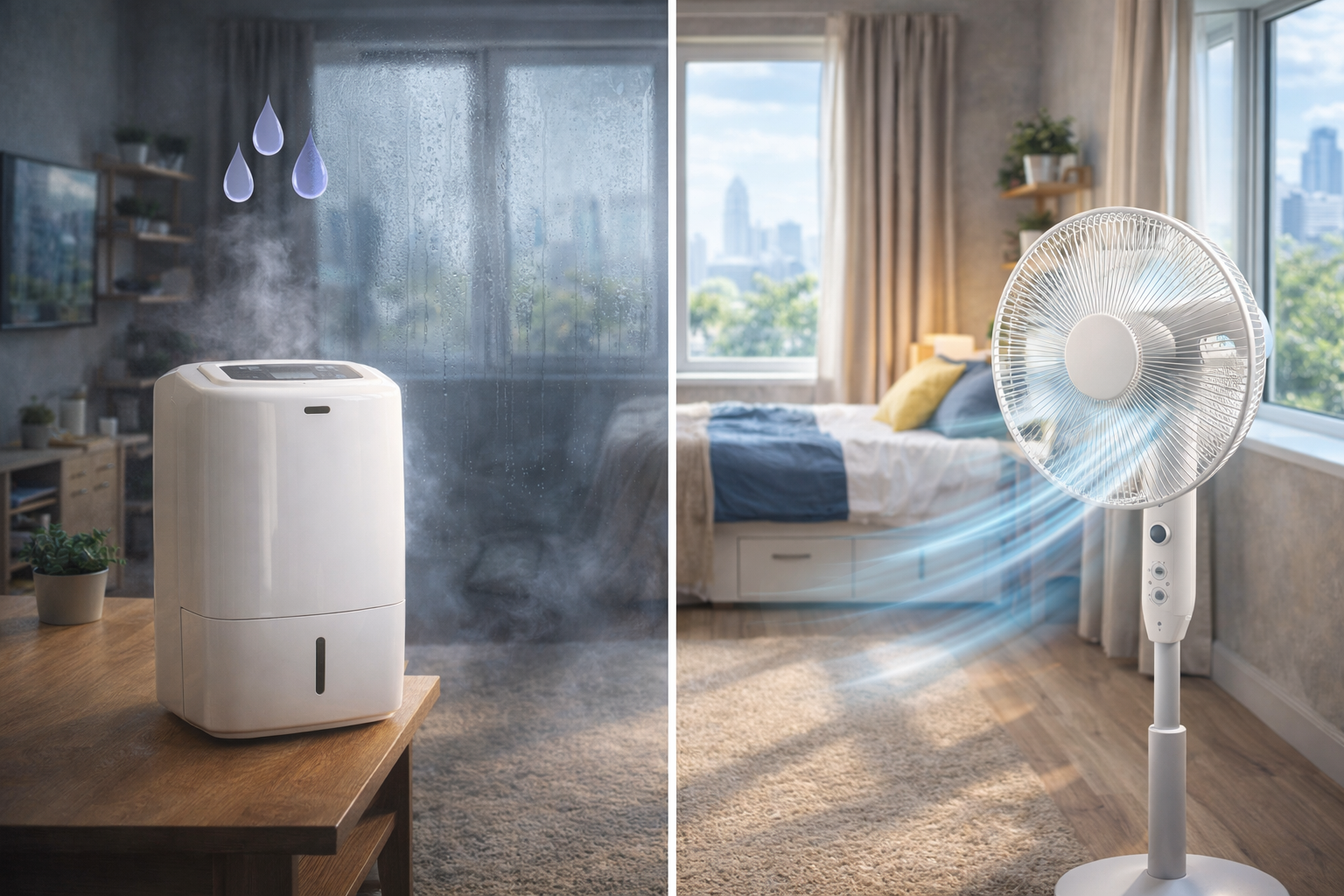
Is a Dehumidifier or Fan Better for a Studio Flat?
Dehumidifier vs Fan for a Studio Flat (Which Is Better in 2026?)
Is a dehumidifier or fan better for a studio flat? If you live in a small UK flat, choosing the right appliance can make a big difference to comfort, humidity and airflow.
In this guide, we compare whether a dehumidifier or fan is better for a studio flat, looking at humidity control, cooling effect, running costs and space efficiency.
In very hot weather, neither fans nor dehumidifiers may be enough — our portable air conditioner guide for studio flats UK shows more powerful cooling options.
For updated UK energy pricing, you can check:
| Model | Type | Power Usage | Best For | View Price |
|---|---|---|---|---|
| COMFEE’ Aqua Dry 12L/DAY Dehumidifier | Compressor | 230W | Small studio flats | Check Latest Price on Amazon ➜ |
| Dyson Bladeless | Bladeless Fan | 65W | Powerful fan that can also become a heater | Check Latest Price on Amazon ➜ |
| Russell Hobbs Dehumidifier 20 Litre | Compressor | 440W | Timer, dryer & SMART modes, LED display, continuous drain function and auto defrost | Check Latest Price on Amazon ➜ |
| Dreo Tower Fan | Tower Fan | 42W | Tower Fan – Small spaces | Check Latest Price on Amazon ➜ |
| Amazon Basics Pedestal Fan | Pedestal Fan | 60W | Budget Friendly | Check Latest Price on Amazon ➜ |
Disclosure: This article contains affiliate links. If you purchase through these links, we may earn a small commission at no extra cost to you.
What Does a Fan Actually Do?
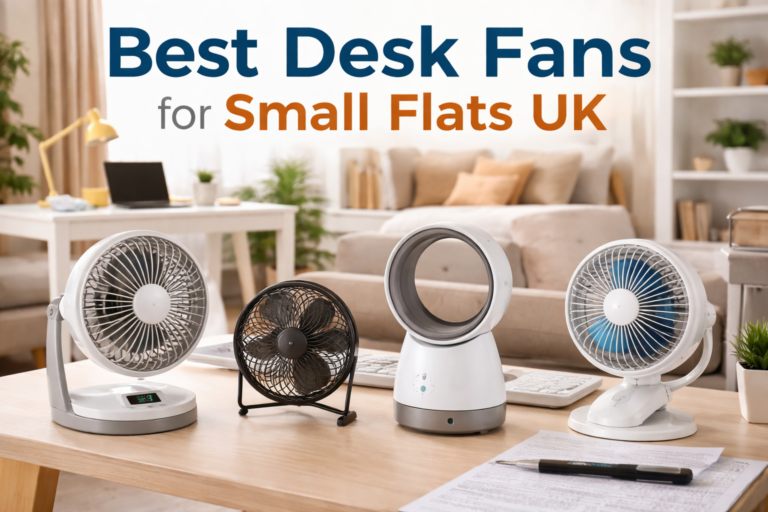
A fan does not reduce the temperature of a room. Instead, it circulates air, helping sweat evaporate from your skin, which makes you feel cooler.
In a studio flat (typically 20–35 square metres), a good quality fan can:
- Improve airflow
- Reduce stuffiness
- Make warm rooms feel cooler
- Use very little electricity
Fans are ideal in summer or during short periods of heat.
Although fans move air, a dehumidifier actually removes moisture — see our guide to the best dehumidifiers for studio flats UK if you need targeted humidity control.
What Does a Dehumidifier Do?
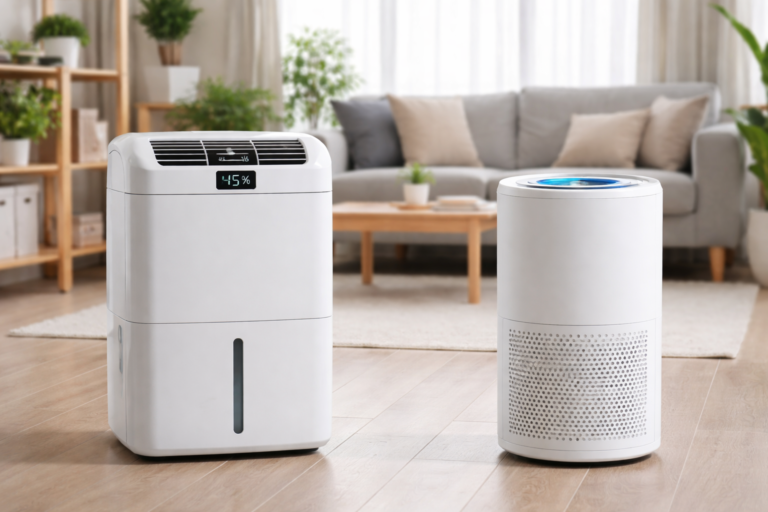
A dehumidifier removes excess moisture from the air. This helps reduce:
- Condensation on windows
- Damp smells
- Mould growth
- Sticky, heavy air
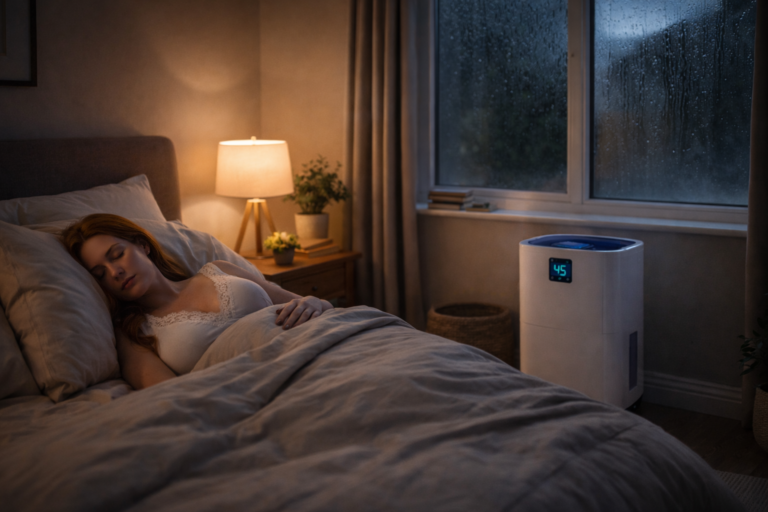
In many UK studio flats — especially ground-floor or poorly ventilated ones — humidity is a bigger problem than temperature.
Lower humidity can make a room feel freser and more comfortable, even if the temperature remains the same.
Dehumidifier vs Fan: Key Differences
Cooling Effect
- A fan makes you feel cooler.
- A dehumidifier does not directly cool the air.
Humidity Control
- A fan does not remove moisture.
- A dehumidifier actively reduces humidity levels.
Running Costs
- Fans typically use 30–60W.
- Dehumidifiers usually use 150–300W.
Fans are cheaper to run, but dehumidifiers solve deeper air quality issues.
Which Is Better for a Studio Flat?
It depends on your main issue. To decide whether a dehumidifier or fan is better for a studio flat, you first need to identify whether humidity or heat is the main problem. Understanding whether a dehumidifier or fan is better for a studio flat comes down to identifying whether moisture or airflow is the bigger concern.
High-quality cooling fans are excellent for improving air circulation and can help make warm flats feel more comfortable — see our recommendations for the best cooling fans for studio flats UK.
Choose a Fan If:
- Your flat gets hot in summer.
- Air feels stale but not damp.
- You want low running costs.
- You need a portable solution.
Choose a Dehumidifier If:
- You see condensation on windows.
- Clothes take a long time to dry indoors.
- The flat smells musty.
- You’ve noticed mould patches.
Can You Use Both Together?
Yes — and in many cases, that’s the best solution.
A dehumidifier improves air quality by removing moisture. A fan improves airflow and comfort. In a small studio flat, combining the two can dramatically improve overall living conditions.
If you’re unsure which issue you’re facing, read our guide on how to cool a studio flat without AC to understand additional ventilation strategies.
Running Cost Comparison in the UK
When comparing whether a dehumidifier or fan is better for a studio flat, running costs matter. Fans typically use between 30–60 watts, making them extremely cheap to operate daily. Dehumidifiers use more power, usually between 150–300 watts, but they actively remove moisture from the air.
In damp studio flats, a dehumidifier can prevent mould growth and reduce condensation on windows. In dry but hot flats, a fan may be sufficient. Understanding your specific issue ensures you choose the most efficient solution for your space. For official UK electricity price updates, visit Ofgem’s website.
Which Option Is More Space Efficient?
In most studio flats, space efficiency matters just as much as performance. Tower fans are usually slim and vertical, taking up minimal floor space. Dehumidifiers are slightly bulkier but can double as air quality improvement devices year-round. If storage is limited, consider how often you’ll use the appliance and whether it can serve multiple purposes in your small living space.
Final Thoughts
When deciding whether a dehumidifier or fan is better for a studio flat, focus on the core problem. Heat requires airflow. Damp requires moisture control. Ultimately, deciding whether a dehumidifier or fan is better for a studio flat depends on whether you are fighting heat or humidity.
For most UK studio flats, identifying whether humidity or temperature is the bigger issue will determine the right choice. If you’re still wondering whether a dehumidifier or fan is better for a studio flat, the answer depends entirely on your flat’s ventilation and moisture levels. Ultimately, deciding is a dehumidifier or fan better for a studio flat depends on your flat’s humidity levels and seasonal temperature changes.