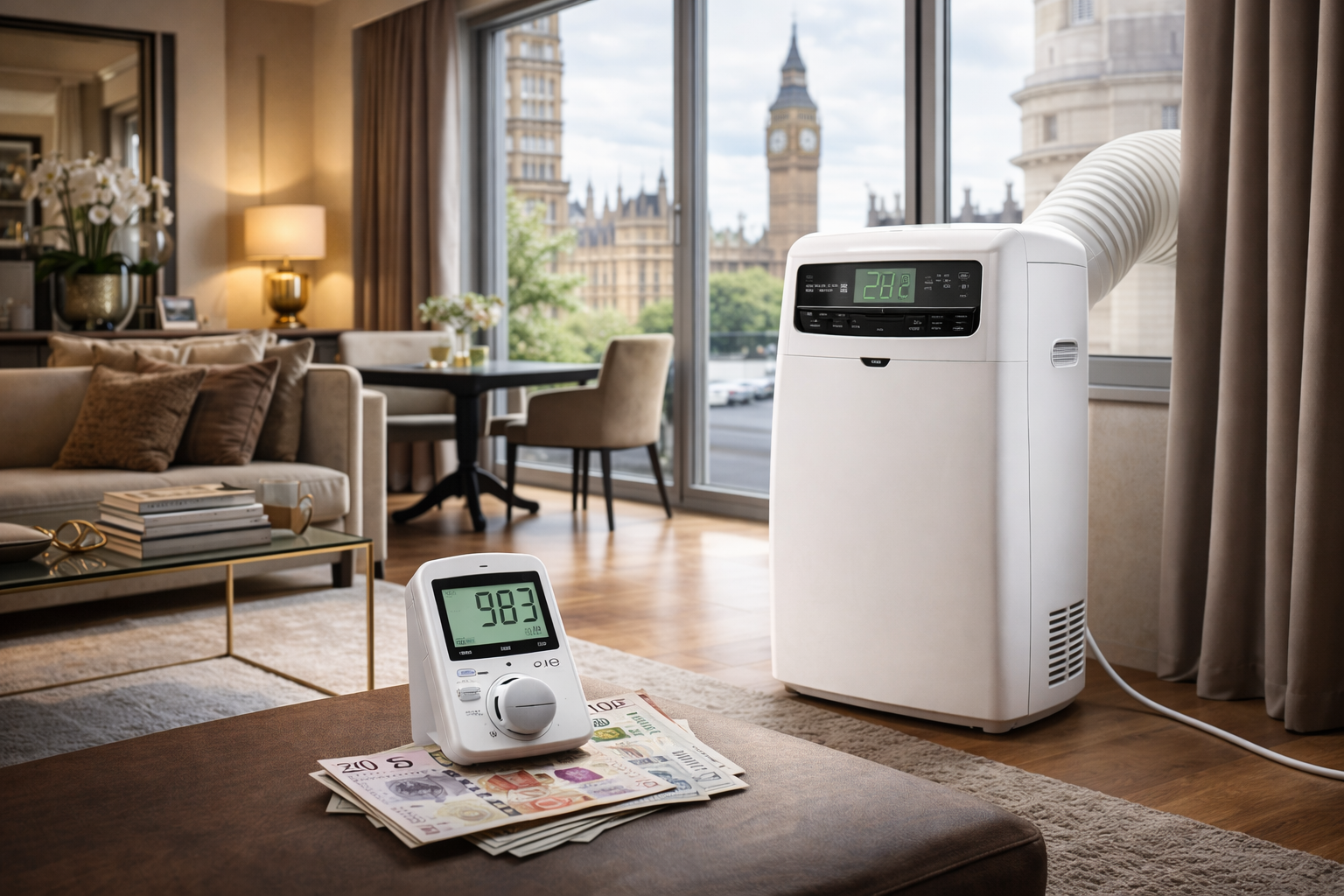
How Much Electricity Does a Portable Air Conditioner Use in the UK?
During warm summer months, many people living in small apartments start looking for cooling solutions. One of the most common questions asked before buying a unit is how much electricity does a portable air conditioner use and whether it will significantly increase energy bills.
Portable air conditioners can be extremely effective at cooling studio flats and small living spaces, but like any appliance, they do consume electricity. Understanding how much power they use can help you decide whether a portable air conditioner is the right solution for your home.
How Portable Air Conditioners Use Electricity
Portable air conditioners work by removing heat from the air inside a room and exhausting it outside through a ventilation hose. This process requires a compressor and fan system that uses electricity to operate.
When people ask how much electricity does a portable air conditioner use, the answer usually depends on three factors:
- the cooling capacity of the unit
- the size of the room
- how long the unit runs each day
Most portable air conditioners designed for home use consume between 700 and 1500 watts per hour, depending on their cooling power.
Because studio flats are relatively small spaces, portable AC units often run less frequently than they would in larger homes, which can help reduce overall electricity consumption.
Typical Running Costs in the UK
Electricity prices in the UK can fluctuate, but portable air conditioners are generally similar to other high-powered household appliances such as electric heaters.
If a portable air conditioner uses around 1000 watts, running it for one hour uses approximately 1 kilowatt-hour (kWh) of electricity.
For example, if you run the unit for 4 hours during a warm evening, the appliance would use about 4 kWh of electricity.
For many people researching how much electricity does a portable air conditioner use, this means the running cost depends largely on how often the unit is used rather than simply owning one.
Why Portable AC Units Can Be Efficient in Studio Flats
Although portable air conditioners use more electricity than standard fans, they can still be efficient in smaller spaces. Studio flats usually have a compact layout, meaning the cooling system does not need to work as hard to reduce the temperature.
Smaller rooms cool down faster, which allows the unit to cycle on and off instead of running constantly.
This is one reason why many people comparing cooling options also read guides such as portable AC vs cooling fan for studio flats, which explains the difference between air circulation and actual cooling.
Factors That Affect Electricity Usage
Several things can influence how much electricity your portable air conditioner uses.
Room Size
Larger rooms require more cooling power. Studio flats typically range between 20–40 square metres, which is ideal for portable AC units designed for smaller living spaces.
You can also explore our guide to the best cooling fans for studio flats UK for low-energy cooling options.
Insulation and Sunlight
Rooms that receive strong sunlight or have poor insulation will heat up faster. In these cases, the air conditioner may run longer to maintain a comfortable temperature.
Ventilation
Proper ventilation is essential for efficient operation. Portable air conditioners must vent warm air outside through a window hose. Without this, the appliance cannot remove heat effectively.
If ventilation is difficult in your apartment, you may also want to explore techniques in our guide on how to cool a studio flat without air conditioning.
Are Portable Air Conditioners Expensive to Run?
For most people asking how much electricity does a portable air conditioner use, the concern is usually about energy bills.
While portable air conditioners do use electricity, they are typically run only during the hottest parts of the day or evening. This means the total energy usage is often lower than expected.
Using the unit strategically—such as cooling the room before sleeping or during peak heat—can significantly reduce overall electricity consumption.
In many cases, the comfort provided during hot summer nights makes the electricity cost worthwhile. According to the Energy Saving Trust, cooling appliances should be used efficiently to reduce electricity consumption.
Final Thoughts
So, how much electricity does a portable air conditioner use in the UK? Most units consume between 700 and 1500 watts, with actual running costs depending on how long the appliance is used each day.
For people living in studio flats, portable air conditioners can be an effective way to stay cool during summer while still keeping electricity usage manageable.
When properly ventilated and used in compact spaces, portable AC units can deliver strong cooling performance without running constantly throughout the day.