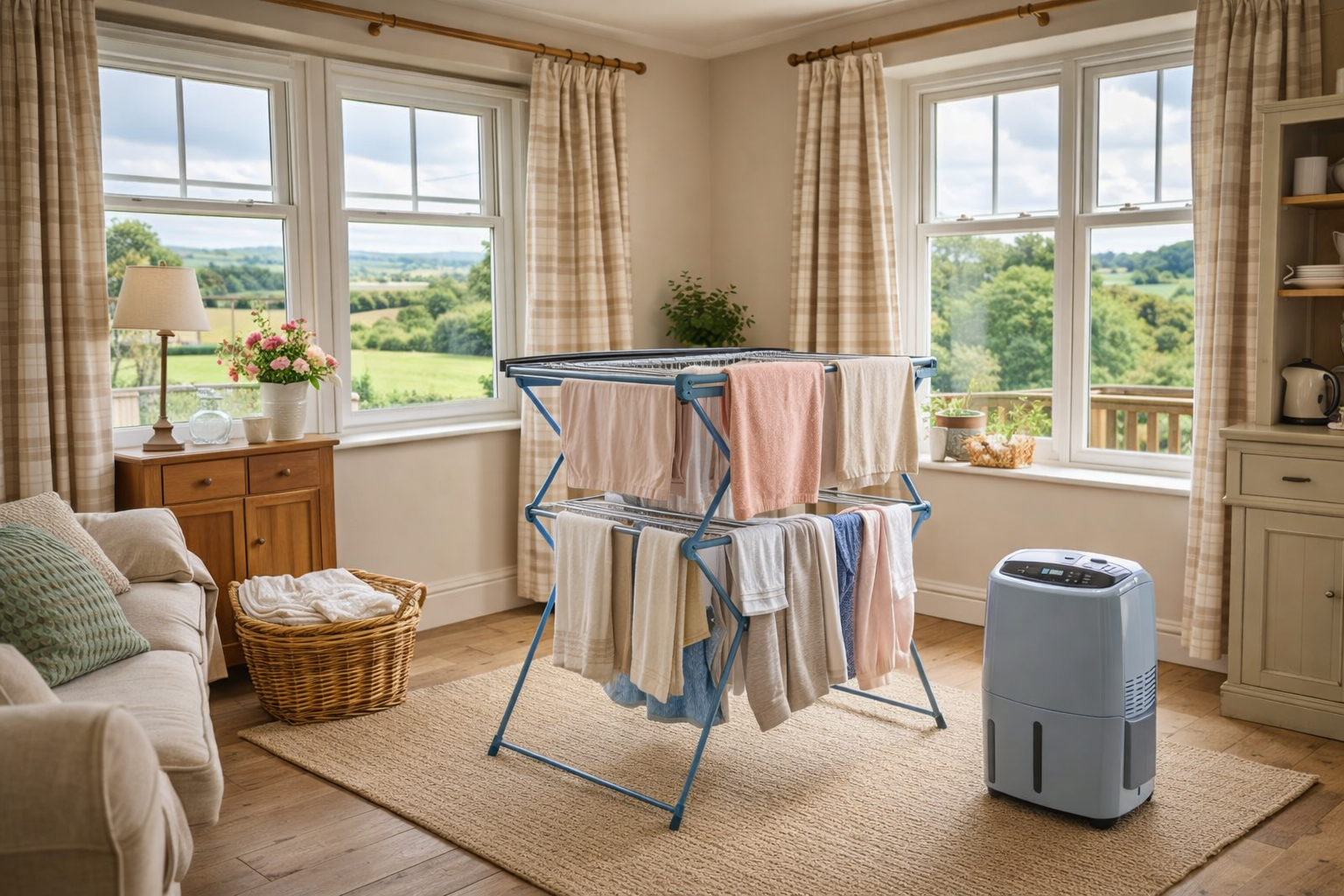
How to Dry Clothes in a Small Flat Without Damp
How to Dry Clothes in a Small Flat Without Damp
If you’re wondering how to dry clothes in a small flat without damp, you’re not alone. Many people living in studio flats struggle with condensation and humidity when drying laundry indoors. Living in a compact apartment can make everyday tasks more challenging, especially laundry. Many people search for how to dry clothes in a small flat without damp because indoor drying can quickly increase humidity levels and lead to condensation on windows and walls.
When wet clothes release moisture into the air, that moisture has to go somewhere. In small living spaces it often collects on colder surfaces such as windows, walls and furniture. Over time this can cause condensation, mould growth and unpleasant damp smells.
Understanding how to dry clothes in a small flat without damp is essential for maintaining a healthy and comfortable living space.
Why Drying Clothes Indoors Can Cause Damp
Drying laundry indoors releases a large amount of moisture into the air.
A single load of washing can release two litres or more of water vapour while it dries. In larger homes this moisture spreads across several rooms, but in a studio flat it remains trapped in the same space.
This is why many people begin searching online for how to dry clothes in a small flat without damp once condensation starts appearing on windows.
Improve Ventilation While Clothes Are Drying
One of the most effective solutions is improving airflow.
Opening windows slightly while drying clothes allows moisture to escape before it builds up inside the room. Even short periods of ventilation can reduce humidity levels significantly.
Air circulation is especially important in small apartments where air movement is limited. Our Complete Guide to Cooling a Studio Flat in the UK explains several ways to improve airflow and comfort in compact living spaces.
Position Drying Racks Near Windows
Location matters when drying laundry indoors.
Placing drying racks near windows or areas with natural airflow helps moisture leave the room faster. This prevents humid air from collecting in corners or near cold surfaces.
Many people find that combining ventilation with air circulation from fans makes a noticeable difference.
If overheating is also a problem, our guide on how to cool a studio flat without air conditioning explains additional airflow techniques.
Avoid Drying Clothes Overnight
Leaving wet laundry to dry overnight can trap moisture inside the flat for many hours.
During the night temperatures often drop, which increases the chances of condensation forming on windows and walls. Drying clothes during the daytime when ventilation is easier usually helps reduce humidity buildup.
Understanding how to dry clothes in a small flat without damp often involves adjusting drying habits as well as improving airflow.
Reduce Moisture With Humidity Control
Sometimes ventilation alone is not enough, especially during colder months when windows stay closed.
Devices designed to remove moisture from the air can help reduce humidity while clothes are drying. Many people living in studio flats use them alongside proper ventilation to keep moisture levels under control.
If damp is already appearing in your flat, our guide on best small dehumidifiers for studio flats explains how they can help manage indoor humidity.
Spread Clothes Out When Drying
Laundry dries faster when air can circulate around each item.
Avoid stacking clothes too closely on drying racks. Spreading items out allows air to move between fabrics and helps moisture evaporate more quickly.
This simple adjustment can significantly reduce drying time and humidity levels inside a small apartment.
Keep a Consistent Indoor Temperature
Cold rooms increase the likelihood of condensation forming while clothes dry.
Maintaining a steady indoor temperature helps moisture evaporate instead of settling on surfaces. Even gentle heating combined with ventilation can help control humidity levels.
Understanding how to dry clothes in a small flat without damp often involves balancing airflow, temperature and humidity.
According to guidance from the UK Energy Saving Trust, proper ventilation and humidity control are important when drying clothes indoors.
Conclusion
Learning how to dry clothes in a small flat without damp is important for maintaining a comfortable and healthy living space. Because studio flats contain everything in one open room, moisture from laundry can quickly build up and cause condensation.
By improving ventilation, managing humidity and adjusting drying habits, it is possible to dry clothes indoors without creating damp problems.
Small changes to airflow and drying methods can make a significant difference in keeping a studio flat fresh and moisture-free.