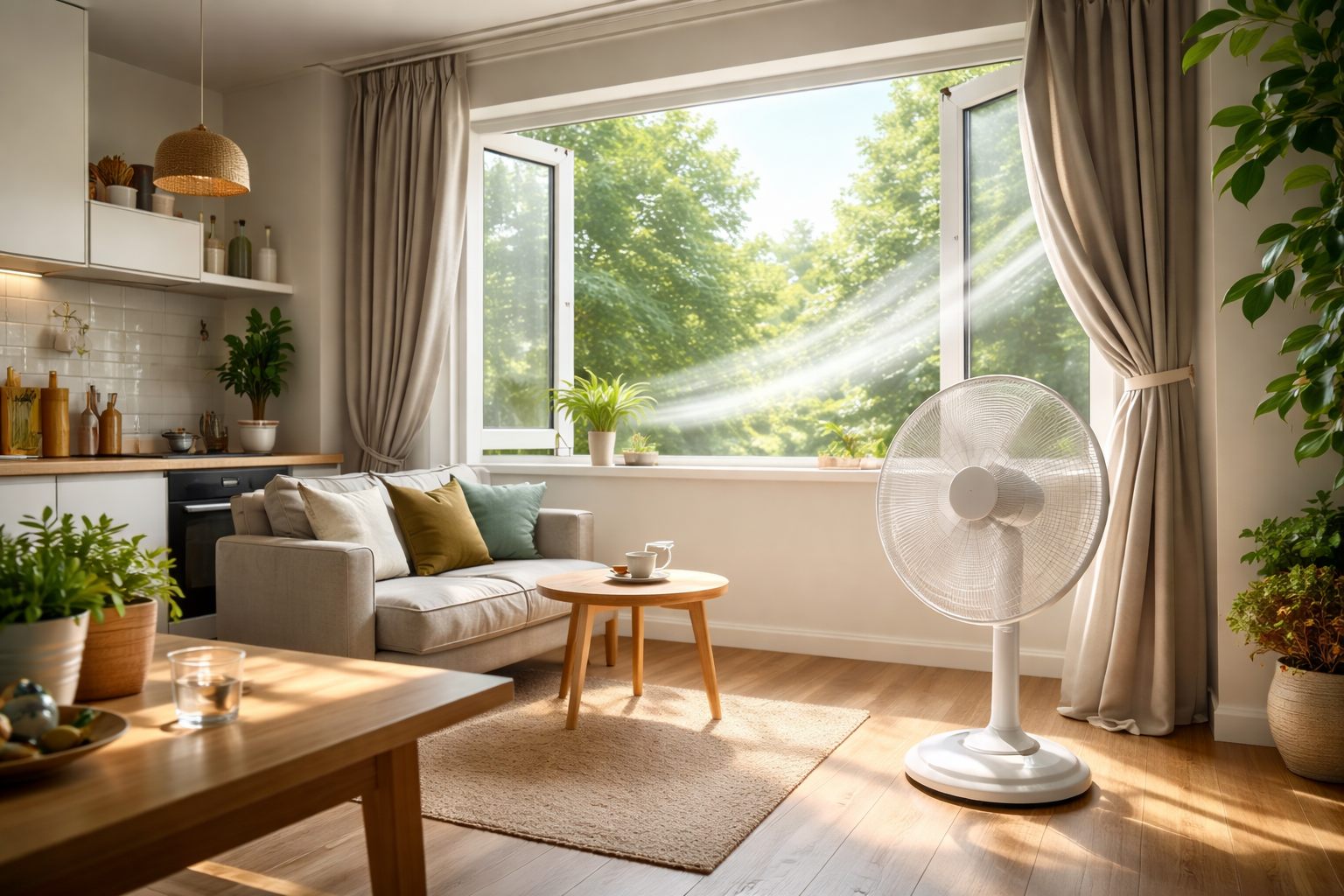
How to Ventilate a Studio Flat Properly (7 Simple Airflow Tricks That Work)
How to Ventilate a Studio Flat the Right Way
Living in a studio flat has many advantages — lower rent, easier cleaning, and efficient use of space. However, one common issue many people face is poor airflow. When ventilation is limited, small flats can quickly feel stuffy, humid, or even develop damp smells.
Learning how to ventilate a studio flat properly can make a huge difference to comfort, air quality, and even energy costs. With a few simple adjustments, you can improve airflow and keep your living space feeling fresh all year round.
Below are practical ventilation strategies that work particularly well in small apartments and studio flats.
| Best For | Model | Type | Noise Level | Check Price |
|---|---|---|---|---|
| Best Overall | DREO Silent Tower Fan | Tower Fan | 25dB | Check Price On Amazon |
| Best Budget | Belaco Pedestal Fan | Pedestal Fan | 45dB | Check Price On Amazon |
| Best Quiet | Pro Breeze Bladeless | Tower Fan | 48dB | Check Price On Amazon |
| Best Energy Efficient | Dr. Prepare | Desk Tower Fan | 60dB | Check Price On Amazon |
| Best Window Fan | Comfort Zone | Window Fan | 53dB | Check Price On Amazon |
Disclosure: This article contains affiliate links. If you purchase through these links, we may earn a small commission at no extra cost to you.
Why Ventilation Is Important in a Studio Flat
Because studio flats combine living, sleeping, cooking, and sometimes working spaces into one room, air can quickly become stagnant. Everyday activities release moisture and particles into the air, including:
- Cooking steam
- Shower humidity
- Drying clothes indoors
- Dust and household particles
- Carbon dioxide from breathing
Without proper airflow, these can lead to problems like condensation, damp smells, and uncomfortable temperatures.
Good ventilation helps by:
- Removing excess humidity
- Improving oxygen levels indoors
- Preventing mould growth
- Keeping temperatures more stable
- Making the space feel fresher and less cramped
Open Windows Strategically
One of the simplest ways to ventilate a studio flat is by using cross ventilation.
Instead of opening just one window slightly, try opening two windows on opposite sides of the flat if possible. This creates airflow across the room, allowing fresh air to replace stale air much more efficiently.
Even opening windows for 10–15 minutes in the morning and evening can dramatically improve indoor air quality.
If your flat only has one window, opening doors to hallways or internal areas can sometimes help air circulate better.
According to the Energy Saving Trust, good home ventilation helps reduce condensation and improve indoor air quality.
Use Fans to Move Air Around the Room
Fans are extremely useful for improving ventilation in small spaces. While they don’t cool the air directly, they help move stale air and distribute fresh air more evenly.
Fans can help by:
- pulling cooler air from windows
- pushing warm air out of the room
- circulating air throughout the flat
For example, placing a fan near an open window can help pull fresh air inside while pushing stale air outward.
If you’re trying to cool your flat in summer as well, you may find it helpful to read our guide on how to keep a studio flat cool in summer.
Keep Interior Doors Open
Many studio flats have small partitions or internal doors for bathrooms or kitchens. Keeping these doors open when possible allows air to circulate freely throughout the space.
This prevents pockets of trapped air where humidity can build up.
Bathrooms in particular benefit from better airflow. After showering, leaving the bathroom door open for a while can help moisture disperse more quickly.
Ventilate During and After Cooking
Cooking releases a lot of moisture and heat into a small flat. Without ventilation, this steam can linger for hours and increase condensation.
To reduce this:
- open windows while cooking
- run extractor fans if available
- ventilate the room for a few minutes after cooking
These simple steps prevent humidity from accumulating indoors. Once you understand how to ventilate a studio flat properly, maintaining fresh air and reducing humidity becomes much easier in a small living space.
Poor ventilation can also make humidity worse, which is why many people use appliances like dehumidifiers. You can read more in our guide on the best dehumidifiers for studio flats.
Avoid Blocking Airflow
Furniture placement can sometimes unintentionally block airflow in studio flats.
Large furniture placed directly in front of windows or ventilation points can restrict how air moves through the room.
Try to keep areas around:
- windows
- vents
- radiators
relatively clear so air can circulate more easily.
Ventilation also plays a big role in temperature control. If your flat gets very warm, our guide on how to cool a studio flat without air conditioning explains additional cooling strategies.
Use Dehumidifiers When Necessary
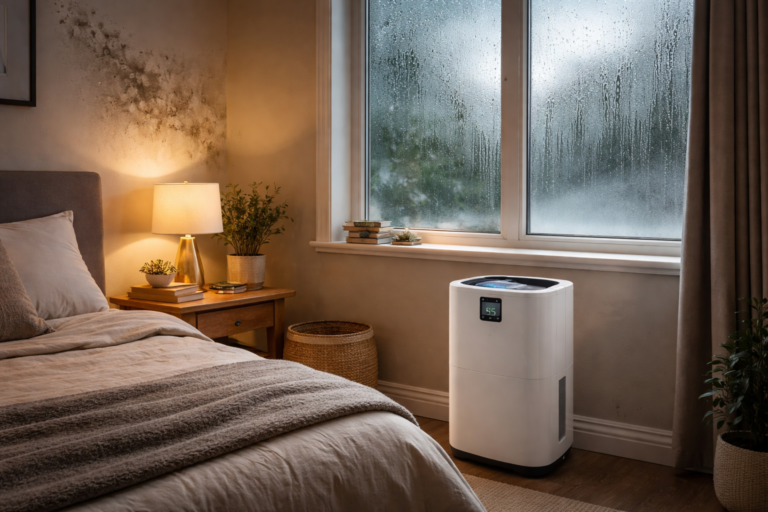
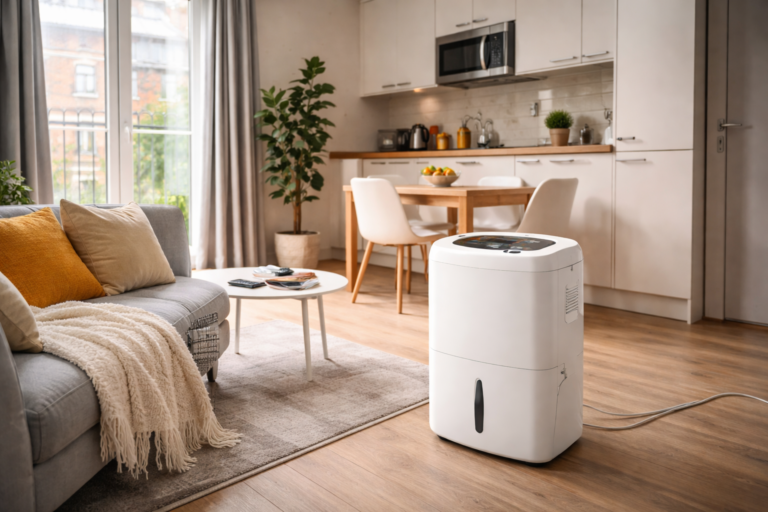
If your studio flat struggles with humidity or condensation, a dehumidifier can be a useful addition.
These appliances remove moisture from the air, which can help prevent damp smells and mould growth.
They are particularly helpful if you:
- dry clothes indoors
- live in a humid building
- notice condensation on windows frequently
If humidity is a regular issue, it may also help to compare solutions like fans vs dehumidifiers for studio flats to see which works best for your situation.
Ventilate Regularly Throughout the Day
The most effective way to ventilate a studio flat is to make airflow part of your daily routine.
Short bursts of fresh air throughout the day are far more effective than leaving windows closed for long periods.
Simple habits that help include:
- airing out the flat each morning
- opening windows briefly after cooking
- ventilating after showers
- letting fresh air circulate before bedtime
Over time these small habits keep indoor air fresher and prevent moisture from building up. Once you understand how to ventilate a studio flat, it becomes much easier to control humidity, prevent damp, and keep your home comfortable.
Final Thoughts
Understanding how to ventilate a studio flat properly is one of the easiest ways to improve comfort in a small living space.
Simple changes like opening windows strategically, using fans to circulate air, and reducing humidity sources can make a big difference.
Better airflow helps prevent damp problems, keeps the air fresh, and makes a studio flat feel much more comfortable to live in — even during warmer months.