Oil Heater vs Ceramic Heater for Small Flats
Oil Heater vs Ceramic Heater for Small Flats
Choosing the right heater can make a huge difference when you live in a studio flat or small apartment, especially during cold UK winters. One of the most common questions people ask is oil heater vs ceramic heater for small flats — which one is actually better?
Both heaters are popular because they are compact, portable, and easy to use without needing central heating. However, they work in very different ways, which affects how quickly they heat a room, how energy efficient they are, and how comfortable the heat feels.
In this guide, we’ll compare oil heater vs ceramic heater for small flats, looking at heating performance, running costs, safety, and which option works best for small living spaces.
What Is an Oil Heater?
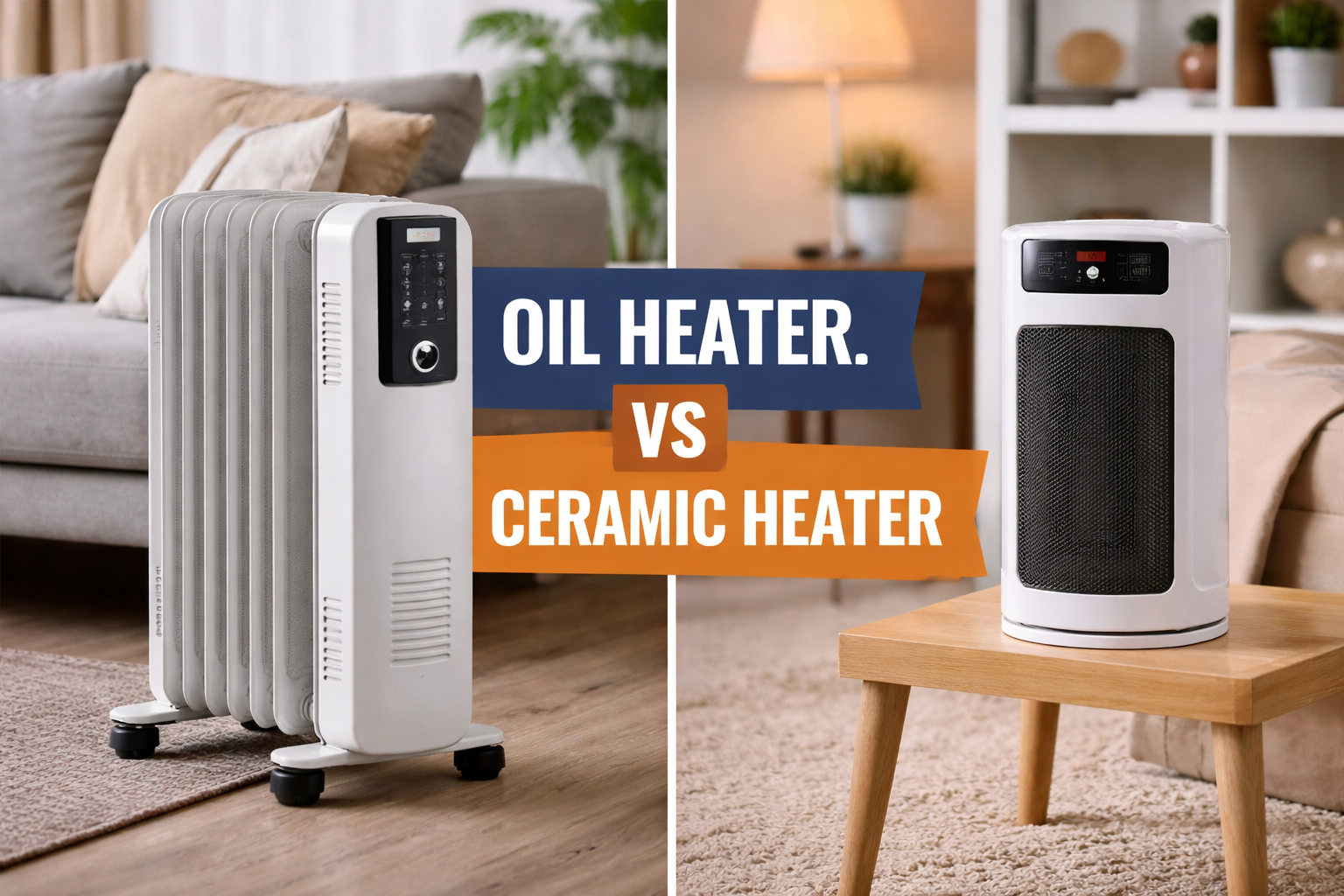
An oil heater, often called an oil-filled radiator, uses electricity to heat oil sealed inside metal fins. The oil stays inside the heater permanently and circulates heat through the fins, which then warms the surrounding air.
Oil heaters are known for producing steady, long-lasting heat, making them ideal for heating small flats over longer periods.
They are commonly used for:
• heating bedrooms overnight
• maintaining steady warmth in living rooms
• reducing temperature fluctuations
• warming rooms quietly
One advantage of oil heaters is that they continue radiating heat even after being switched off, because the internal oil remains warm for a while.
However, oil heaters typically take longer to warm up compared to ceramic heaters.
What Is a Ceramic Heater?
A ceramic heater uses a ceramic heating element combined with a fan to push warm air into the room. This allows ceramic heaters to warm spaces very quickly.
They are often smaller and more compact than oil heaters, making them popular in studio flats where space is limited.
Ceramic heaters are best suited for:
• quick heat when entering a cold room
• short heating sessions
• small living areas
• desks or workspaces
Because they use a fan to distribute heat, ceramic heaters can warm a room much faster, but they usually stop heating immediately once turned off.
Oil Heater vs Ceramic Heater for Small Flats: Key Differences
When comparing oil heater vs ceramic heater for small flats, the biggest difference is how they deliver heat.
Oil heaters produce radiant heat, which slowly warms the entire room and keeps the temperature stable. Ceramic heaters produce fan-forced heat, which warms the air quickly but can cool down faster once the heater is turned off.
For small flats, this means oil heaters are often better for consistent heating, while ceramic heaters are better for quick bursts of warmth.
Understanding heating efficiency is important, and resources explaining how electric heaters work can help homeowners choose the most efficient option.
When an Oil Heater Is Better for a Small Flat
An oil heater for a small flat is often the better choice if you want steady warmth over longer periods.
Oil heaters work well if you:
• need heat throughout the evening
• want quiet heating in bedrooms
• prefer stable room temperatures
• want a heater that stays warm after switching off
Because oil heaters heat gradually, they are excellent for maintaining comfortable warmth in living areas.
If you’re comparing different models, you may also want to read our guide to best oil-filled heaters for studio flats.
When a Ceramic Heater Is Better for a Small Flat
A ceramic heater for a small flat is better if you want fast heat without waiting for the room to warm up slowly.
Ceramic heaters are ideal if you:
• want instant warmth
• only heat rooms occasionally
• need a compact heater for a desk or workspace
• prefer a lightweight portable heater
If you decide a ceramic model is right for you, check out our list of the best ceramic heaters for studio flats UK for compact and energy-efficient options.
Running Costs: Oil Heater vs Ceramic Heater
When comparing oil heater vs ceramic heater for small flats, many people assume oil heaters are cheaper to run. In reality, both heaters usually consume similar amounts of electricity because they rely on electrical resistance heating.
The difference often comes down to how the heat is used.
Oil heaters may feel more efficient for long sessions because they retain heat longer. Ceramic heaters may use more energy if they are repeatedly switched on and off to maintain warmth.
If you want to understand heating costs in more detail, you can also read our guide on how much it costs to run a heater in the UK.
Can You Use Both in a Small Flat?
Some people choose to use both an oil heater and ceramic heater in a small flat.
For example:
• an oil heater can maintain background warmth in the room
• a ceramic heater can provide quick heat when needed
This combination can create a comfortable environment without needing central heating.
Many people also wonder is it cheaper to leave a heater on low all day UK, especially when trying to maintain consistent warmth in winter.
Which Heater Is Best for a Small Flat?
When deciding between oil heater vs ceramic heater for small flats, think about how you normally heat your home. We have also got a break down with a full comparison between an oil filled radiator vs ceramic heater UK if you want a deeper look at how these heaters perform in real homes.
If you want quiet, steady heat that lasts longer, an oil heater is usually the better choice. If you want fast warmth and a compact heater, a ceramic heater may be more practical.
If you’re unsure which heater type works best overall, our guide to the best heater for studio flat UK compares the most efficient options for small apartments.
For many studio flats, oil heaters provide a more comfortable heating experience because they maintain warmth consistently without the noise of a fan.