Dehumidifier Running Cost UK: The Ultimate Electricity Cost Guide (2026)
If you’re dealing with damp, condensation, or drying clothes indoors, a dehumidifier can be one of the most useful appliances in a UK home. However, many people worry about the dehumidifier running cost UK and whether running one regularly will significantly increase their electricity bill.
The good news is that modern dehumidifiers are generally quite energy efficient, especially compared with appliances like electric heaters or portable air conditioners. In this guide, we’ll break down exactly how much it costs to run a dehumidifier in the UK and what factors affect electricity usage.
Dehumidifier Running Cost UK: How Much Electricity Do They Use?
Most household dehumidifiers use between 200 watts and 500 watts depending on the model and capacity.
Typical power usage:
- Small dehumidifier: 200–300 watts
- Medium dehumidifier: 300–400 watts
- Large dehumidifier: 400–500 watts
For studio flats and small apartments, most people use compact units in the 200–300W range, which keeps the dehumidifier running cost UK relatively low.
Average Electricity Price in the UK
Electricity prices change over time, but as of 2026 the UK energy price cap sits around:
£0.28 per kWh
Electricity cost can be estimated using the formula:
Power (watts) × hours used ÷ 1000 × electricity price
According to Ofgem, the UK energy price cap determines the maximum electricity rates that suppliers can charge households.
Example: Cost to Run a Dehumidifier
Let’s look at a typical example.
A 250W dehumidifier running for 8 hours per day.
Calculation:
250W × 8 hours = 2000Wh
2000Wh ÷ 1000 = 2 kWh
2 × £0.28 = £0.56 per day
Monthly cost (30 days):
≈ £16.80 per month
So while the dehumidifier running cost UK is higher than a fan, it is still far cheaper than running electric heaters.
Cost Comparison With Other Appliances
| Appliance | Typical Power | Daily Cost |
|---|---|---|
| Desk Fan | 30W | ~7p |
| Dehumidifier | 250W | ~56p |
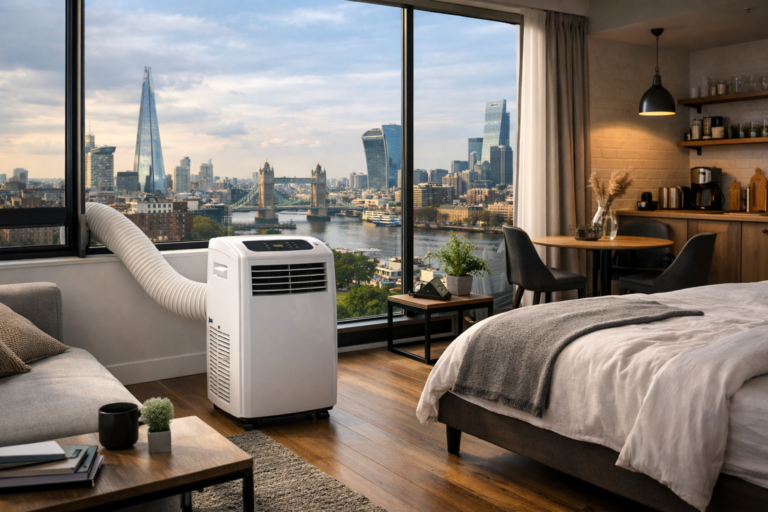
| Portable Air Conditioner | 1200W | ~£2.68 |
| Electric Heater | 2000W | ~£4.48 |
This shows that a dehumidifier sits somewhere in the middle for energy usage, but provides important benefits like reducing damp and improving air quality. You can also estimate appliance electricity costs using online energy consumption calculators.
When Should You Run a Dehumidifier?
Running a dehumidifier continuously is usually unnecessary. Most modern units include humidity sensors that automatically turn the appliance on and off when needed.
Situations where running one is useful:
- drying clothes indoors
- reducing condensation on windows
- preventing mould in damp flats
- improving indoor air quality
If damp is a regular issue in your home, you might also want to see our guide to the best dehumidifiers for studio flats in the UK.
Tips to Reduce Dehumidifier Running Cost UK
Although dehumidifiers are already efficient, a few simple habits can help reduce electricity costs. The Energy Saving Trust provides helpful guidance on reducing electricity usage and improving energy efficiency in UK homes.
Close windows and doors
Running a dehumidifier in an open room makes it work harder.
Use humidity settings
Set the target humidity to around 50–55%, which prevents the unit from running constantly. Condensation can often be solved with better airflow, as explained in our guide on how to stop condensation in a studio flat.
Choose the right size
A smaller flat doesn’t need a large industrial dehumidifier. Compact models are often more efficient.
You can compare suitable models in our guide to small dehumidifiers for studio flats UK.
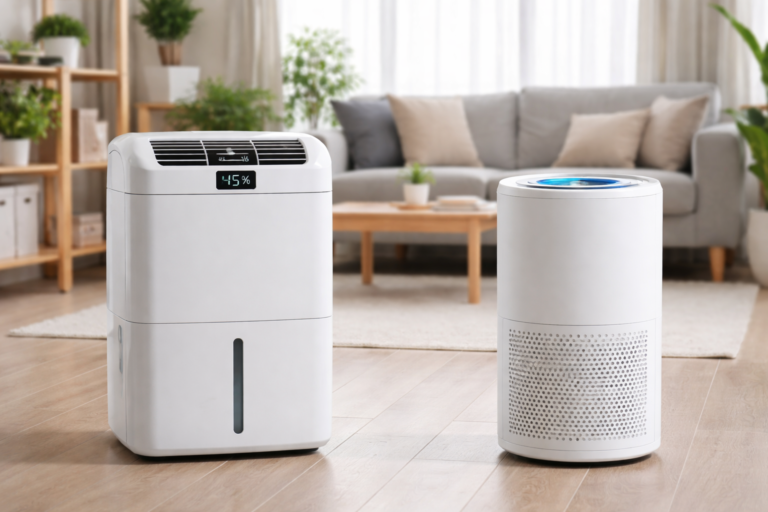
Dehumidifier vs Air Purifier Energy Usage
Some people consider using an air purifier instead of a dehumidifier. However, these appliances serve different purposes.
A dehumidifier removes moisture from the air, which helps prevent mould and condensation. Air purifiers remove dust, allergens, and pollutants.
If you’re unsure which appliance suits your situation, see our comparison of dehumidifier vs air purifier for small flats.
Final Thoughts
The dehumidifier running cost UK is moderate compared with many other home appliances. Most compact units cost roughly £10–£20 per month depending on how often they run.
For homes dealing with damp or condensation, a dehumidifier is often one of the most effective and affordable solutions.
When used correctly, it can improve comfort, reduce mould risk, and make indoor air healthier without dramatically increasing electricity bills.