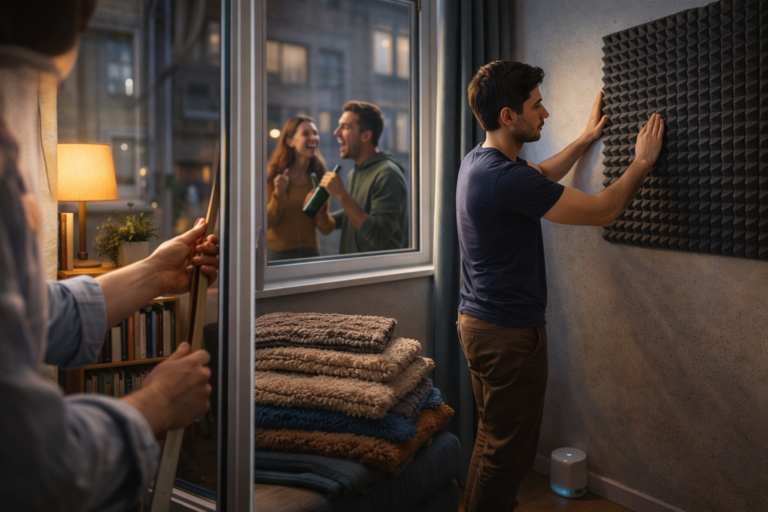

How to Soundproof a Studio Flat (7 Simple Fixes That Actually Work)
Living in a studio flat has many advantages — efficient space, lower rent, and easy maintenance. However, one common problem many people face is noise. Thin walls, nearby traffic, noisy neighbours, or shared building spaces can make small apartments surprisingly loud.
Learning how to soundproof a studio flat can make a huge difference to comfort, sleep quality, and your overall living environment. While completely soundproofing a room can be expensive, there are several simple and affordable methods that can significantly reduce noise in small flats.
Many people search for ways on how to soundproof a studio flat when noise from neighbours, traffic, or shared walls becomes a daily frustration. Below are practical soundproofing strategies that work particularly well in studio apartments.
| Best For | Model | Type | Key Benefit | Check Price |
|---|---|---|---|---|
| 🥇 Best Overall | TONOR | Sound proofing panels | Excellent Acoustic Performance | Check Latest Price On Amazon |
| 💰 Best Budget | FStop | Acoustic Foam Panels | Budget Friendly | Check Latest Price On Amazon |
| 🪟 Best Curtain | Deconovo Blackout Curtains | Blackout Curtains | Noise reduction, Thermal Insulation, Energy Efficient | Check Latest Price On Amazon |
| 🚪 Best Door Seal | Hojoy | Draft Excluder | Soundproof, Waterproof, Draft excluder. | Check Latest Price On Amazon |
| 🧱 Best Acoustic Panel | JBER | Acoustic Panels | Precise Soundproofing for Places | Check Latest Price On Amazon |
Disclosure: This article contains affiliate links. If you purchase through these links, we may earn a small commission at no extra cost to you.
Why Studio Flats Often Have Noise Problems
Before looking at solutions, it helps to understand why noise travels so easily in studio flats.
Many apartments are built with:
- thin internal walls
- shared structural walls between units
- large windows facing streets
- minimal insulation
Because studio flats combine living, sleeping, and working spaces into one room, unwanted sound can become even more noticeable.
Common sources of noise include:
- neighbours talking or walking
- traffic outside the building
- hallway noise
- televisions or music from nearby flats
Understanding how to soundproof a studio flat properly starts with identifying where noise enters the room, such as walls, windows, floors, and doors.
According to research from the UK Noise Association, noise pollution can significantly impact sleep quality and wellbeing.
Use Soft Furnishings to Absorb Sound
One of the easiest ways to reduce noise in a studio flat is by adding soft materials to absorb sound.
Hard surfaces reflect sound waves, while soft materials help dampen them.
Helpful items include:
- thick curtains
- rugs or carpets
- upholstered furniture
- wall hangings or fabric panels
Even adding a large rug to wooden floors can noticeably reduce echo and improve sound absorption inside the room. Small adjustments like furniture placement can contribute to better soundproofing for a studio flat.
If overheating and noise are both issues in your apartment, you may also want to read our guide on how to cool a studio flat without air conditioning.
Rearrange Furniture to Block Noise
Furniture placement can also help reduce noise coming through shared walls.
Large pieces of furniture placed against a noisy wall can act as a buffer, helping block and absorb sound.
For example:
- wardrobes against shared walls
- bookshelves filled with books
- large storage units
These items create extra mass between you and the noise source, helping reduce sound transmission.
Seal Gaps Around Doors and Windows
Small gaps around doors or windows allow sound to travel easily into your apartment.
You can improve sound isolation by sealing these openings using:
- door draft stoppers
- weather stripping
- adhesive foam seals
These inexpensive fixes help reduce both noise and drafts, improving overall comfort in your flat. Excess humidity can sometimes amplify sound in small spaces, so our guide on how to reduce damp in a studio flat may also help.
Use Curtains to Reduce Street Noise
If your studio flat faces a busy road, windows may be the main source of outside noise.
Installing thicker curtains or acoustic curtains can help reduce the amount of sound entering through glass.
Heavy curtains also provide additional benefits such as:
- improved insulation
- reduced heat loss in winter
- improved privacy
For many small apartments, this is one of the easiest ways to reduce street noise.
If background noise from appliances is a problem, you may also want to check our guide to the best cooling fans for studio flats.
Add Wall Panels or Acoustic Materials
If noise is a serious issue, wall panels designed for sound absorption can help.
These panels are typically made from materials that reduce sound reflections and dampen noise within the room.
They can be installed on walls where noise is most noticeable, such as:
- shared apartment walls
- walls facing hallways
- areas near entertainment systems
While they won’t fully soundproof a room, they can significantly improve the acoustic environment inside a studio flat.
Reduce Noise at the Source
Sometimes the best solution is reducing noise where it starts.
Examples include:
- lowering TV or speaker volume
- placing rubber pads under furniture
- using soft door closers
- avoiding placing speakers directly against walls
These small adjustments can help prevent vibrations that travel through floors and walls.
Final Thoughts
Understanding how to soundproof a studio flat doesn’t require expensive renovations. Simple changes such as adding rugs, repositioning furniture, sealing gaps, and installing curtains can significantly reduce unwanted noise.
While no apartment can be perfectly silent, these practical solutions can make your studio flat noticeably quieter and more comfortable to live in.