
How to Stop Condensation in a Studio Flat (UK Guide)
How to Stop Condensation in a Studio Flat
Condensation is one of the most common problems people face when living in small apartments. If you are searching for how to stop condensation in a studio flat, you are not alone. Studio flats often experience higher humidity because cooking, showering and everyday living all happen in the same open space.
When warm, moist air touches colder surfaces such as windows or walls, water droplets begin to form. Over time this can lead to damp smells, mould growth and damage to furniture.
Understanding how to stop condensation in a studio flat starts with controlling humidity and improving airflow throughout the space. If humidity and heat are both problems in your home, our Complete Guide to Cooling a Studio Flat in the UK explains several ways to improve airflow and comfort in small apartments.
Why Condensation Happens in Studio Flats
Small flats naturally trap moisture more easily than larger homes. Because everything happens in a single room, humidity builds up faster.
Some of the most common causes include:
- cooking and boiling water
- drying clothes indoors
- poor ventilation
- cold windows and walls
- limited airflow in small spaces
When moisture cannot escape, it condenses on colder surfaces such as windows, mirrors and exterior walls. According to the UK Met Office, high humidity levels during colder months can contribute to condensation forming inside homes.
Improve Ventilation to Reduce Moisture
One of the most effective ways of learning how to stop condensation in a studio flat is improving ventilation.
Fresh air helps remove moisture before it can settle on surfaces. Even opening windows for a short period can dramatically reduce humidity levels inside a small flat.
Many people also improve airflow using small fans or ventilation techniques that keep air moving around the room.
For example, proper airflow strategies are explained in our guide on how to cool a studio flat without air conditioning.
Control Humidity When Cooking and Showering
Cooking and showering produce large amounts of moisture in a short period of time.
To reduce condensation:
- open a window when cooking
- use kitchen extractor fans if available
- keep bathroom doors closed while showering
- ventilate the room after steam builds up
These simple habits can make a noticeable difference in preventing excess moisture.
Dry Clothes Carefully in Small Spaces
Many people struggle with how to stop condensation in a studio flat when drying clothes indoors.
Wet laundry releases large amounts of moisture into the air. If possible, try to:
- dry clothes near an open window
- avoid drying large loads overnight
- increase ventilation while clothes are drying
Managing indoor laundry is one of the most effective ways to reduce humidity levels.
Maintain Consistent Heating
Cold surfaces make condensation worse. When walls or windows become cold, moisture in the air turns into water droplets.
Keeping a stable indoor temperature can reduce the temperature difference between air and surfaces. This helps prevent condensation from forming.
https://www.nhs.uk/live-well/healthy-home/Heating solutions designed for small spaces can help maintain a more balanced indoor climate. The NHS also advises keeping homes properly ventilated to reduce damp and mould problems.
Use Devices That Reduce Moisture
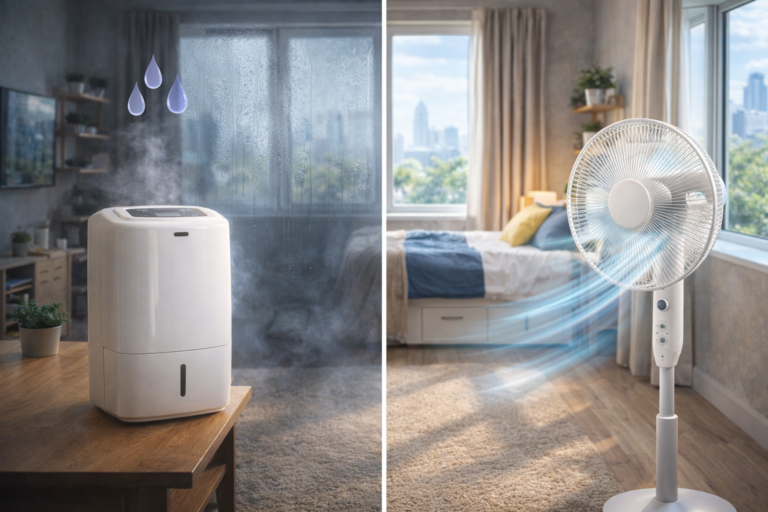
Some small devices are specifically designed to remove excess humidity from indoor spaces.
These can help reduce condensation when ventilation alone is not enough. Many people living in studio flats use them alongside good airflow and heating practices.
If damp is a recurring problem in your home, you may also find our guide on best small dehumidifiers for studio flats helpful.
Manage Airflow Throughout the Flat
Air circulation is important in compact living spaces. Without airflow, warm humid air becomes trapped inside the room.
Simple steps such as rearranging furniture, improving ventilation and using fans can help move air around the flat more effectively.
This prevents moisture from settling on windows and walls.
Conclusion
Learning how to stop condensation in a studio flat involves managing humidity, improving ventilation and maintaining steady indoor temperatures.
Because studio flats are small spaces, moisture builds up quickly. By improving airflow, reducing humidity sources and ventilating regularly, it is possible to keep condensation under control and prevent damp problems.
Small adjustments to ventilation and everyday habits can make a big difference in maintaining a healthy living environment.