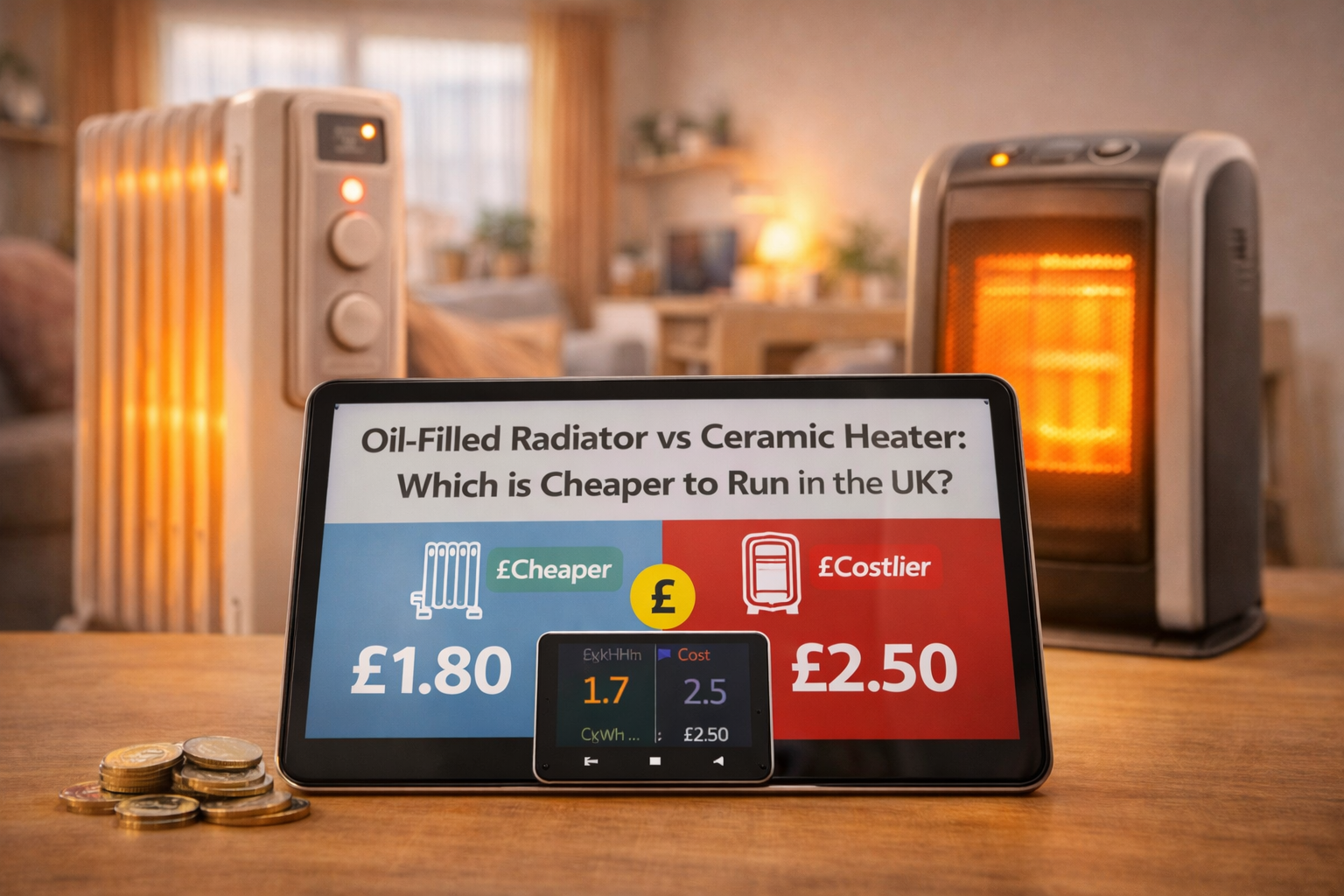
Oil-Filled Radiator vs Ceramic Heater: Which Is Cheaper to Run in the UK?
Oil Filled Radiator vs Ceramic Heater UK: Which Is Cheaper in 2026?
If you’re heating a studio flat, one of the most common questions is simple: oil filled radiator vs ceramic heater UK — which is actually cheaper to run?
Both are popular electric heating options across the UK. Both plug into a standard socket. But they behave differently, especially in small spaces.
Let’s break it down properly.
Oil Filled Radiator vs Ceramic Heater UK: How They Work
Before comparing cost, it’s important to understand the difference.
Oil filled radiators use internal oil that heats up and retains warmth. Once heated, they continue radiating heat even after the heating element switches off.
Ceramic heaters use ceramic heating elements and usually a fan to push warm air into the room quickly. They heat fast but cool down quickly once turned off.
In small studio flats, speed and control matter. Many small-flat renters combine heater use with electric blankets to cut overnight costs — see our guide to the best electric blankets for studio flats UK.
Are They Different in Electricity Cost?
Here’s the key point:
All electric heaters convert electricity into heat at nearly 100% efficiency.
If both heaters are rated at 2,000W:
- They both use 2kW per hour.
- If electricity costs around 30p per kWh,
- That’s roughly 60p per hour for either heater.
So at pure wattage level, oil filled radiator vs ceramic heater UK running cost is similar per hour. If energy efficiency is your priority, check our ceramic heater electricity guide for how these units draw power.
The difference comes from how long they run.
Which Heats a Studio Flat Faster?
Ceramic heaters usually win here.
They:
- Heat up instantly
- Blow warm air immediately
- Raise room temperature quickly
Oil filled radiators:
- Take longer to heat initially
- Warm the oil first
- Then radiate steady heat
In a small studio flat (20–35m²), rapid heating can mean shorter runtime.
Shorter runtime = lower total daily cost.
Which Is Better for Maintaining Heat?
Oil filled radiators are often better for steady, long heating sessions.
They:
- Provide consistent background warmth
- Retain heat after switching off
- Don’t rely on a fan
If you’re working from home all day, oil filled can feel more stable.
But if you’re only heating for a few hours in the evening, ceramic heaters may be more cost-efficient overall.
Oil Filled Radiator vs Ceramic Heater UK: Real Cost Scenario
Let’s compare realistically.
Assume:
- 2,000W heater
- 30p per kWh electricity
Running 3 hours:
£0.60 × 3 = £1.80 per day
If ceramic heats room in 2 hours instead of 3:
£0.60 × 2 = £1.20 per day
Over 30 days:
Difference = £18 per month
That’s where real savings appear — runtime, not wattage.
For a full breakdown of heater running costs, see our guide on heater running cost UK.
Noise & Space Considerations
Ceramic heaters:
- Often include a fan
- Slight operating noise
- Smaller footprint
- Lightweight
Oil filled radiators:
- Silent operation
- Heavier
- Bulkier
- Better for long-term steady warmth
In compact flats, space can be a deciding factor.
So Which Is Cheaper in the UK?
In most studio flats:
- If you heat for short bursts → Ceramic heater is usually cheaper overall.
- If you heat for long steady periods → Costs are similar.
Neither is magically cheaper per unit of electricity.
The real factor is usage pattern.
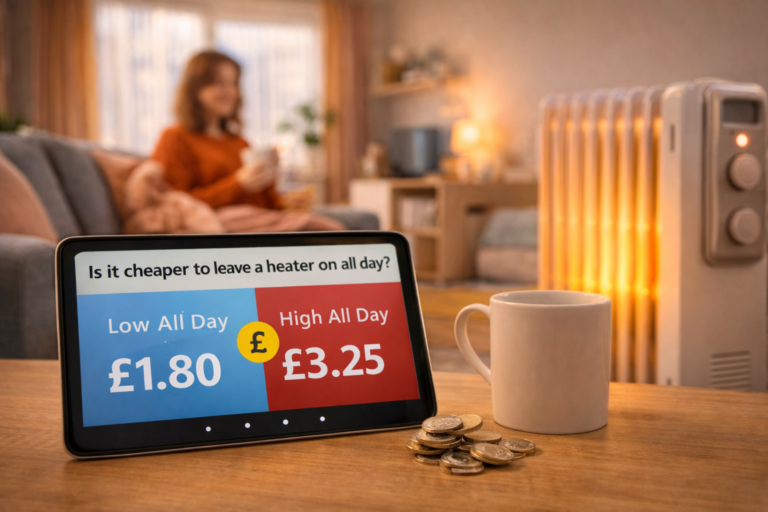
If you’re trying to minimise bills, read our guide on whether it’s cheaper to leave a heater on low all day.
According to UK energy guidance from Ofgem, reducing active heating time is the most effective way to cut electricity bills.
Final Verdict: Oil Filled Radiator vs Ceramic Heater UK
When comparing oil filled radiator vs ceramic heater UK costs, both use similar electricity per hour at the same wattage.
The ceramic heater often wins for short heating sessions in small flats due to faster warm-up time.
Oil filled radiators can feel more comfortable for long steady use.
Your usage pattern matters more than the heater type.