
Why Is My Fridge So Noisy In A Flat?
The Most Common Causes Of Fridge Noise And How To Fix Them
If you’ve ever been relaxing in your living room only to hear a loud humming, clicking or buzzing coming from the kitchen, you’re probably wondering why is my fridge so noisy in a flat.
Unlike larger houses, flats often have open-plan layouts or smaller rooms where everyday appliance sounds become much more noticeable. A fridge that seems perfectly normal in a detached house can suddenly feel surprisingly loud in a compact apartment.
The good news is that most fridge noises are completely normal and don’t mean your appliance is about to fail. However, some sounds can indicate poor positioning, worn components or maintenance issues that are worth addressing.
In this guide, we’ll explain why is my fridge so noisy in a flat, the different noises you might hear, what causes them and the simple steps you can take to reduce unwanted fridge noise.
🔊 Why Is My Fridge So Noisy In A Flat?
In many cases, there’s nothing actually wrong with your fridge.
Modern refrigerators naturally make a variety of sounds as they cool your food and regulate their internal temperature.
The reason many people ask why is my fridge so noisy in a flat is because flats amplify everyday appliance sounds.
Smaller rooms, hard flooring and open-plan living spaces allow noise to travel much further than in larger homes.
Common normal fridge sounds include:
- gentle humming
- soft buzzing
- clicking
- water trickling
- occasional popping
- compressor cycling on and off
These noises are usually a sign that the appliance is working exactly as intended.
The important part is learning the difference between normal operating sounds and noises that may indicate a problem, so, If you’re still asking why is my fridge so noisy in a flat, remember that most refrigerator noises are completely normal and simply become more noticeable in smaller homes with open-plan layouts.
If you’re specifically looking for quieter refrigeration options, our guide to best quiet fridge freezers for flats uk compares low-noise models designed for apartments and open-plan homes.
🏢 Why Flats Make Fridges Sound Louder
One of the biggest reasons people notice fridge noise more in flats is the layout of the home itself.
Many modern apartments combine the kitchen, dining and living room into one open space.
Instead of several walls absorbing sound, the noise travels freely throughout the property. Understanding why is my fridge so noisy in a flat can help you identify whether the sound is simply part of normal operation or something that requires attention.
One reason people ask why is my fridge so noisy in a flat is because compact homes naturally amplify everyday appliance sounds, and hard surfaces also contribute.
Sound reflects from:
- laminate flooring
- tiled kitchens
- painted walls
- kitchen cabinets
- worktops
- glass doors
This reflection can make even a relatively quiet fridge seem much louder than it actually is.
If you’re wondering why is my fridge so noisy in a flat, the answer may simply be that your living environment makes ordinary appliance sounds much easier to hear.
If you’re considering replacing your appliance altogether, our guide to best fridge freezers for small kitchens uk compares compact models that are well suited to smaller homes.
⚙️ The Compressor Is Usually The Loudest Part
The compressor is the heart of every refrigerator.
Its job is to circulate refrigerant around the cooling system.
Whenever the internal temperature rises, the compressor starts automatically before switching off again once the desired temperature has been reached.
This cycling is completely normal.
Depending on the model, the compressor may produce:
- a low humming sound
- gentle vibration
- occasional clicking
- brief buzzing
Modern inverter compressors are generally quieter than older fixed-speed compressors because they adjust their speed gradually instead of repeatedly switching fully on and off.
When researching why is my fridge so noisy in a flat, it’s worth remembering that warmer rooms can make compressors run more frequently.
If the humming remains fairly consistent and the fridge continues cooling normally, the compressor is probably doing exactly what it’s supposed to do.
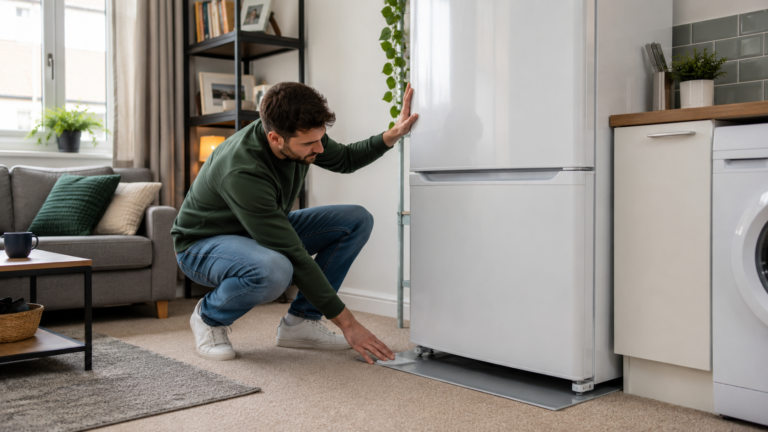
📍 Is Your Fridge Sitting Level?
One of the simplest causes of unnecessary fridge noise is poor positioning.
If the appliance isn’t completely level, small vibrations can transfer into the floor, cabinets and surrounding furniture.
This often creates rattling or vibrating sounds that seem much louder than the fridge itself.
Check whether:
- all four feet touch the floor
- the appliance rocks when pushed gently
- the floor underneath is even
- nearby cabinets are touching the sides
- pipes aren’t vibrating against the wall
If why is my fridge so noisy in a flat is becoming a regular concern, ensuring the appliance is perfectly level should always be one of your first checks.
🚪 Could Something Be Vibrating Against The Fridge?
Sometimes the noise isn’t coming from inside the appliance at all.
If you’ve been wondering why is my fridge so noisy in a flat, checking for nearby objects that vibrate against the appliance is one of the quickest fixes.
Common culprits include:
- glass bottles
- cereal boxes
- storage baskets
- magnets
- kitchen utensils
- neighbouring cupboards
Try removing nearby items one by one while listening carefully.
You may discover the fridge itself is relatively quiet and another object is creating most of the unwanted noise.
❄️ Frost Build-Up Can Increase Noise
Ice build-up is another reason some fridges become noisier over time.
Although many modern refrigerators are frost-free, compact or older models can sometimes develop ice around internal components.
When this happens, the fan or moving parts may begin rubbing against the ice, creating unusual noises.
You might notice:
- scraping sounds
- ticking noises
- louder fan operation
- intermittent buzzing
If your appliance isn’t frost-free, following the manufacturer’s defrosting recommendations can often solve the problem.
If you’re asking why is my fridge so noisy in a flat, checking for frost is one of the simplest maintenance tasks you can carry out.
🌡️ Warm Rooms Make Fridges Work Harder
Your fridge doesn’t make the same amount of noise all year round.
During warmer weather, the compressor naturally runs for longer because it has to remove more heat from inside the cabinet.
This is particularly noticeable if your fridge is positioned:
- beside an oven
- next to a radiator
- in direct sunlight
- against a south-facing window
The harder the compressor works, the more often you’ll hear its normal operating sounds.
Moving the appliance to a cooler location—or simply reducing the amount of heat surrounding it—can noticeably reduce how often it runs.
If your bedroom regularly becomes warm, our guide to can you keep a mini fridge in a bedroom explains the best locations, ventilation requirements and how room temperature affects performance.
🌬️ Poor Ventilation Can Make A Fridge Louder
Many homeowners searching why is my fridge so noisy in a flat discover that improving ventilation and levelling the appliance solves the problem immediately.
Every fridge releases heat from the rear and sides while operating. If there isn’t enough airflow around the appliance, that heat becomes trapped.
The result is a compressor that has to work harder and for longer, creating more noticeable noise.
Always leave the clearance recommended by the manufacturer around:
- the rear
- the sides
- the top (where applicable)
Never push a freestanding fridge tightly against the wall or inside a cupboard unless it’s specifically designed for built-in installation.
Poor ventilation doesn’t just increase noise—it can also reduce efficiency and shorten the appliance’s lifespan.
Another factor affecting why is my fridge so noisy in a flat is poor airflow around the rear of the appliance, which can increase compressor activity.
If you’re wondering how appliance placement affects efficiency, our guide to how much electricity does a mini fridge use explains how ventilation and positioning influence running costs.
🧹 A Dirty Condenser Can Affect Performance
Some refrigerators have accessible condenser coils that gradually collect dust.
As dust builds up, the appliance becomes less efficient at releasing heat.
That means the compressor may run for longer periods, making the fridge seem noisier.
If your model has exposed coils that the manufacturer recommends cleaning, gently removing dust with a soft brush or vacuum attachment can improve efficiency.
Always check your owner’s manual first, as many modern fridges have enclosed condensers that don’t require routine cleaning.
⚠️ When Is Fridge Noise A Sign Of A Problem?
Learning why is my fridge so noisy in a flat allows you to distinguish between harmless operating noises and sounds that may indicate a developing fault. This is why most fridge sounds are completely normal, however, some noises deserve closer attention.
You should investigate if you hear:
- loud grinding
- metal scraping
- continuous knocking
- high-pitched squealing
- repeated loud banging
- sudden increases in noise combined with poor cooling
These sounds may indicate worn components such as fans, compressors or motors.
If your fridge also stops cooling properly, leaks water or struggles to maintain temperature, it’s worth arranging a professional inspection.
If you’re wondering why is my fridge so noisy in a flat because the sound has suddenly changed, don’t ignore it.
A noticeable increase in noise often provides an early warning that something isn’t operating as it should.
If you’re thinking about replacing an older compact appliance, our guide to are mini fridges worth it explores whether buying a new model is a worthwhile investment.
🔇 How To Make Your Fridge Quieter
The good news is that many noisy fridges can be made noticeably quieter with a few simple adjustments.
Try the following:
- ensure the appliance is level
- leave adequate ventilation around the fridge
- move it away from heat sources
- remove objects touching the sides
- avoid overloading the shelves
- check the door seals are clean
- keep the condenser clean if recommended by the manufacturer
None of these tasks take very long, but together they can significantly reduce vibration and unnecessary compressor activity.
For most households asking why is my fridge so noisy in a flat, the solution is often simple maintenance rather than replacing the appliance.
If you’re comparing refrigeration options before buying, our mini fridge vs full size fridge guide explains the differences in noise, storage capacity and everyday practicality.
🏆 Final Verdict
So, why is my fridge so noisy in a flat?
In most cases, it’s because ordinary operating sounds become much more noticeable in smaller homes.
Open-plan layouts, hard flooring and compact rooms allow humming, clicking and compressor noises to travel much further than they would in a larger house.
Fortunately, most fridge noises are completely normal.
If your appliance is level, well ventilated and cooling properly, there’s usually nothing to worry about. However, sudden grinding, scraping or loud knocking noises should always be investigated, particularly if cooling performance has also changed.
Understanding what’s normal—and what isn’t—can help you enjoy a quieter home while ensuring your fridge continues operating efficiently for years to come.
Ultimately, why is my fridge so noisy in a flat usually comes down to normal operating sounds, room acoustics and correct appliance installation rather than a serious fault.
If you’re working with a smaller kitchen, our guide to best under counter fridges for small kitchens uk compares compact refrigeration options that make the most of limited space.
❓ Frequently Asked Questions
Why is my fridge so noisy in a flat all of a sudden?
A sudden increase in noise may be caused by poor ventilation, warm room temperatures, frost build-up or worn components. If cooling performance has also changed, the appliance should be checked.
Is it normal for a fridge to hum?
Yes. Gentle humming is one of the most common refrigerator sounds and usually comes from the compressor while it’s cooling.
Why does my fridge click?
Most fridges click when the compressor starts or stops. Occasional clicking is perfectly normal.
Can I reduce fridge noise in a flat?
Yes. Levelling the appliance, improving ventilation, removing vibrating objects and keeping it away from heat sources can all help reduce noise.
Why is my fridge so noisy in a flat during summer?
Higher room temperatures make the compressor run more frequently, so fridge noise often becomes more noticeable during warmer weather.
Should I replace a noisy fridge?
Not necessarily. If the appliance is cooling correctly and only produces normal humming or clicking sounds, replacement usually isn’t needed. However, persistent grinding, scraping or loud banging noises should be professionally assessed.
For official consumer advice on electrical product safety in the home, visit Electrical Safety First.