
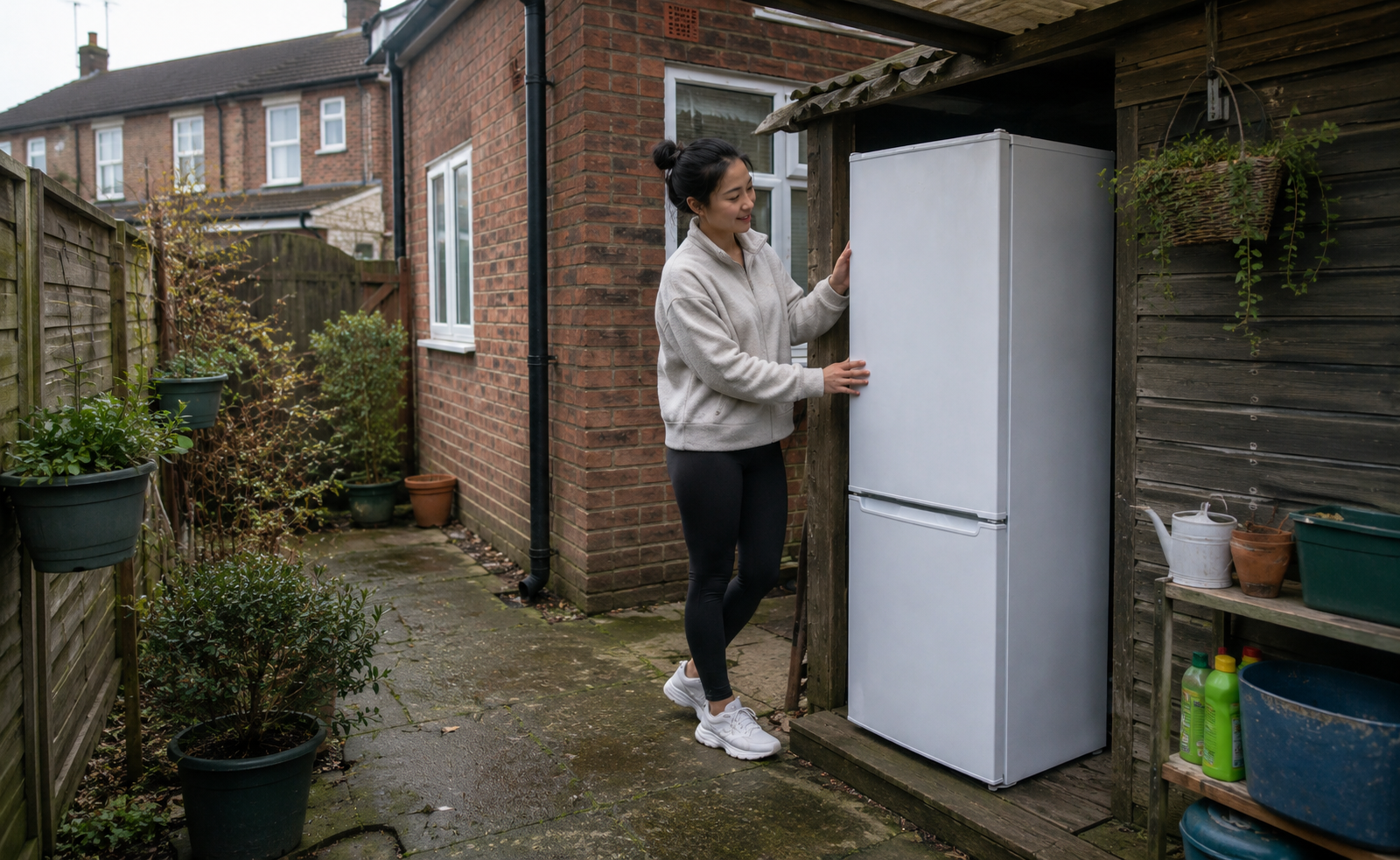
Can You Keep A Fridge Freezer Outside
Can You Keep A Fridge Freezer Outside Safely in the UK?
If you are short on kitchen space, you may be wondering Can You Keep A Fridge Freezer Outside and still expect it to work properly throughout the year.
The answer is not a simple yes or no. A fridge freezer can sometimes be kept in a sheltered outdoor area, but most standard appliances are designed for indoor use. Rain, moisture, freezing temperatures, summer heat and unsuitable electrical connections can all affect performance and safety.
In this guide, we will answer Can You Keep A Fridge Freezer Outside, explain the main risks and help you decide whether a shed, covered patio, lean-to or other outdoor space is genuinely suitable.
⚡ Quick Answer
Can You Keep A Fridge Freezer Outside? Only if the appliance is specifically approved for the temperatures and conditions it will face. A dry, enclosed and insulated outbuilding may be suitable, but placing a standard fridge freezer directly outside leaves it exposed to moisture, temperature extremes and possible electrical hazards.
🌦️ Can You Keep A Fridge Freezer Outside All Year?
The biggest issue with Can You Keep A Fridge Freezer Outside is that British weather is unpredictable.
A sheltered area may feel suitable in spring, but conditions can change dramatically during winter and summer. An appliance placed outdoors could face:
- ❄️ Temperatures close to or below freezing
- ☀️ High temperatures during warm spells
- 🌧️ Wind-driven rain
- 💧 Condensation and damp
- 🍂 Leaves, dirt and insects
- 🌬️ Rapid changes in temperature
Most domestic fridge freezers are designed to operate inside a home, where the surrounding temperature remains relatively stable.
If an appliance is left outdoors throughout the year, it may spend long periods operating outside its recommended climate range. That can affect cooling performance, increase energy use and potentially shorten its working life.
For most standard appliances, keeping them fully exposed outdoors is not recommended.
🏠 What Counts as “Outside”?
When people ask Can You Keep A Fridge Freezer Outside, they may be describing very different locations.
For example, “outside” could mean:
- A completely open patio
- A covered lean-to
- A timber shed
- A brick outbuilding
- A garage
- A summer house
- A sheltered utility area beside the home
These spaces do not offer the same level of protection.
A fridge freezer placed directly on an uncovered patio is exposed to rain and changing weather. A dry brick outbuilding with a proper electrical supply and some insulation is much closer to an indoor environment.
The more enclosed, dry and temperature-controlled the space is, the more suitable it is likely to be.
💡 Good to know: A roof alone does not make an outdoor space safe. Wind can still carry rain and moisture onto the appliance, while cold air can affect performance throughout winter.
If indoor space is limited, our comparison Fridge Freezer vs Separate Fridge And Freezer can help you decide whether splitting your storage between two locations would work better.
🌡️ Why Temperature Matters
Temperature is one of the most important factors in Can You Keep A Fridge Freezer Outside.
Every fridge freezer has an operating temperature range. This is usually linked to its climate class and tells you the surrounding temperatures the appliance is designed to handle.
If the outdoor temperature drops too low, the thermostat may detect that the fridge compartment is already cold enough. The compressor may then run less often, which can cause the freezer section to warm unexpectedly.
If the surrounding temperature becomes too high, the compressor may need to run for much longer to keep the interior cold.
This can lead to:
- ❌ Higher electricity consumption
- ❌ More compressor noise
- ❌ Reduced cooling efficiency
- ❌ Extra wear on components
- ❌ Food not remaining at the correct temperature
Before placing an appliance outdoors, always check the climate class and the manufacturer’s stated minimum and maximum operating temperatures.
If you are comparing sheltered outdoor spaces, our guide Can You Put A Fridge Freezer In A Garage explains how colder environments can affect appliance performance.
❄️ What Happens During a Cold UK Winter?
Winter is often the biggest challenge when considering Can You Keep A Fridge Freezer Outside.
In an unheated shed or exposed lean-to, temperatures can fall very close to the outdoor temperature. During a cold spell, that may be below the appliance’s recommended operating range.
A fridge freezer may still appear to be working, but the freezer compartment could gradually become warmer.
Warning signs include:
- Ice cream becoming soft
- Frozen food feeling less solid
- The compressor rarely switching on
- Water or frost appearing in unusual places
- Food beginning to thaw around the edges
This can be particularly confusing because the fridge compartment may still feel cold.
If your appliance is not specifically designed for colder environments, an unheated outdoor location may be unsuitable during winter.
☀️ What Happens During Hot Weather?
Summer creates the opposite problem.
A small shed, enclosed porch or covered timber structure can become surprisingly hot when exposed to direct sunlight. Even when the outdoor temperature feels reasonable, heat can build up around the appliance.
When comparing Can You Keep A Fridge Freezer Outside with keeping it indoors, outdoor summer conditions may cause the compressor to run for longer periods.
This may result in:
- Increased electricity bills
- More heat around the rear of the appliance
- Louder operation
- Slower cooling after the door is opened
- Greater strain on the compressor
Avoid placing the fridge freezer where direct sunlight reaches the doors or side panels for long periods.
A shaded location with good ventilation is always preferable.
🌧️ Can Rain or Damp Damage a Fridge Freezer?
Yes.
Moisture is one of the clearest reasons why Can You Keep A Fridge Freezer Outside should be considered carefully.
Domestic fridge freezers are not generally weatherproof. Rainwater, condensation or persistent damp may affect:
- Electrical connections
- Metal panels
- Door hinges
- Controls
- Internal wiring
- Compressor components
Over time, moisture can contribute to corrosion and electrical faults.
Even if the appliance sits beneath a canopy, wind-driven rain may still reach it. Water can also collect underneath if the floor does not drain properly.
The appliance should never stand directly on wet soil, grass or an uneven surface.
✅ A suitable location should be:
- Completely dry
- Protected from rain
- Raised above standing water
- Well ventilated
- Close to a safe electrical supply
- Stable and level
If you cannot guarantee those conditions, the appliance should remain indoors.
🔌 Outdoor Electrical Safety
Electrical safety is essential when deciding Can You Keep A Fridge Freezer Outside.
A fridge freezer should not simply be connected to an indoor extension lead running through a window or door.
Outdoor installations may require:
- A suitable weather-resistant socket
- RCD protection
- Correct earthing
- Professional electrical installation
- Protection from water and accidental damage
Avoid daisy-chaining extension leads or using a cable that can be trapped beneath doors, exposed to rain or damaged by garden equipment.
The plug, socket and cable should remain dry and easily accessible.
⚠️ Important: If there is any doubt about the electrical supply, ask a qualified electrician to assess the location before connecting the appliance.
🛖 Is a Shed Suitable?
A common version of Can You Keep A Fridge Freezer Outside is whether it can go inside a garden shed.
A shed may offer protection from direct rain, but many sheds still experience:
- Extreme temperature changes
- Damp
- Condensation
- Poor ventilation
- Dust
- Pest activity
A modern, insulated shed with a proper electrical supply is more suitable than a thin timber structure with gaps around the doors and roof.
Before using a shed, check:
- Does the roof leak?
- Does condensation form inside?
- Is the floor dry and level?
- Is there enough space around the appliance?
- Does the temperature remain within the approved range?
- Is the socket suitable and professionally installed?
If the answer to any of these is no, the shed may not be a safe long-term location.
🚪 What About a Covered Patio or Lean-To?
A covered patio may protect the top of the appliance, but it usually leaves the sides open.
That means the fridge freezer may still be exposed to:
- Wind-driven rain
- Cold air
- Direct sunlight
- Insects and dirt
- Sudden temperature changes
For that reason, Can You Keep A Fridge Freezer Outside under a simple canopy is usually answered with caution.
A fully enclosed utility space is much safer than an open-sided shelter.
Do not cover the appliance tightly with a waterproof sheet while it is operating. This can block ventilation and trap heat around the compressor.
📏 Leave Enough Ventilation
A fridge freezer releases heat through the rear or sides, depending on its design.
Wherever you install it, there must be enough clearance for heat to escape.
Poor ventilation can cause:
- The compressor to run longer
- Higher energy use
- Excessive heat
- Reduced appliance lifespan
- Louder operation
Follow the manufacturer’s recommended gaps around the sides, top and rear.
Do not push the appliance directly against timber walls, garden storage or stacked boxes.
Understanding Can You Keep A Fridge Freezer Outside is not only about keeping rain away. The appliance also needs enough airflow to operate safely and efficiently.
🧊 Should You Buy a Garage-Ready Model?
If you genuinely need additional refrigeration outside the main home, a garage-ready model may be the best option.
These appliances are designed to operate across a wider range of ambient temperatures than many standard fridge freezers.
They can be particularly useful in:
- Garages
- Insulated outbuildings
- Utility rooms
- Workshop spaces
- Enclosed garden rooms
However, “garage ready” does not automatically mean “weatherproof”.
The appliance may cope with lower temperatures, but it still needs protection from rain, damp and unsafe electrical connections.
When researching Can You Keep A Fridge Freezer Outside, always distinguish between an appliance approved for an unheated indoor space and one specifically designed for true outdoor use.
If you are considering a more compact appliance for an outbuilding, our guide to the Best Mini Fridges For Flats UK may help you find a smaller alternative.
🧼 How to Protect the Appliance From Dirt and Pests
Another practical part of Can You Keep A Fridge Freezer Outside is keeping the appliance clean and protected.
Outdoor and semi-outdoor spaces collect far more dust, leaves, cobwebs and insects than a normal kitchen. These can build up around ventilation areas and make it harder for the appliance to release heat.
To reduce problems:
- ✅ Keep the floor around the appliance clear.
- ✅ Clean dust from vents and condenser areas.
- ✅ Check for signs of insects or rodents.
- ✅ Avoid storing bags, boxes or garden equipment against the appliance.
- ✅ Inspect the power cable regularly.
Rodents can damage electrical cables, while insects may enter through gaps around the rear of the appliance.
A clean, uncluttered installation is safer, easier to inspect and more likely to operate efficiently.
💷 Will an Outdoor Fridge Freezer Cost More to Run?
For many households, Can You Keep A Fridge Freezer Outside is partly a question about running costs.
An appliance operating in a stable indoor kitchen usually has an easier job than one placed in a space that becomes very hot or cold.
In summer, the compressor may run for longer to maintain the correct temperature. In winter, cold conditions may interfere with the thermostat and cooling cycle.
Other factors that increase energy use include:
- Poor ventilation
- Direct sunlight
- Damaged door seals
- Dust around the condenser
- Frequently opening the door
- Positioning the appliance close to another heat source
If the outdoor location creates extreme conditions, any convenience may be offset by higher electricity use and reduced reliability.
💡 Top Tip: Check the appliance regularly with a fridge and freezer thermometer rather than assuming it is maintaining a safe temperature.
For a clearer idea of typical energy use, read How Much Electricity Does A Fridge Freezer Use before deciding whether outdoor storage is worthwhile.
⚠️ Signs the Outdoor Location Is Not Working
Even if the setup initially appears suitable, continue monitoring it throughout the year.
Warning signs include:
- ❌ Food not staying properly frozen.
- ❌ Ice cream becoming soft.
- ❌ The compressor running almost constantly.
- ❌ Excessive condensation.
- ❌ Rust appearing on panels or hinges.
- ❌ Unusual noises.
- ❌ Water collecting beneath the appliance.
- ❌ The plug or socket becoming damp.
If you notice any of these problems, switch off the appliance safely and move it to a more suitable location.
The answer to Can You Keep A Fridge Freezer Outside may change with the seasons, especially if the space is only suitable during mild weather.
If the appliance becomes noticeably louder outdoors, our guide Why Is My Fridge So Noisy In A Flat explains the most common causes of increased fridge freezer noise.
✅ A Quick Outdoor Installation Checklist
Before moving your appliance, work through this checklist.
The location should be:
- Completely sheltered from rain
- Dry throughout the year
- Level and stable
- Well ventilated
- Protected from direct sunlight
- Within the appliance’s operating temperature range
- Supplied by a suitable electrical socket
- Free from standing water
- Accessible for regular checks and cleaning
The appliance should be:
- Approved by the manufacturer for the space
- Positioned with the correct ventilation gaps
- Protected from pests and physical damage
- Monitored with an appliance thermometer
- Inspected regularly for condensation and corrosion
If you cannot tick every box, keeping the appliance indoors is the safer option.
This checklist makes Can You Keep A Fridge Freezer Outside much easier to answer for your specific home rather than relying on a general yes or no.
🏆 Final Verdict
So, Can You Keep A Fridge Freezer Outside?
In most cases, a standard domestic fridge freezer should not be left fully exposed outdoors. Rain, damp, freezing temperatures, summer heat and unsuitable electrical connections can all affect safety, performance and reliability.
A dry, enclosed and insulated outbuilding may be suitable if the appliance is approved for the expected temperature range and connected to a safe electrical supply.
For the best results:
- Keep the appliance completely protected from weather.
- Check the manufacturer’s operating guidance.
- Maintain proper ventilation.
- Monitor fridge and freezer temperatures.
- Use a suitable outdoor or outbuilding electrical connection.
If you are still unsure about Can You Keep A Fridge Freezer Outside, the safest choice is to keep it inside your home, garage or another properly enclosed space.
If you are replacing an older appliance, our guide to the Best Fridge Freezers For Small Kitchens UK highlights space-efficient models for compact UK homes.
Frequently Asked Questions
Can You Keep A Fridge Freezer Outside under a covered area?
Possibly, but a roof alone is not enough. The appliance must also be protected from wind-driven rain, damp, temperature extremes and unsafe electrical connections.
Can You Keep A Fridge Freezer Outside in a shed?
A dry, insulated shed with a suitable socket may work if the appliance is approved for the temperatures inside. Thin, damp or unheated sheds are often unsuitable.
Will cold weather stop a fridge freezer from working?
It can. In very cold conditions, the thermostat may not trigger the compressor often enough, which can cause the freezer compartment to warm.
Can rain damage a fridge freezer?
Yes. Most domestic fridge freezers are not weatherproof, and moisture can damage electrical parts, metal panels and internal components.
Is a garage-ready fridge freezer safe outdoors?
Not automatically. Garage-ready usually means the appliance can operate across a wider temperature range, not that it is waterproof or suitable for direct outdoor exposure.
Does an outdoor fridge freezer use more electricity?
It may do. Hot weather, poor ventilation, direct sunlight and damaged seals can all make the compressor work harder and increase running costs.
If you plan to switch the appliance off when it is not in use, read Can You Switch Off A Fridge Freezer Without Damaging It for the safest storage method.
Can You Keep A Fridge Freezer Outside during summer only?
It may be possible in a fully sheltered location, but you still need to consider high temperatures, direct sunlight, moisture and electrical safety. Always check the manufacturer’s guidance first.
Electrical Safety First provides practical UK guidance on outdoor sockets, extension leads and the safe use of electrical appliances around the home.