Why Is My Fridge Freezer Not Cold Enough?
Why Is My Fridge Freezer Not Cold Enough and What Should You Check First?
If you are asking Why Is My Fridge Freezer Not Cold Enough, the cause is often something simple such as blocked airflow, an incorrect temperature setting, a damaged door seal or poor ventilation around the appliance. In other cases, the problem may be linked to a faulty thermostat, fan or compressor.
A fridge that is too warm can shorten the life of fresh food, while a freezer that is not cold enough may allow food to soften or begin thawing. In this guide, we will explain Why Is My Fridge Freezer Not Cold Enough, the checks you can carry out safely at home and when it may be time to arrange a repair.
⚡ Quick Answer
Why Is My Fridge Freezer Not Cold Enough? Start by checking the temperature controls, door seals, airflow vents and the space around the appliance. The fridge should usually sit between 3°C and 5°C, while the freezer should be around -18°C. If temperatures remain too high after basic checks, there may be an internal fault.
🌡️ Check the Temperature Before Assuming There Is a Fault
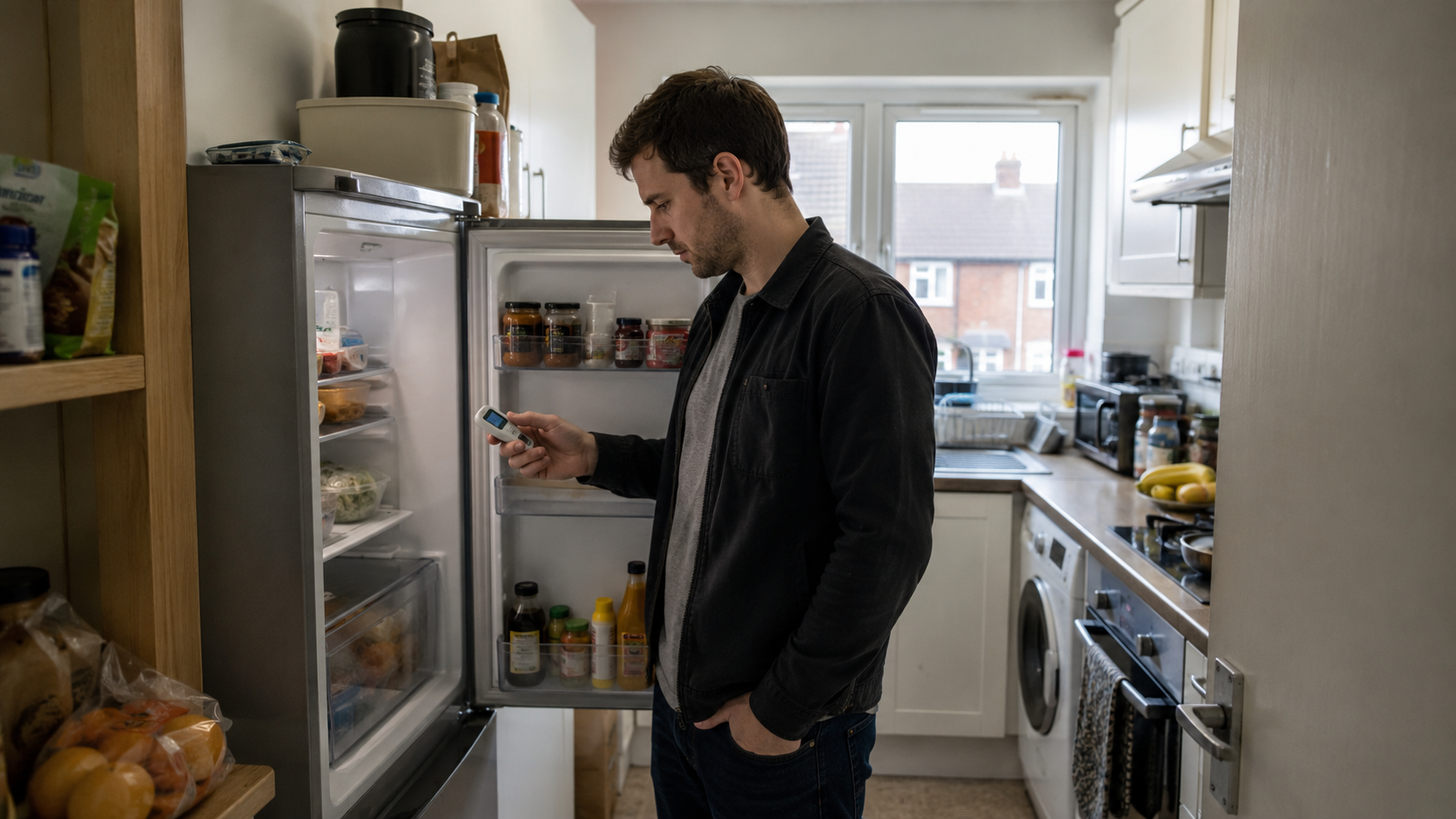
Before changing any settings, confirm the actual temperature with a separate appliance thermometer.
Many fridge freezers use a numbered dial rather than an exact digital temperature. This can make it difficult to know whether the appliance is genuinely too warm.
As a general guide:
- ✅ Fridge: 3°C to 5°C
- ✅ Freezer: -18°C
Place the thermometer on the middle shelf of the fridge and leave it for several hours, ideally overnight.
For the freezer, position it between frozen food packets rather than beside the door.
If you are wondering Why Is My Fridge Freezer Not Cold Enough, a proper reading helps separate a real cooling problem from food simply feeling less cold than expected.
💡 Good to know: A fridge door shelf will usually feel warmer than the middle or lower shelves, so do not use that area as your main temperature check.
If you are unsure whether the appliance is genuinely too warm, our guide What Temperature Should A Fridge Freezer Be UK explains the safest fridge and freezer settings.
🎛️ Check the Temperature Setting
The thermostat may have been changed accidentally during cleaning, restocking or moving the appliance.
A thermometer is the best starting point for Why Is My Fridge Freezer Not Cold Enough, because it confirms whether the problem affects one compartment or the entire appliance.
If you are still asking Why Is My Fridge Freezer Not Cold Enough after changing the controls, give the appliance enough time to stabilise before making another adjustment.
On many fridge freezers, a higher dial number means stronger cooling. However, this is not universal, so always check the manual before making adjustments.
Try changing the setting one level colder, then wait at least 6–12 hours before checking the temperature again.
Avoid turning it immediately to the coldest setting.
Doing so can:
- Make food freeze in the fridge
- Increase electricity use
- Cause the compressor to run for longer
- Make it harder to identify the original problem
When investigating Why Is My Fridge Freezer Not Cold Enough, small adjustments are more useful than repeatedly turning the dial up and down.
📦 Is the Fridge Freezer Too Full?
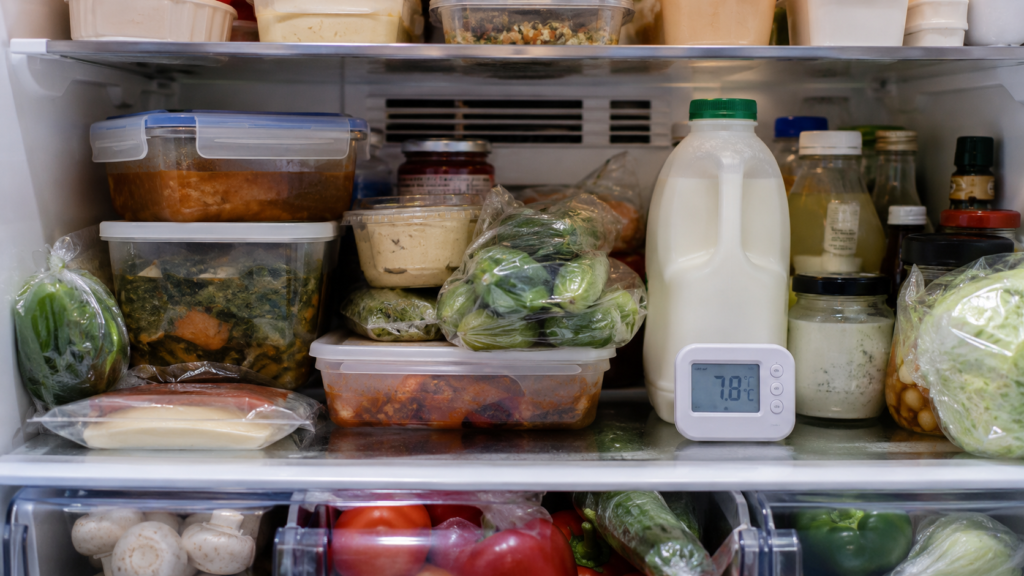
Overfilling is one of the most common causes of uneven cooling.
For many households, Why Is My Fridge Freezer Not Cold Enough is simply caused by food being packed too tightly around the shelves and vents.
Cold air needs room to circulate around food containers, shelves and internal vents. If every gap is packed tightly, some areas may stay cold while others become noticeably warmer.
Look inside and check whether:
- Food is pressed against the back wall
- Containers are blocking vents
- Shelves are packed without gaps
- Large items are stopping air movement
- Freezer drawers are overfilled
Try removing a few items and reorganising the shelves.
Leave small gaps between containers and keep vents clear.
If Why Is My Fridge Freezer Not Cold Enough only becomes a problem after a large food shop, overcrowding may be the main cause.
A completely empty fridge can also fluctuate more quickly, but this is less common than overfilling.
🚪 Check the Door Seals
A weak or damaged door seal allows cold air to escape and warm air to enter.
A weak seal is often overlooked when diagnosing Why Is My Fridge Freezer Not Cold Enough, even though a small gap can allow a surprising amount of cold air to escape.
This makes the appliance work harder while still struggling to maintain the correct temperature.
Inspect the rubber seal around both the fridge and freezer doors.
Look for:
- Cracks
- Splits
- Warping
- Food residue
- Grease
- Sections pulling away from the door
Clean the seal with warm water and a soft cloth.
You can also try the paper test:
- Place a sheet of paper between the door and the seal.
- Close the door.
- Gently pull the paper.
If it slides out very easily, the seal may not be gripping properly.
A damaged seal is a strong possibility when asking Why Is My Fridge Freezer Not Cold Enough, especially if condensation forms around the door edge or the compressor runs almost constantly.

🧼 Are the Internal Vents Blocked?
Many modern fridge freezers use fans and vents to distribute cold air.
In some cases, Why Is My Fridge Freezer Not Cold Enough can be resolved simply by moving large containers away from the internal air vents.
These vents are often positioned near the back wall or upper shelves.
Large containers, food bags or boxes placed directly in front of them can restrict airflow.
This may lead to:
- Warm areas inside the fridge
- Food freezing near one vent
- Uneven shelf temperatures
- Longer compressor running times
- Poor freezer performance
Move food away from the vents and leave enough room for air to circulate.
If the vents are covered with frost or ice, there may be a defrost problem rather than simple overcrowding.
When considering Why Is My Fridge Freezer Not Cold Enough, blocked airflow is one of the easiest issues to fix.
🔥 Is There Enough Ventilation Around the Appliance?
A fridge freezer removes heat from inside the cabinet and releases it into the room.
If the appliance is pushed tightly against a wall or squeezed between cupboards without enough clearance, that heat may not escape properly.
Poor ventilation can make the compressor work harder and reduce cooling efficiency.
If the appliance is installed in a colder or less conventional space, our guide Can You Put A Fridge Freezer In A Garage explains how the surrounding temperature can affect cooling performance.
Check the recommended clearance in the user manual.
Pay particular attention to:
- The gap behind the appliance
- Space above the fridge freezer
- Side ventilation
- Dust around rear components
- Nearby heat sources
Avoid placing the appliance close to:
- Ovens
- Radiators
- Tumble dryers
- Direct sunlight
- Boilers
This is especially important in small kitchens where appliances are often fitted closely together.
For anyone asking Why Is My Fridge Freezer Not Cold Enough, improving the airflow around the outside can be just as important as reorganising the inside.
🧹 Could Dust Be Affecting Cooling?
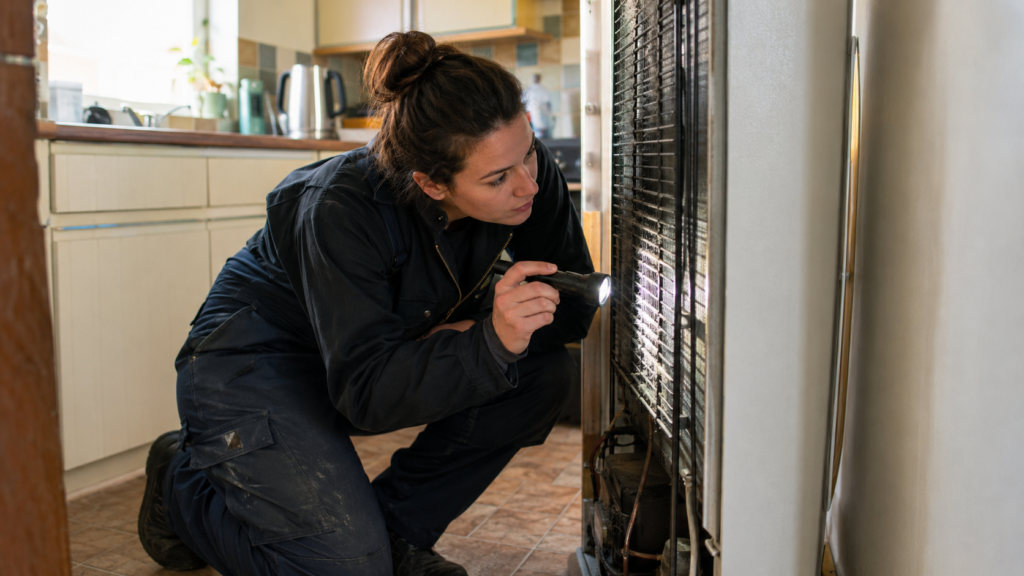
Dust can collect around condenser coils, vents and the compressor area.
Over time, this makes it harder for the appliance to release heat.
Some modern fridge freezers hide these components behind panels, while older models may have visible coils at the back.
Before cleaning:
- Switch the appliance off safely.
- Unplug it from the wall.
- Follow the manufacturer’s instructions.
- Avoid bending pipes or damaging components.
Use a soft brush or vacuum attachment to remove loose dust where it is safe to do so.
Do not dismantle covers unless the manual specifically allows it.
A dusty condenser does not always cause an immediate failure, but it can contribute to poor performance, increased noise and higher electricity use.
If you have already checked the controls and seals, dust may help explain Why Is My Fridge Freezer Not Cold Enough.
🍲 Have You Added Too Much Warm Food?
Adding a large amount of warm food can temporarily raise the temperature inside the appliance.
This often happens after:
- Batch cooking
- A large supermarket delivery
- Putting away warm leftovers
- Restocking after defrosting
- Leaving the doors open during cleaning
The fridge freezer may need several hours to recover.
During that time, the compressor may run continuously and the interior may feel warmer than usual.
To help it recover:
- Divide warm food into smaller containers.
- Avoid placing steaming dishes directly inside.
- Leave space around containers.
- Keep the doors closed.
- Use fast-cool or fast-freeze settings if available.
If the temperature returns to normal later, there may be nothing wrong with the appliance.
If you regularly store freshly cooked meals, read Can You Put Hot Food In A Fridge Freezer for the safest way to cool leftovers without raising the internal temperature too much.
☀️ Does Hot Weather Affect Fridge Freezer Performance?
Yes.
During warm weather, small kitchens can become hot very quickly, especially in flats with limited ventilation.
During a heatwave, Why Is My Fridge Freezer Not Cold Enough may become more noticeable if the kitchen is poorly ventilated or receives strong afternoon sunlight.
The fridge freezer then has to remove more heat from both the food and the surrounding air.
This can cause:
- Longer compressor cycles
- Louder operation
- Slower cooling
- Higher electricity use
- Warmer door shelves
Keep the appliance away from direct sunlight and leave the correct ventilation gaps.
Try not to open the doors more often than necessary.
If Why Is My Fridge Freezer Not Cold Enough becomes a seasonal issue every summer, room temperature may be placing extra strain on the appliance.
However, it should still maintain safe temperatures if it is working correctly and being used within its stated climate class.
❄️ Is Ice Build-Up Blocking the Cooling System?
Heavy frost can restrict airflow inside the freezer and around hidden cooling components.
When frost repeatedly returns, Why Is My Fridge Freezer Not Cold Enough may be linked to a defrost-system problem rather than the temperature dial.
This may cause one compartment to cool poorly even though the appliance still appears to be running.
Look for:
- Thick ice around freezer drawers
- Frost covering vents
- Drawers becoming difficult to open
- Ice forming repeatedly after removal
- Water appearing inside the fridge
If the appliance is not frost-free, it may simply need defrosting.
If it is a frost-free model and heavy ice keeps returning, there may be a problem with the defrost heater, sensor or drainage system.
Do not remove ice with knives or sharp tools, as this can puncture internal panels or refrigerant pipes.
🔊 Is the Compressor Running Normally?
Listen to the appliance.
A healthy fridge freezer normally cycles on and off throughout the day.
You may hear:
- A low humming sound
- Gentle fan noise
- Occasional clicks
- Gurgling from refrigerant movement
Potential warning signs include:
- The appliance running constantly
- Repeated clicking without cooling
- Complete silence for long periods
- Loud buzzing
- New rattling or grinding sounds
Constant running may mean the appliance is struggling to reach temperature.
Complete silence could indicate a thermostat, electrical or compressor problem.
If Why Is My Fridge Freezer Not Cold Enough is accompanied by unusual noises, note what you hear before contacting a repair engineer. That detail may help identify the cause.
If the appliance has also become noticeably louder, our guide Why Is My Fridge So Noisy In A Flat explains the most common causes of unusual fridge freezer sounds.
🧊 Is the Freezer Cold but the Fridge Warm?
This is a common version of Why Is My Fridge Freezer Not Cold Enough.
If the freezer is working but the fridge section is warm, the problem may be linked to airflow between the two compartments.
Possible causes include:
- A blocked internal vent
- A failed circulation fan
- Ice build-up behind an internal panel
- Food blocking the air channel
- A faulty temperature sensor
In many fridge freezers, cold air is produced around the freezer compartment and circulated into the fridge.
If that airflow is restricted, the freezer may appear normal while the fridge becomes too warm.
Check that no food is blocking visible vents. If there is heavy frost behind the freezer drawers or around an internal panel, the appliance may need defrosting or professional attention.
🥶 Is the Fridge Cold but the Freezer Too Warm?
The opposite can also happen.
If frozen food is beginning to soften, Why Is My Fridge Freezer Not Cold Enough should be investigated promptly rather than solved by repeatedly changing the thermostat.
If the fridge compartment feels cold but frozen food is softening, the freezer may not be reaching -18°C.
This can be caused by:
- The freezer door not sealing correctly
- Overfilled drawers
- Warm food being added
- Frost restricting airflow
- A faulty fan or sensor
- The appliance operating in a room that is too cold
That final point may sound surprising.
Some fridge freezers can struggle in very cold garages or outbuildings because the thermostat detects that the fridge section is already cold enough. The compressor then runs less often, even though the freezer still needs cooling.
When investigating Why Is My Fridge Freezer Not Cold Enough, always consider the temperature of the room as well as the appliance setting.
🔌 Has the Appliance Recently Been Moved or Switched Off?
A fridge freezer may take time to return to normal after being:
- Transported
- Unplugged
- Defrosted
- Cleaned
- Switched off for storage
- Moved into a new position
After switching it back on, allow enough time for both compartments to cool fully before judging its performance.
The fridge may cool within a few hours, but the freezer can take longer to reach -18°C.
Avoid filling the appliance immediately with warm or unfrozen food.
If the fridge freezer was transported on its side, it should also have been left upright for the manufacturer’s recommended settling period before being plugged in.
If Why Is My Fridge Freezer Not Cold Enough only became a concern immediately after a move, the appliance may simply need more time to stabilise.
If it has recently been transported, read How Long Should You Leave A Fridge Freezer Before Plugging It In before judging whether it is cooling correctly.
🛠️ When Is It Time to Call an Engineer?
If the basic checks have not solved the problem, there may be an internal fault.
If basic checks do not explain Why Is My Fridge Freezer Not Cold Enough, recording the temperature and any unusual noises can help an engineer diagnose the fault.
Possible issues include:
- A faulty thermostat
- A failed evaporator fan
- A damaged temperature sensor
- A defrost-system fault
- Low refrigerant
- A compressor problem
- A control-board fault
These are not usually suitable for DIY repair.
Arrange professional help if:
- The fridge remains above 5°C
- The freezer cannot maintain -18°C
- Frozen food is thawing
- The appliance repeatedly alarms
- The compressor runs constantly
- The appliance is clicking but not cooling
- Heavy frost returns after defrosting
Before booking a repair, note the model number, temperature readings and any unusual sounds.
Understanding Why Is My Fridge Freezer Not Cold Enough will help you give the engineer useful information and may make diagnosis quicker.
💷 Is It Worth Repairing?
The answer depends on the age, value and condition of the appliance.
A relatively new fridge freezer may be worth repairing if the fault involves:
- A thermostat
- A fan
- A sensor
- A door seal
- A blocked drain
An older appliance may be less economical to repair if the compressor or sealed cooling system has failed.
Consider:
- The repair quote
- The appliance’s age
- Its energy efficiency
- Whether other faults have appeared
- The cost of replacement
If the fridge freezer is more than 10 years old and the repair is expensive, replacing it may offer better long-term value.
However, do not assume replacement is always necessary. A simple seal, fan or thermostat repair can often restore normal cooling.
If replacement looks more sensible than repair, our guide to the Best Fridge Freezers For Small Kitchens UK covers practical options for compact homes.
✅ Quick Troubleshooting Checklist
Working through each check methodically is the safest way to answer Why Is My Fridge Freezer Not Cold Enough without overlooking a straightforward cause.
Work through these checks in order:
✅ Confirm the temperature with a thermometer.
✅ Check the thermostat setting.
✅ Make sure the doors close fully.
✅ Clean and inspect the seals.
✅ Remove food blocking internal vents.
✅ Avoid overfilling shelves and drawers.
✅ Leave enough space around the appliance.
✅ Keep it away from heat sources.
✅ Clean accessible dust from ventilation areas.
✅ Allow time to recover after adding warm food.
✅ Check for unusual frost or ice.
✅ Listen for the compressor and internal fan.
Following this checklist can resolve many cases of Why Is My Fridge Freezer Not Cold Enough without needing an immediate repair.
🏆 Final Verdict
So, Why Is My Fridge Freezer Not Cold Enough?
Start with the simplest explanations: an incorrect setting, blocked airflow, overcrowding, weak door seals or poor ventilation around the appliance.
Understanding Why Is My Fridge Freezer Not Cold Enough early can help protect your food, reduce wasted energy and prevent a minor issue from becoming a more expensive repair.
Check the fridge with a thermometer and aim for 3°C to 5°C, with the freezer at -18°C.
If the temperature does not improve after reorganising food, cleaning seals and allowing the appliance time to stabilise, there may be a fault with the fan, thermostat, sensor or compressor.
For small kitchens and flats, pay particular attention to ventilation. Fridge freezers are often squeezed between cupboards or placed close to ovens, which can make cooling more difficult.
If you are still asking Why Is My Fridge Freezer Not Cold Enough after completing the basic checks, arrange professional advice before food begins to spoil or thaw.
If you are reconsidering your overall storage setup, our comparison Fridge Freezer vs Separate Fridge And Freezer can help you decide which arrangement suits your home best.
Frequently Asked Questions
Why Is My Fridge Freezer Not Cold Enough even on the highest setting?
The problem may not be the setting. Blocked vents, poor ventilation, damaged seals, heavy frost or an internal fault can all prevent the appliance from cooling properly.
How long should I wait after changing the temperature?
Wait at least 6–12 hours before checking again. Larger adjustments or a recently restarted appliance may need longer to stabilise.
Why is the freezer working but the fridge is warm?
Cold air may not be circulating properly between the compartments. Check for blocked vents, frost build-up or a failed internal fan.
Can overfilling stop a fridge freezer from cooling?
Yes. Tightly packed food can block airflow and create warmer areas inside both the fridge and freezer.
Should the compressor run all the time?
No. It should normally cycle on and off. Constant running can indicate warm room conditions, damaged seals, poor ventilation or a cooling fault.
Is food safe if the fridge is above 5°C?
Food becomes more vulnerable to bacterial growth as temperatures rise. If the fridge remains above 5°C, move high-risk foods somewhere colder and investigate the problem promptly.
Why Is My Fridge Freezer Not Cold Enough after moving house?
It may need more time to settle and reach temperature. Check that it was left upright for the recommended period before being switched on and allow several hours for cooling.
Can hot weather make my fridge freezer too warm?
Yes. Hot kitchens can make the compressor work harder, especially if ventilation is poor or the appliance is exposed to direct sunlight.
The Food Standards Agency provides official guidance on safe chilled-food temperatures and how to store food correctly at home.