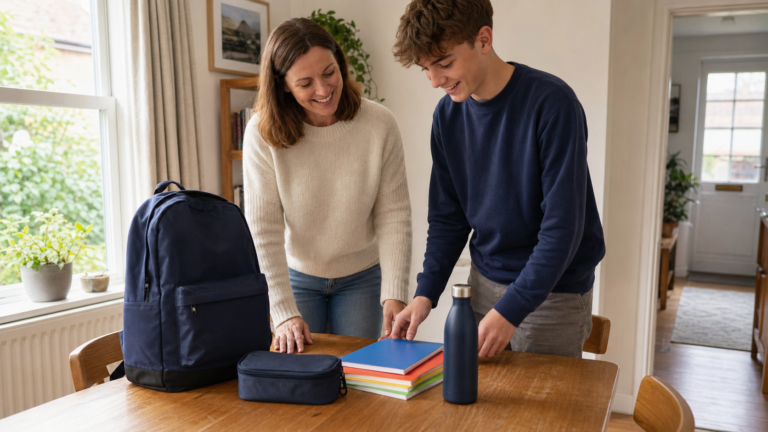
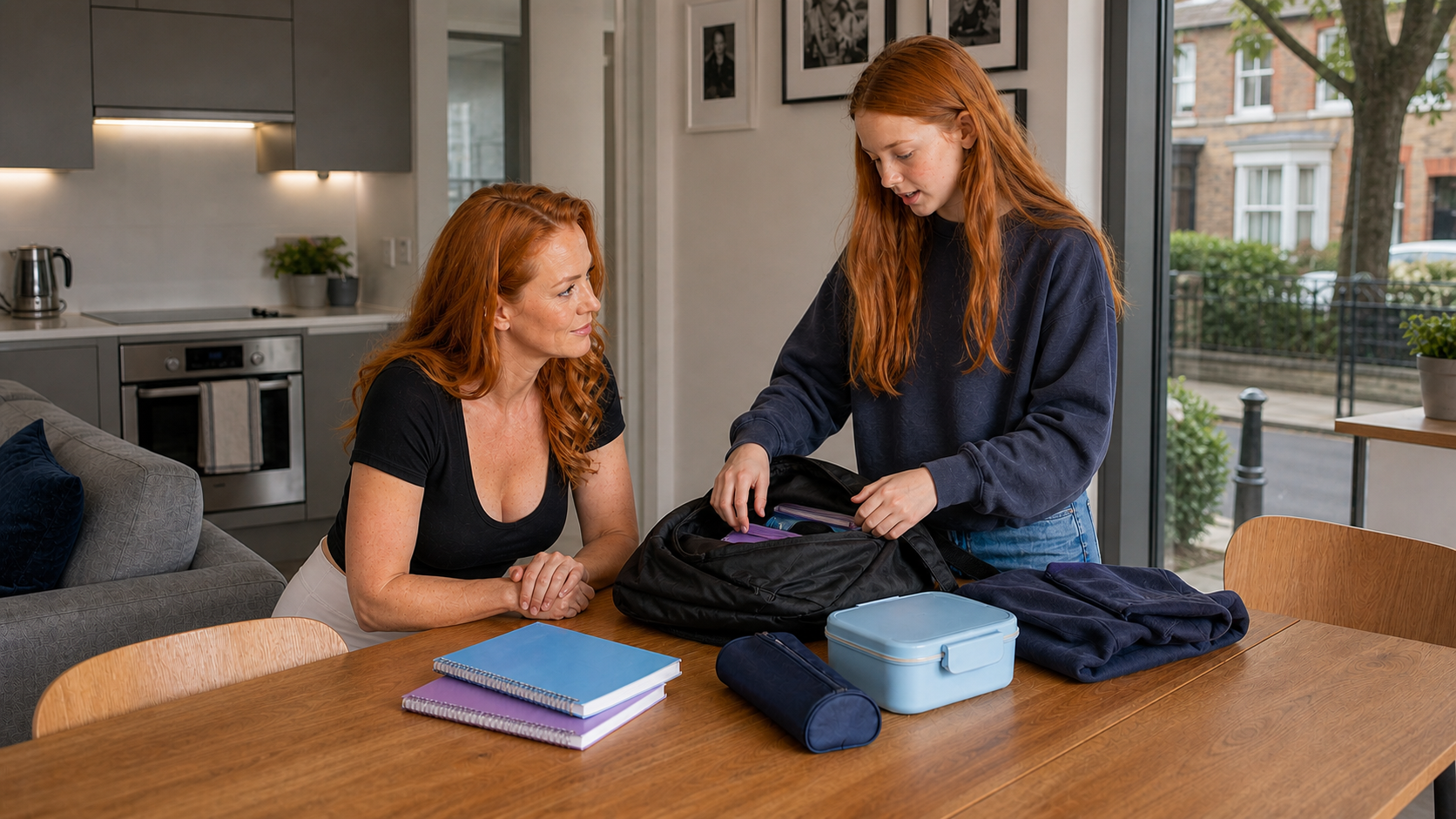
25-Point Ultimate Back-to-School Checklist UK Students Need
Everything Students and Families Need to Prepare Before the New Term
This back-to-school checklist UK students and families can follow covers the practical jobs that are easily forgotten during the summer holidays. It includes school requirements, stationery, clothing, technology, travel arrangements and everyday routines, helping you prepare without filling a small home with unnecessary purchases. Whether your child is starting secondary school, entering sixth form or simply moving into a new academic year, the aim is to have every essential ready before the first morning arrives.
⚡ Quick Answer: Back-to-School Checklist UK
A useful back-to-school checklist UK families can follow should cover five main areas:
✔ Confirm the school’s current uniform and equipment requirements.
✔ Check what can be reused before buying anything new.
✔ Prepare a comfortable backpack with the correct everyday supplies.
✔ Test technology, travel cards and important online accounts.
✔ Restore sensible sleeping, studying and morning routines before term begins.
The best approach is to complete the back-to-school checklist UK students need gradually. Start with school-specific requirements, reuse anything still in good condition and leave non-essential purchases until you know they will genuinely be useful.
📋 Back-to-School Checklist UK: The 25 Essential Tasks
| No. | Essential task | When to complete it |
|---|---|---|
| 1 | Read the latest school information | Three to four weeks before term |
| 2 | Check the uniform policy | Three weeks before term |
| 3 | Try on existing uniform and shoes | Three weeks before term |
| 4 | Label clothing and valuable belongings | Two weeks before term |
| 5 | Check the school bag | Two weeks before term |
| 6 | Prepare essential stationery | Two weeks before term |
| 7 | Confirm calculator requirements | Two weeks before term |
| 8 | Organise notebooks, folders and subject dividers | One to two weeks before term |
| 9 | Prepare PE clothing and equipment | One to two weeks before term |
| 10 | Choose a suitable lunch box and bottle | One week before term |
| 11 | Test laptops, tablets and accessories | One week before term |
| 12 | Confirm school logins and digital accounts | One week before term |
| 13 | Plan the journey to school | One week before term |
| 14 | Check passes, cards and travel money | Several days before term |
| 15 | Create a simple homework station | Before the first week |
| 16 | Organise school storage at home | Before the first week |
| 17 | Prepare a weekly academic planner | Before the first day |
| 18 | Record important dates | Before the first day |
| 19 | Plan practical breakfasts and lunches | Several days before term |
| 20 | Restore a sensible sleep routine | At least one week before term |
| 21 | Practise the morning routine | Two or three days before term |
| 22 | Prepare medication and medical information | Before the first day |
| 23 | Discuss safety and emergency arrangements | Before the first day |
| 24 | Pack the school bag the evening before | The night before term |
| 25 | Keep the first morning calm and simple | The first day |
This back-to-school checklist UK table is designed to be saved and worked through in stages. There is no need to buy everything in one trip or complete every task on the same weekend
🗓️ How to Use This Back-to-School Checklist Without Feeling Overwhelmed
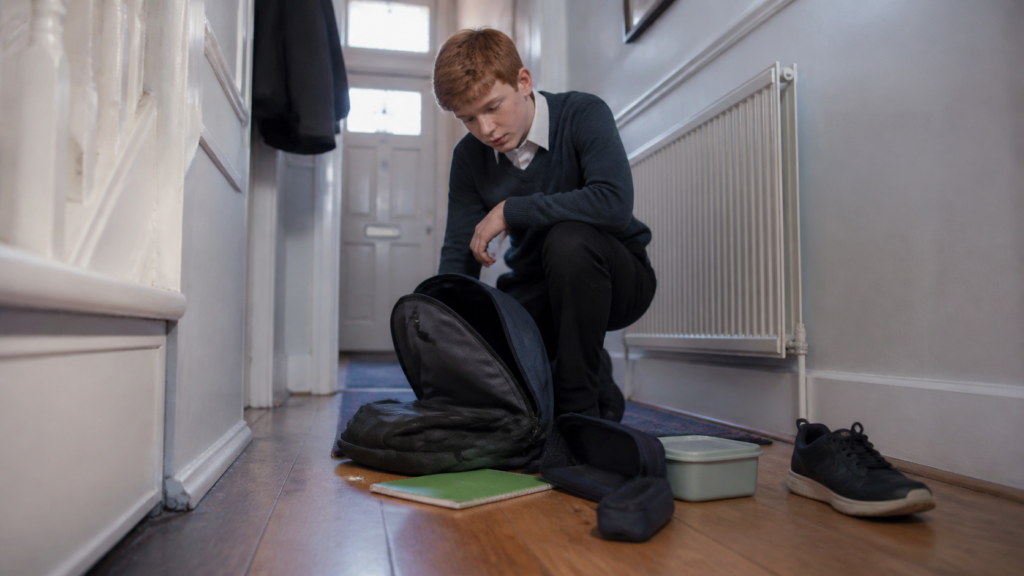
A long list can make preparation feel more complicated than it really is. Divide this back-to-school checklist UK families can use into three manageable sessions.
Families trying to control the cost can compare the best school supplies for students on a budget before buying new equipment.
During the first session, concentrate on school rules, uniform and items that may require ordering. During the second, check stationery, bags, technology and equipment already in the home. Use the final session for routines, travel planning and packing.
If space is limited, keep one temporary box or basket for everything that has been checked and approved for the new term. This prevents supplies from becoming scattered around bedrooms, kitchen tables and hallway cupboards. Once the back-to-school checklist UK preparation is complete, transfer each item to the student’s bag, wardrobe or study area.
It also helps to involve the student. Younger pupils can test pens, help label belongings and arrange their PE kit. Older students can take responsibility for digital accounts, timetables and travel arrangements. A shared back-to-school checklist UK households complete together is usually more reliable than one parent trying to remember everything alone.
🏫 1. Read the Latest Information From the School
Begin with the information supplied directly by the school. Requirements can change between academic years, even when the student is returning to the same building.
Look for recent emails, website updates, welcome packs and letters. Check:
✔ Term dates and inset days.
✔ Arrival times and entrances.
✔ Uniform rules.
✔ PE requirements.
✔ Equipment lists.
✔ Mobile phone policies.
✔ Rules covering calculators, laptops or tablets.
✔ Payment systems for meals and trips.
Avoid relying entirely on an old equipment list or advice from another family. The back-to-school checklist UK schools expect can vary considerably, particularly when students move from primary to secondary school or begin sixth form.
Save the most important information in one accessible place. A digital folder, printed document wallet or shared family calendar can all work. This first stage of the back-to-school checklist UK process reduces the chance of buying the wrong uniform, calculator or exercise books.
Because dates can differ between schools and local authorities, families can confirm their local school term and holiday dates on GOV.UK before planning the first week.
👔 2. Check the Current Uniform Policy
Uniform policies can be surprisingly specific. Some schools allow generic trousers and shirts but require an official blazer, jumper, tie or PE top. Others have rules about skirt length, footwear, jewellery, coats or visible logos.
Read the wording carefully before ordering replacements. Check whether there are separate summer and winter expectations and whether sixth-form students follow a dress code instead of a uniform.
A sensible back-to-school checklist UK approach is to prioritise the garments that must come from an approved supplier. Generic items can often be purchased later, once you have compared prices and confirmed the correct colour and style.
If money is tight, ask whether the school operates a second-hand uniform shop or exchange scheme. Many children outgrow garments before wearing them out, so previously owned blazers and PE tops can offer excellent value.
Uniform is an important part of the back-to-school checklist UK families prepare, but buying excessive quantities is rarely necessary. A smaller number of properly fitting, washable pieces is more useful than a crowded wardrobe of uncomfortable clothing.
📏 3. Try On Existing Uniform, Coats and Shoes
Do not assume that clothes which fitted in July will still fit in September. Children and teenagers can grow quickly during the summer.
Ask the student to try on:
✔ Shirts or blouses.
✔ Trousers, skirts or dresses.
✔ Blazers and jumpers.
✔ PE clothing.
✔ School shoes.
✔ Trainers or sports footwear.
✔ A waterproof coat.
Check fit while the student is sitting, bending and walking, not only while standing still. Shoes should be comfortable with the socks normally worn to school, and coat sleeves should allow easy movement.
This part of the back-to-school checklist UK families often postpone can prevent an expensive last-minute shopping trip. It also reveals which items genuinely need replacing and which only require washing, ironing or a minor repair.
Inspect zips, buttons, hems and shoe soles. A loose button or small split is usually cheaper to repair than replace. Recording only the genuine gaps keeps the back-to-school checklist UK budget focused on necessary purchases.
🏷️ 4. Label Clothing and Valuable Belongings
School property boxes fill quickly with identical black jumpers, coats, bottles and pencil cases. Clear labelling makes lost items much easier to return.
Add the student’s name to:
✔ Blazers and jumpers.
✔ Coats.
✔ PE tops and shorts.
✔ Trainers and sports bags.
✔ Lunch boxes.
✔ Water bottles.
✔ Calculators.
✔ Pencil cases.
✔ Laptop sleeves and chargers.
Follow the school’s preferred format if one is provided. For privacy, avoid displaying a child’s full name prominently on the outside of a bag where strangers can easily read it. An internal label is normally sufficient.
Labelling belongs near the top of any back-to-school checklist UK families use because it is easiest to complete before equipment becomes mixed with everyone else’s belongings.
Iron-on labels can work well for clothing, while waterproof stickers are useful for bottles and lunch containers. A permanent marker may be enough for inexpensive stationery. The goal is not to make every possession look perfect; it is to make the back-to-school checklist UK preparation practical.
🎒 5. Inspect the School Backpack
A school backpack must carry more than it appears to on a quiet shopping day. Once filled with books, stationery, a bottle, lunch, PE clothing and possibly a laptop, a poorly designed bag can become uncomfortable.
Before replacing it, check the existing backpack for:
✔ Broken zips.
✔ Frayed shoulder straps.
✔ Torn internal lining.
✔ Weak stitching.
✔ Water damage.
✔ Insufficient capacity.
✔ An uncomfortable or sagging back panel.
Ask the student to wear the packed bag using both shoulder straps. The bag should sit reasonably close to the back rather than hanging low. Heavy books and technology should be positioned nearest the body.
A dependable backpack is central to the back-to-school checklist UK secondary-school students need, but the largest available model is not automatically the best. Oversized bags encourage students to carry more than necessary and can be awkward on buses or in crowded corridors.
For smaller homes, avoid buying several bags for slightly different purposes. One comfortable everyday backpack and a separate lightweight PE bag will usually cover most needs. This keeps the back-to-school checklist UK setup useful without creating unnecessary storage problems.
Students carrying books, lunch and equipment every day can compare the best school backpacks for secondary school before choosing a replacement.
✏️ 6. Prepare Essential Stationery

School stationery does not need to be elaborate. Reliable basics are generally more useful than a large novelty set containing items the student will never use.
A ready-made set may be convenient when several basics need replacing, so we have also compared the best stationery sets for students.
A typical everyday pencil case may include:
✔ Two or three black or blue pens.
✔ A couple of pencils.
✔ An eraser.
✔ A pencil sharpener with a container.
✔ A 15 cm ruler.
✔ One or two highlighters.
✔ A suitable maths set when required.
✔ A glue stick if requested by the school.
Check drawers and cupboards before shopping. Pens, rulers and unopened notebooks often accumulate around the home. Testing and gathering these supplies can significantly reduce the cost of the back-to-school checklist UK families are completing.
Avoid packing every spare pen into the school bag. Keep a small reserve at home and replace items as they run out. This makes the bag lighter and stops the pencil case becoming difficult to use.
The stationery stage of the back-to-school checklist UK process should produce a compact, dependable kit rather than an overflowing collection. Students are also less likely to lose valuable equipment when they carry only what they need.
For a more detailed equipment list, see our guide to the best secondary school supplies for everyday lessons and homework.
🧮 7. Confirm the Correct Calculator Requirements
Do not purchase a calculator based only on its appearance or the words “school calculator” in a product description. The appropriate model depends on the student’s year group, subjects and examination requirements.
Ask the maths department or consult the current school equipment list. A basic calculator may be sufficient for younger pupils, while GCSE or A-level courses can require particular scientific functions.
If the student already owns a suitable calculator:
✔ Test that it switches on.
✔ Replace weak batteries if possible.
✔ Check that buttons respond correctly.
✔ Confirm the case is present.
✔ Add a name label.
✔ Make sure the student knows the basic controls.
Calculator checks are a small but important part of the back-to-school checklist UK students should complete before lessons begin. Discovering a fault during a maths class or assessment creates avoidable stress.
Keep the receipt for a new calculator until the school has confirmed it is appropriate. This protects the back-to-school checklist UK budget if the selected model turns out to be unsuitable.
📚 8. Organise Notebooks, Folders and Subject Dividers
Older students often manage several subjects, teachers and assignment deadlines. A simple filing system can prevent worksheets from being crushed at the bottom of a backpack.
The right system depends on what the school supplies. Some provide exercise books for every subject, while sixth forms and colleges may expect students to bring their own folders, refill pads and dividers.
A practical setup might include:
✔ One folder for current papers.
✔ A separate home archive for completed work.
✔ Subject dividers.
✔ A refill pad with punched pages.
✔ A document wallet for homework that must be submitted.
Avoid sending a large lever-arch folder to school every day unless it is genuinely required. It can add considerable weight. Instead, carry the current material in a slimmer folder and transfer older work into the home archive each week.
This organisation stage makes the back-to-school checklist UK students follow useful beyond the first morning. It creates a routine that can continue throughout the academic year.
In a small bedroom, use one magazine file or compact shelf section for active schoolwork. The back-to-school checklist UK system should control paper rather than spreading it across the entire room.
🏃 9. Prepare the Complete PE Kit
PE equipment is easily forgotten because it may be stored separately from the main uniform. Check the school list for indoor and outdoor requirements.
The kit may include:
✔ A school PE top.
✔ Shorts, leggings or sports trousers.
✔ A sweatshirt or training layer.
✔ Trainers.
✔ Football boots where required.
✔ Sports socks.
✔ A compact towel.
✔ A suitable drawstring or sports bag.
Make sure footwear still fits and inspect any boots that have been stored since the previous term. Clean reusable items and label everything clearly.
Add PE day to the family calendar once the timetable is known. This prevents the kit remaining in a locker for weeks or being forgotten on the morning it is needed.
A complete PE bag deserves its own line on the back-to-school checklist UK parents use because missing one small item can prevent a student from participating comfortably. However, wait for official guidance before buying specialist sports equipment.
Students moving into post-16 education can use our guide to the best sixth-form essentials to prepare for more independent study.
🥪 10. Choose a Practical Lunch Box
A school lunch box should be easy to clean, simple to open and appropriately sized for the student’s appetite. Decorative features matter less than reliable closures and a shape that fits inside the backpack.
If the student takes packed lunches, check whether the existing container:
✔ Closes securely.
✔ Fits inside the chosen school bag.
✔ Can be washed thoroughly.
✔ Holds food without crushing it.
✔ Is manageable for the student to open independently.
✔ Fits any school rules covering nuts or other allergens.
Avoid excessively bulky lunch systems if bag space is limited. A compact container and separate snack box can be easier to arrange.
Meal preparation is part of the back-to-school checklist UK households sometimes overlook until the evening before term. Decide in advance who will prepare lunches, where ingredients will be stored and how reusable containers will be cleaned.
If the student uses school meals, confirm how the account is funded and whether biometric or payment-card registration is complete. The back-to-school checklist UK process should cover the system the student actually uses rather than assuming everyone needs a lunch box.
💧 11. Prepare a Reusable Water Bottle
Most students benefit from carrying a reusable bottle, but it must be suitable for daily travel. Check that it seals properly and does not leak when placed on its side.
A practical school bottle should be:
✔ Easy to clean.
✔ Comfortable to carry.
✔ Clearly labelled.
✔ Large enough for the school day.
✔ Slim enough to fit the backpack’s bottle pocket.
✔ Free from cracks, damaged seals or persistent smells.
Test the bottle over the sink before placing it near exercise books or electronics. Fill it, close the lid and leave it on its side for several minutes.
This quick test strengthens the back-to-school checklist UK families rely on because even a small leak can damage notebooks, homework and technology.
Encourage the student to empty and rinse the bottle every evening. Buying a new bottle will not help if it remains forgotten in the school bag. A successful back-to-school checklist UK routine must include the maintenance of reusable equipment.
💻 12. Test Laptops, Tablets and Essential Accessories
Technology should be checked before the first assignment is due. Even devices that worked well last term may have a weak battery, missing charger or unfinished software update.
Test:
✔ The device starts normally.
✔ The battery charges.
✔ The charger and cable are undamaged.
✔ WiFi connects reliably.
✔ The keyboard, trackpad or touchscreen works.
✔ Required applications open correctly.
✔ Important files are backed up.
✔ The protective sleeve still fits.
Do not assume a student needs a new laptop simply because the academic year is starting. If the existing device supports the required schoolwork, replacing it may offer little practical benefit.
Technology can become the most expensive part of a back-to-school checklist UK families face, so confirm the school’s requirements before purchasing. Some schools provide devices, specify compatible systems or recommend waiting until lessons begin.
Keep chargers together in one labelled place at home. In a small flat, a compact charging station can prevent cables from disappearing into different rooms. This makes the back-to-school checklist UK setup easier to maintain throughout the year.
If existing equipment is no longer suitable, our guide to the best study tech for students explains which upgrades can genuinely support schoolwork.
🔐 13. Confirm School Logins and Digital Accounts
Modern school life often depends on several online systems. Students may need accounts for email, homework platforms, virtual learning environments, meal payments, library services and parent communications.
Before term starts:
✔ Confirm the student remembers essential usernames.
✔ Reset forgotten passwords through the proper system.
✔ Check that recovery contact details are current.
✔ Sign in on the device that will be used for homework.
✔ Test the school email account.
✔ Install only the applications officially required.
✔ Record support details in case access fails.
Passwords should not be written openly on the front page of a school planner or stored on a loose note inside the backpack. Use an appropriate password manager or another secure family system.
Digital preparation is now a fundamental part of the back-to-school checklist UK students need. A fully packed pencil case will not help if the student cannot access their timetable or submit homework.
Complete these checks several days before term so the school’s support team has time to resolve any problems. The next stage of this back-to-school checklist UK guide covers travel, study spaces, routines, health preparations and the final night-before-school checks.
🚌 14. Plan the Journey to School
Continue the back-to-school checklist UK students need by confirming exactly how the journey will work. This is especially important when a child is starting a new school, travelling independently for the first time or using public transport.
Check:
✔ The correct bus, train or walking route.
✔ How long the journey normally takes.
✔ Where the student should enter the school.
✔ What time they need to leave home.
✔ Alternative arrangements if transport is cancelled.
✔ A safe place to wait if they arrive early.
✔ Who they should contact if there is a problem.
If possible, practise the journey before the first day. Travel at approximately the same time the student will travel during term, as traffic and public transport can feel very different during the morning rush.
Younger students may benefit from completing the route with a parent or responsible adult. Older students should still know what to do if they miss a bus, lose their phone or find that their normal route is unavailable.
Travel planning is an essential part of a back-to-school checklist UK families can complete together. It replaces uncertainty with a clear routine and can make the first morning feel considerably calmer.
Do not plan the journey based on the fastest possible travel time. Add a sensible buffer for traffic, queues, crowded buses and unexpected delays. A realistic journey makes the back-to-school checklist UK preparation far more dependable.
🎫 15. Check Travel Passes, Cards and Money
Once the route has been planned, confirm that the student can actually pay for the journey. Check travel passes, railcards, bus cards and any linked online accounts.
Make sure:
✔ The pass is still valid.
✔ The photograph and personal details are correct.
✔ Any required balance has been added.
✔ The card has not expired or become damaged.
✔ The student knows where to keep it safely.
✔ There is an emergency payment option where appropriate.
A travel card should have a consistent home inside the school bag, preferably in a secure but easily accessible pocket. Moving it between bags and coat pockets increases the chance of it being forgotten.
Adding travel cards to the back-to-school checklist UK students follow is particularly useful after a long summer break. A card that has not been used for several weeks may have expired, developed a fault or been misplaced.
If the student is carrying cash for emergencies, keep the amount modest and store it discreetly. The back-to-school checklist UK process should improve preparedness without encouraging children to carry unnecessary valuables.
🪑 16. Create a Simple Homework Station
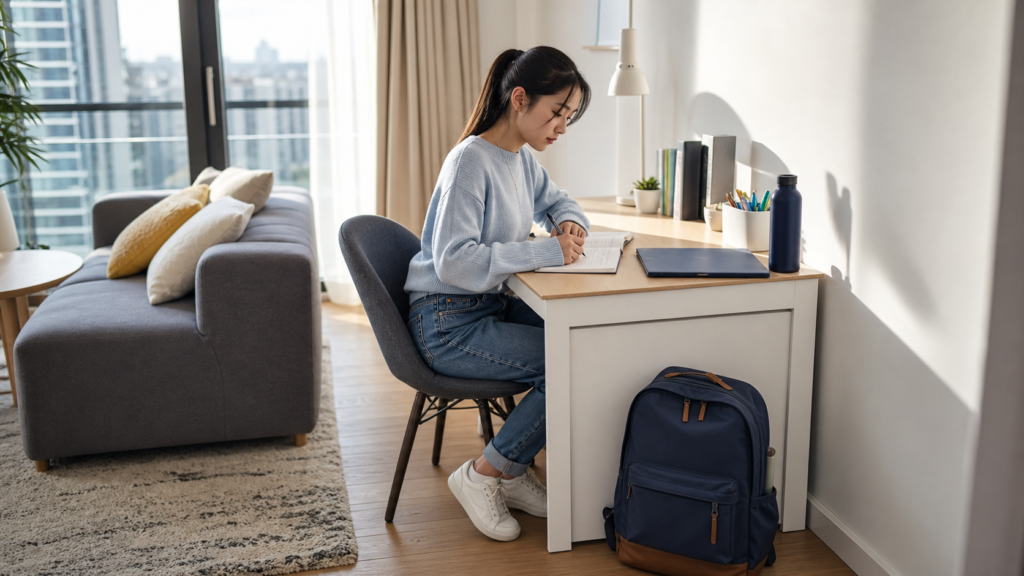
A useful study area does not need to occupy an entire room. In a small flat, it may be a compact desk in a bedroom, one end of the dining table or a foldaway surface that can be cleared after homework.
The important features are:
✔ A stable work surface.
✔ A supportive chair.
✔ Suitable lighting.
✔ Access to a power socket where needed.
✔ A small amount of stationery.
✔ Somewhere to place current books and papers.
Remove unrelated clutter before the term begins. A crowded surface makes it harder for a student to start work and increases the chance of worksheets becoming lost.
The study-space stage of the back-to-school checklist UK families use should focus on function. There is no need to recreate an elaborate desk setup seen online. A clear surface, comfortable seat and dependable lamp will usually have a greater effect than decorative accessories.
If several people use the same table, keep school supplies in a portable caddy or shallow box. The entire homework setup can then be brought out and packed away quickly.
Creating this defined work area turns the back-to-school checklist UK plan into a routine that supports the student after the first week has passed.
Where floor space is limited, the best study desks for small bedrooms can provide a dedicated work surface without overwhelming the room.
🗄️ 17. Organise School Storage at Home
School equipment can quickly spread across a small home. Bags collect in hallways, exercise books cover tables and PE clothing disappears into mixed laundry.
Choose a specific place for:
✔ The everyday school bag.
✔ Shoes and outerwear.
✔ Clean uniform.
✔ PE equipment.
✔ Current homework.
✔ Spare stationery.
✔ Lunch containers and bottles.
The storage does not have to be large. One hook, one shelf, one drawer and one document holder may be enough. What matters is that the student knows where each item belongs.
A practical back-to-school checklist UK households can maintain includes storage that is easy to reach. If the bag’s official home is behind several boxes or on a high shelf, it will probably remain on the floor instead.
Keep the system simple and avoid buying organisers until you have identified a real problem. Existing baskets, hooks and magazine files may already provide everything required.
Good storage makes the back-to-school checklist UK routine easier every evening because essential belongings can be found, checked and repacked without searching the whole home.
Older students preparing to move away can also use these storage products for university halls to organise belongings in a compact room.
📅 18. Prepare a Weekly Academic Planner
An academic planner helps students see lessons, homework, activities and deadlines in one place. It can be a paper diary, wall planner, school-issued booklet or digital calendar.
Choose the format the student is genuinely likely to use. A beautifully designed planner offers little value if it remains unopened in a drawer.
Start by recording:
✔ The weekly lesson timetable.
✔ Regular PE days.
✔ Clubs and after-school activities.
✔ Homework deadlines.
✔ Revision sessions.
✔ Appointments.
✔ Known term dates.
✔ Family commitments that affect study time.
Planner preparation belongs on the back-to-school checklist UK students complete because organisation becomes much harder once assignments begin arriving.
Do not fill every free hour with planned work. Leave room for rest, meals, travel and unexpected tasks. A realistic planner is easier to follow than an ambitious schedule that fails during the first week.
Review the planner briefly each evening. This small habit turns the back-to-school checklist UK preparation into an ongoing system rather than a one-day exercise.
Anyone who prefers organising deadlines on paper can explore the best academic planners for students for the coming academic year.
📌 19. Record Important Dates and Contacts
Transfer important school dates into the family calendar as soon as they are available. This can include inset days, parents’ evenings, examinations, trips, performances and application deadlines.
Also record essential contact details for:
✔ The school office.
✔ The student’s form tutor or head of year.
✔ Attendance reporting.
✔ Transport providers.
✔ After-school clubs.
✔ Emergency family contacts.
✔ Technical support for school accounts.
Keep this information accessible without displaying private details publicly. A shared digital calendar can work well for adults, while the student may benefit from a simpler version in their own planner.
Dates and contacts are easy to ignore while purchasing equipment, but they are an important part of the back-to-school checklist UK families need. Knowing how to report an absence or contact the school can prevent confusion during a stressful morning.
Review the information at the beginning of each half-term. The back-to-school checklist UK system works best when it remains current instead of being forgotten after September.
🍎 20. Plan Simple Breakfasts and Lunches
Busy mornings are easier when breakfast requires little decision-making. Choose several realistic options that the student enjoys and can eat within the available time.
Useful choices might include:
✔ Porridge with fruit.
✔ Wholegrain toast.
✔ Yoghurt and cereal.
✔ Eggs prepared simply.
✔ Overnight oats.
✔ Fruit alongside another filling option.
For packed lunches, decide on a flexible formula rather than trying to plan an entirely different meal every day. A main item, fruit or vegetables, a snack and water can provide a useful starting structure.
Check school allergy rules before sending food. Some settings restrict nuts or other ingredients to protect pupils with serious allergies.
Food planning makes the back-to-school checklist UK households follow more complete. A new backpack and organised pencil case cannot compensate for a morning spent searching for breakfast or a suitable lunch container.
Prepare what you reasonably can the evening before, but do not create an exhausting routine. The most successful back-to-school checklist UK plan is one the household can continue during an ordinary working week.
🌙 21. Restore a Sensible Sleep Routine
Late nights and relaxed mornings are common during the holidays. Moving instantly from a summer schedule to an early school start can leave students tired during their first week.
Begin shifting bedtime and waking time gradually around a week before term. Moving the schedule by 15 to 30 minutes each day is often easier than attempting one dramatic change.
Encourage a calmer period before bed. This might include:
✔ Packing the school bag.
✔ Preparing clothes.
✔ Charging essential devices outside the bed where practical.
✔ Reducing stimulating screen use.
✔ Dimming bright lighting.
✔ Reading or following another quiet routine.
Sleep should appear prominently on a back-to-school checklist UK parents use because concentration, mood and punctuality all become harder when a student is exhausted.
The exact amount of sleep needed varies with age and the individual. Focus on a consistent routine and enough time in bed rather than treating one bedtime as suitable for every student.
A settled evening routine is one of the most valuable results of completing the back-to-school checklist UK tasks before term starts.
⏰ 22. Practise the Morning Routine
A practice morning can reveal problems that are difficult to spot on paper. Choose a day shortly before term and work backwards from the required departure time.
Include:
✔ Waking up.
✔ Washing and dressing.
✔ Eating breakfast.
✔ Preparing lunch if necessary.
✔ Filling the water bottle.
✔ Checking the school bag.
✔ Putting on shoes and outerwear.
✔ Leaving at the planned time.
There is no need to make the exercise overly strict. The purpose is to discover whether the routine allows enough time and whether essential items are easy to find.
If the student repeatedly runs late, identify the actual cause. Clothes may not be ready, breakfast may take too long or the school bag may be packed in the morning instead of the evening.
Practising the routine brings the back-to-school checklist UK plan into the real world. It is much easier to adjust the alarm or breakfast arrangements during a practice day than during the first morning of term.
Use what you learn to simplify the process. A successful back-to-school checklist UK routine should reduce arguments and repeated reminders, not create another complicated schedule.
💊 23. Prepare Medication and Medical Information
Parents should check the school’s current procedure for medication, allergies and health conditions. Requirements may change as a student moves into a new year group or school.
Confirm:
✔ Emergency contact information is correct.
✔ The school has current medical details.
✔ Medication is within its expiry date.
✔ Prescription labels are clear.
✔ Required consent forms have been completed.
✔ The student understands the agreed procedure.
✔ Spare medication is supplied if requested.
Do not place medication into a child’s bag unless this is permitted by the school and appropriate for the student. Some medicines must be handed directly to authorised staff.
Health preparation must be treated as a priority on the back-to-school checklist UK families follow. It should not be left until the night before school opens.
Students with allergies, asthma, diabetes or other medical needs may require a more detailed individual plan. Contact the school early enough for questions to be resolved.
Completing this part of the back-to-school checklist UK process provides reassurance for the student, family and school staff.
📞 24. Discuss Safety and Emergency Arrangements
Students should know what to do when an ordinary plan goes wrong. Discuss a small number of clear actions rather than presenting an overwhelming list of unlikely dangers.
Cover situations such as:
✔ Missing the bus.
✔ Losing a travel card.
✔ A phone battery running out.
✔ Arriving home when nobody is there.
✔ Feeling unwell at school.
✔ Becoming separated from friends.
✔ Needing help from a trusted adult.
Make sure the student knows at least one important telephone number without relying entirely on their mobile phone. Younger students may carry a discreet contact card inside their bag.
Agree who is authorised to collect the student and how changes to normal arrangements will be communicated. Families may also wish to establish a simple private phrase for confirming an unexpected collection arrangement.
Safety planning gives the back-to-school checklist UK guide a purpose beyond shopping. It helps students feel prepared for situations where equipment alone cannot solve the problem.
Keep the conversation calm and age appropriate. The safety section of a back-to-school checklist UK students use should build confidence rather than create fear.
🎒 25. Pack the School Bag the Evening Before
The final practical task is to pack the school bag before bedtime. Use the timetable and school information rather than filling it with every available book and supply.
A sensible first-day bag may contain:
✔ The correct stationery.
✔ A labelled water bottle.
✔ Lunch or the required payment method.
✔ A planner.
✔ Necessary folders or exercise books.
✔ A suitable calculator.
✔ A charged device if requested.
✔ Travel pass or card.
✔ PE kit only when required.
✔ Any school-approved medical essentials.
Place heavier objects nearest the student’s back and remove unnecessary items. Check that bottles and lunch containers are securely closed.
Packing the evening before completes the practical part of the back-to-school checklist UK students need. It also creates time to locate a missing item without delaying the entire household.
Leave the bag in its agreed place near the student’s shoes or coat. This simple action makes the back-to-school checklist UK routine visible and easy to follow in the morning.
🌅 Keep the First Morning Calm and Simple
The first morning is not the time to introduce an elaborate new routine. Use the preparations already completed and keep expectations realistic.
Wake everyone with enough time to get ready without rushing. Offer a familiar breakfast, avoid unnecessary tasks and check only the most important items.
Students may feel excited, nervous or unusually quiet. Give them space to express how they feel without turning the morning into an interrogation.
Take photographs before the final departure time rather than when everyone should already be leaving. If something minor has been forgotten, decide whether it is genuinely essential before changing the entire plan.
The purpose of the back-to-school checklist UK families complete is to create a calmer start, not demand a flawless first day. Small problems can be corrected later.
Once the student has left, note anything that did not work. Adjust the evening packing time, breakfast choice or departure schedule before the next morning. This turns the back-to-school checklist UK preparation into a practical routine shaped around the household.
🏠 How to Manage Back-to-School Supplies in a Small Home
Small homes require a more selective approach to school shopping. Multipacks, duplicate organisers and bulky stationery collections can use valuable space without making school life easier.
Before buying an item, ask:
✔ Is it required by the school?
✔ Does the student already own a usable version?
✔ Will it fit inside the school bag or available storage?
✔ Can it serve more than one purpose?
✔ Is there a clear place to keep it?
✔ Can additional supplies be purchased later?
Keep active supplies accessible and store spares separately. One compact backup pack of pens and pencils is usually sufficient. Excess supplies can be difficult to find because they become scattered across several cupboards.
Use vertical storage where practical. A wall-mounted pocket, narrow bookcase or over-door organiser can hold papers without taking over the floor. Renters should choose removable solutions that do not damage walls or doors.
A space-conscious back-to-school checklist UK families can use prioritises reliable essentials rather than impressive quantities. This keeps bedrooms and shared living areas easier to manage throughout the year.
Review the setup after the first two weeks. Some equipment may never leave the shelf, while other supplies may be needed more frequently than expected. The back-to-school checklist UK system should be adjusted around real school life.
💷 How Much Should You Budget for Back-to-School Supplies?
There is no single correct budget because costs vary according to age, uniform requirements, transport and technology. A student reusing a suitable bag and uniform may need only a small stationery top-up. A child starting a new school may require considerably more.
Students leaving home for the first time may also need the best university essentials for studying and living comfortably in shared accommodation.
Control spending by dividing purchases into three groups:
Essential before the first day
These are school-required items, correctly fitting uniform, dependable shoes, necessary travel arrangements and essential medical supplies.
Useful after requirements are confirmed
This group can include folders, additional notebooks, desk accessories and specialist subject equipment.
Optional extras
Decorative stationery, duplicate bags, novelty organisers and non-essential technology should come last.
A budget-friendly back-to-school checklist UK families can follow begins with what is already available. Clean the existing bag, test pens, repair clothing and check cupboards before opening a shopping app or visiting a shop.
Avoid buying an entire year’s supply in August. Student preferences and teacher requirements can change once lessons begin. A controlled back-to-school checklist UK budget leaves room for genuine needs that appear later.
❓ Frequently Asked Questions
When should I start preparing for the new school year?
Start the back-to-school checklist UK preparation around three to four weeks before term if uniform or specialist equipment may need ordering. Routine tasks, bag packing and food preparation can be completed closer to the first day.
What are the most important back-to-school essentials?
The most important items are those required by the school: correctly fitting uniform, suitable footwear, a comfortable bag, basic stationery, travel arrangements and any necessary medical supplies. A back-to-school checklist UK student uses should prioritise requirements over fashionable extras.
What school supplies do secondary-school students need?
Most secondary-school students need pens, pencils, a ruler, eraser, sharpener, highlighters and an appropriate calculator. They may also require a maths set, folders, PE clothing and a suitable backpack. Always compare the back-to-school checklist UK guidance with the student’s official school list.
How can I save money on back-to-school shopping?
Reuse equipment that remains safe and functional, purchase only confirmed requirements and investigate second-hand uniform schemes. Completing the back-to-school checklist UK tasks before shopping makes it easier to identify genuine gaps.
Should I buy all school supplies before term begins?
No. Buy the essentials needed for the first few days, but wait for teacher guidance before purchasing specialist notebooks, art materials or expensive technology. A flexible back-to-school checklist UK plan reduces waste and incorrect purchases.
How do I organise school supplies in a small bedroom?
Give active schoolwork one defined shelf, drawer or portable container. Keep the everyday bag on a hook or in a basket and archive completed papers regularly. The back-to-school checklist UK approach should use compact storage instead of filling the room with organisers.
What should be packed on the first day of school?
Pack the requested stationery, planner, water bottle, lunch or meal-payment method, travel card and any books or technology specifically requested. Use the back-to-school checklist UK table alongside the school’s own first-day instructions.
How can I make the first school morning less stressful?
Prepare clothes, pack the bag, charge devices and organise breakfast the evening before. Wake with enough time to avoid rushing and keep the morning familiar. The back-to-school checklist UK routine works best when the important decisions have already been made.
✅ Final Thoughts
The most effective back-to-school checklist UK students can use is practical, selective and based on the school’s current requirements. It should prepare the student for daily life without encouraging families to buy every product marketed for the new academic year.
Begin with school information, uniform and travel. Then check bags, stationery, technology, food containers and study arrangements. Finish by restoring sleep routines, packing the evening before and keeping the first morning calm.
Completing this back-to-school checklist UK families can follow will not guarantee that every day runs perfectly. It will, however, remove many avoidable problems and give students a more confident start.
Save the back-to-school checklist UK guide, work through it in manageable stages and update it when the school provides new information. Thoughtful preparation is more valuable than buying excessive supplies, particularly when space and household budgets are limited.