Best Mesh Node Placement for Thick Walls UK (Ultimate Guide 2026)
📶 Best Mesh Node Placement for Thick Walls UK
If your mesh WiFi system still has dead zones, slow rooms, or weak signal areas, placement is usually the problem.
Many people searching for the best mesh node placement for thick walls UK already have a decent mesh system — but the nodes are positioned badly.
In homes with thick brick, concrete, or stone walls, correct placement makes a huge difference.
For the complete guide to improving connectivity in smaller homes, read wifi in small flats uk
| Placement Tip | Best For | Effectiveness | Main Benefit |
|---|---|---|---|
| Central Hallway Placement | Whole-home coverage | Excellent | Better signal distribution |
| Staircase Positioning | Multi-floor homes | Excellent | Improved upstairs signal |
| Elevated Placement | Flats & houses | Very good | Reduces obstructions |
| Open Shelf Placement | Living rooms | Very good | Cleaner signal path |
| Avoiding Thick Corners | Difficult layouts | High | Fewer dead zones |
🧱 Why Placement Matters So Much
Mesh WiFi works by passing signal between nodes.
If nodes are too far apart or blocked by dense walls:
- Signal strength drops
- Speeds become unstable
- Dead zones appear
- Devices disconnect more often
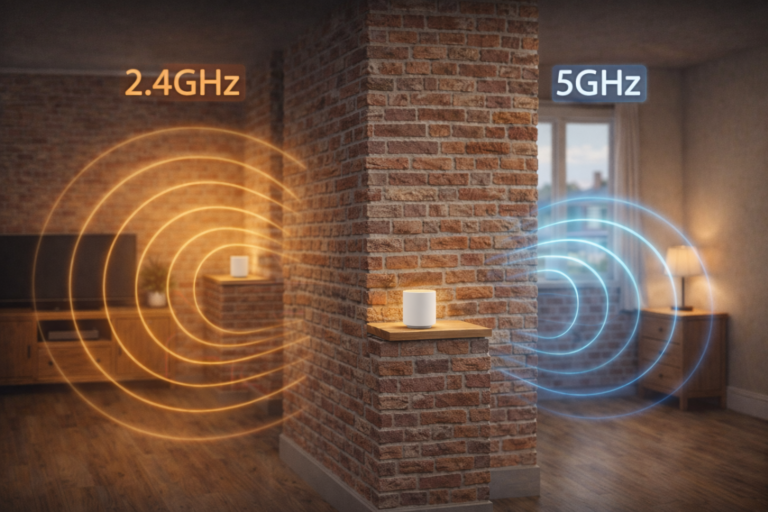
👉 Thick walls weaken wireless signals far more than standard plasterboard walls.
📍 Best Place to Position Mesh Nodes
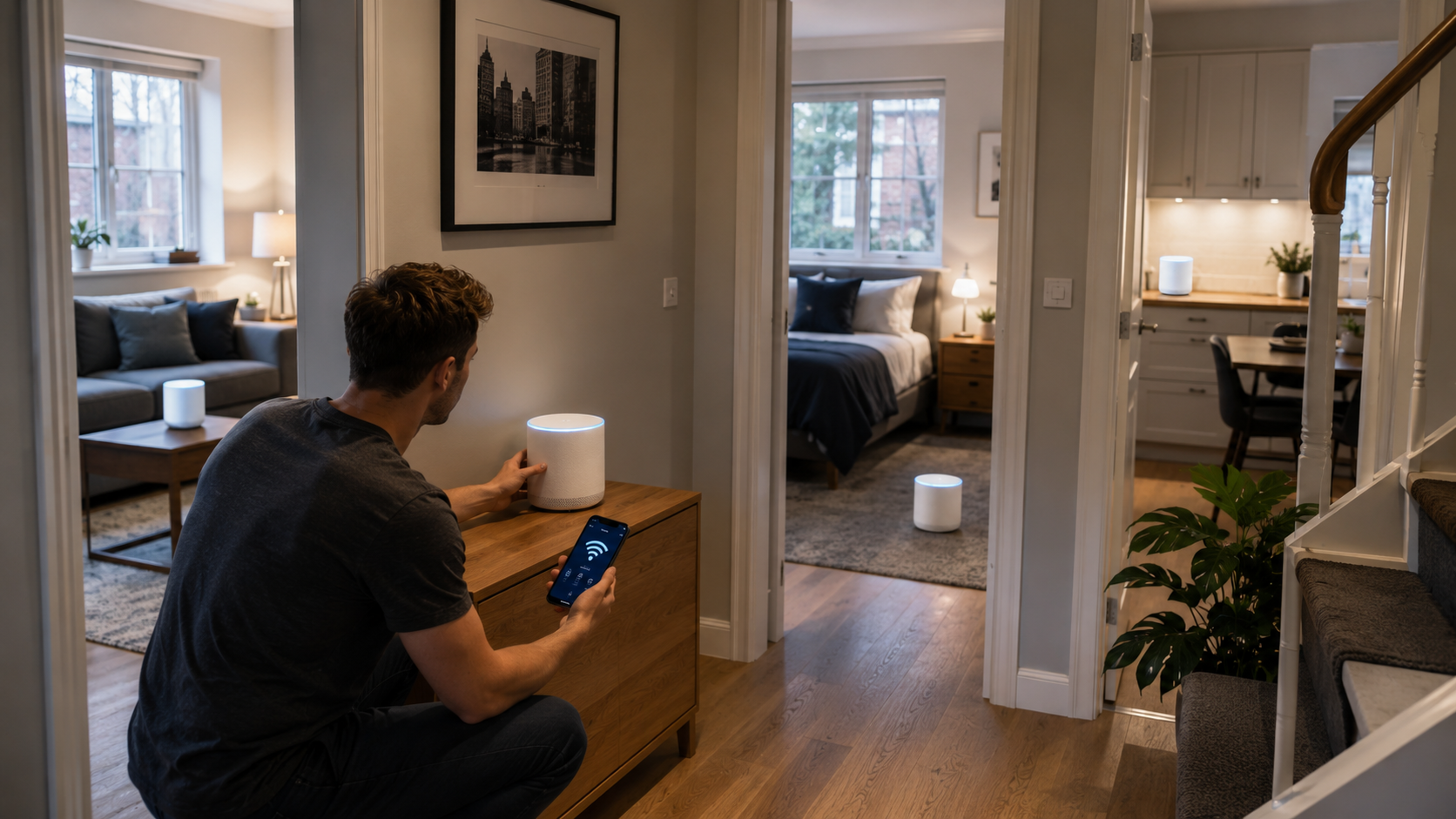
For most UK homes, the best mesh node placement is:
- In open areas
- Between problem rooms
- Raised off the floor
- Away from large metal objects
👉 Hallways and central spaces usually work best.
For full setup advice, read best wifi setup for thick walls uk
🛜 Avoid Hiding Nodes
Many people accidentally reduce performance by hiding mesh nodes behind:
- TVs
- Cabinets
- Furniture
- Thick walls themselves
👉 Mesh nodes need open airflow and clear signal paths.
🏠 Ideal Distance Between Nodes
Nodes should usually be:
- Close enough to communicate strongly
- Far enough apart to extend coverage properly
If nodes are too far apart:
- Speeds drop sharply
- Connection stability suffers
👉 In thick-wall homes, slightly closer placement usually works better.
For router positioning advice, read best place to put router for thick walls uk
⚡ Best Setup for Multi-Floor Homes
For houses with upstairs dead zones:
- Place one node downstairs centrally
- Place another near the staircase or landing
- Avoid putting nodes directly inside thick corner rooms
👉 Staircases often help signals travel more effectively between floors.
For better room coverage, see how to get wifi in every room uk
📡 Best Mesh Placement for Flats
In smaller UK flats:
- One router plus one node is often enough
- Place nodes between thick internal walls
- Avoid positioning next to microwaves or TVs
👉 Flats often suffer from neighbour interference too.
For stronger mesh systems, see best mesh wifi for thick walls uk
🚀 Test Signal Strength After Placement
After positioning your mesh nodes:
- Test speeds in every room
- Walk around while streaming video
- Check for buffering or signal drops
👉 Small adjustments can dramatically improve performance.
For signal boosting tips, see how to boost wifi signal through walls uk
📶 Common Mesh Placement Mistakes
The most common problems include:
- Nodes too close together
- Nodes too far apart
- Hidden placement
- Corner positioning
- Placing nodes beside thick walls
👉 Correcting these mistakes often fixes WiFi issues immediately.
For learning why mesh performs better, read why mesh wifi is better for thick walls uk
📶 Should Mesh Nodes Be Visible?
Many people try hiding mesh WiFi nodes to keep rooms looking tidy, but this often reduces performance.
For the best mesh node placement for thick walls UK:
- Keep nodes in open areas
- Avoid cupboards and enclosed shelves
- Do not place them directly behind TVs or furniture
- Allow clear signal paths between nodes
👉 Visibility usually improves signal quality and coverage.
🏠 Do Thick Walls Affect Every Mesh System?
Yes — even premium systems are affected by thick brick, stone, or concrete walls.
However, better mesh systems handle difficult environments more effectively because they:
- Maintain stronger communication between nodes
- Switch devices intelligently between signals
- Provide more stable coverage throughout the property
👉 Placement still matters, even with expensive systems.
🏆 Final Verdict
The best mesh node placement for thick walls UK usually involves:
- Central positioning
- Open placement
- Proper spacing between nodes
- Avoiding dense obstructions
Even a high-end mesh system performs badly if the nodes are positioned incorrectly.
With the right setup, mesh WiFi can provide strong and reliable coverage throughout difficult UK homes with thick walls.
For broadband and wireless advice, see Ofcom