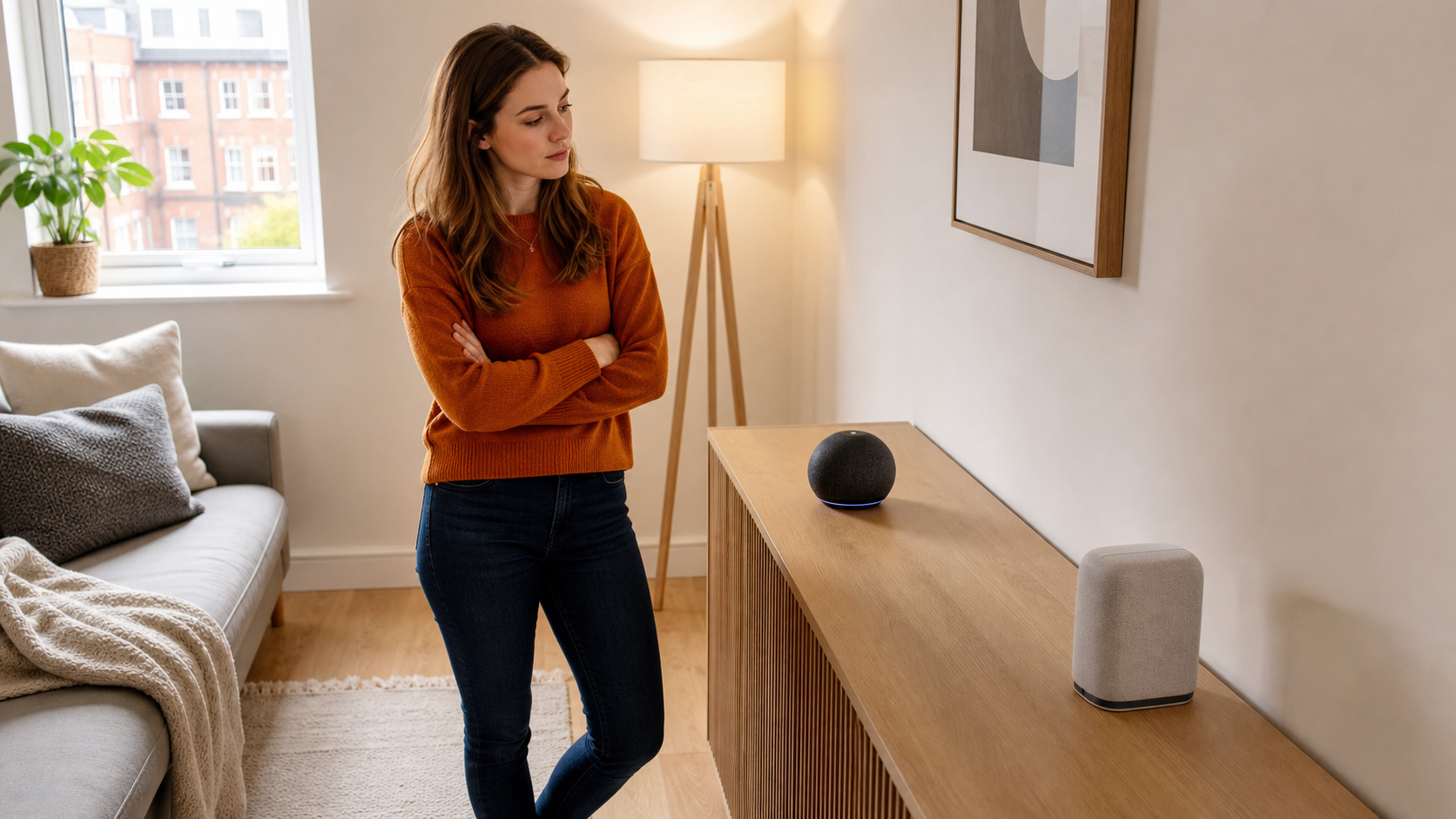
Amazon Alexa vs Google Home for Small Flats UK: 7 Essential Differences
🏠 Alexa vs Google Home for Small Flats UK: Which Is Better?
Alexa vs Google Home for small flats UK buyers is no longer simply a question of choosing between two smart speakers. You are choosing the system that may eventually control your lights, plugs, heating, reminders, music and other connected devices.
If you are still deciding what to connect, our guide to the best smart home devices for small flats UK covers the most useful starting points.
Both platforms can work brilliantly in a compact home. Alexa offers wide device compatibility, affordable Echo hardware and flexible routines, while Google Home provides strong Google service integration and a more conversational experience through Gemini for Home.
Comparing Alexa vs Google Home for small flats UK households should begin with the devices, subscriptions and digital services you already use.
The important question is not which assistant has the longest feature list. It is which one will make your particular home easier to manage without adding unnecessary devices, subscriptions or complications.
That is why Alexa vs Google Home for small flats UK residents should be considered through the realities of small-space living. Surface space is limited, Wi-Fi can become crowded and one centrally positioned speaker may need to serve the entire flat.
This Alexa vs Google Home for small flats UK comparison explains the main differences, what each ecosystem does well and which platform is likely to suit your home.
⚡ Quick Answer
For most people comparing Alexa vs Google Home for small flats UK, Alexa is the stronger all-round choice for smart-home compatibility, affordable devices and straightforward automation.
Google Home is the better option if you already use Google services heavily, prefer Google’s app and want the increasingly conversational Gemini for Home experience.
Choose Alexa if you want:
✔ A wide selection of compatible smart-home products
✔ Affordable Echo speakers in several sizes
✔ Flexible routines and household announcements
✔ Strong integration with Amazon services
✔ Selected Echo devices with built-in Zigbee, Matter and Thread support
Choose Google Home if you want:
✔ Close integration with Google Calendar, Tasks and Keep
✔ Google Cast and YouTube Music support
✔ Natural conversations through Gemini for Home
✔ A clean central app for compatible devices
✔ Strong compatibility with Google Nest products
The winner of Alexa vs Google Home for small flats UK will therefore depend on what you already own. If you have no connected devices yet, Alexa provides a slightly easier and more flexible starting point. If your digital life already revolves around Google, Google Home may feel more natural from the first day.
📊 Alexa vs Google Home at a Glance
The following table gives a practical overview of Alexa vs Google Home for small flats UK households.
| Feature | Amazon Alexa | Google Home |
|---|---|---|
| Current assistant | Alexa and Alexa+ | Gemini for Home |
| Main speakers | Amazon Echo range | Google Home and Nest range |
| Smart-device compatibility | Excellent | Excellent |
| Entry-level hardware | Wide affordable choice | More limited choice |
| Routines and automations | Flexible and beginner-friendly | Capable personal and household routines |
| Google service integration | Limited | Excellent |
| Amazon service integration | Excellent | Limited |
| Music and casting | Strong service support | Excellent Google Cast integration |
| Matter support | Available on compatible devices | Available through compatible Google Home hubs |
| Zigbee hub | Built into selected Echo devices | Not the main connection method |
| Thread support | Available on selected Echo devices | Available through selected Google hubs |
| Voice profiles | Alexa Voice ID | Voice Match |
| Best for | Broad smart-home control | Google users and conversational help |
| Small-flat advantage | Affordable compact Echo devices | Clean ecosystem and slim speaker options |
Neither platform wins every category. The real decision in Alexa vs Google Home for small flats UK homes comes down to compatibility, existing subscriptions and how much automation you genuinely want.
🤖 What Do Alexa and Google Home Mean in 2026?
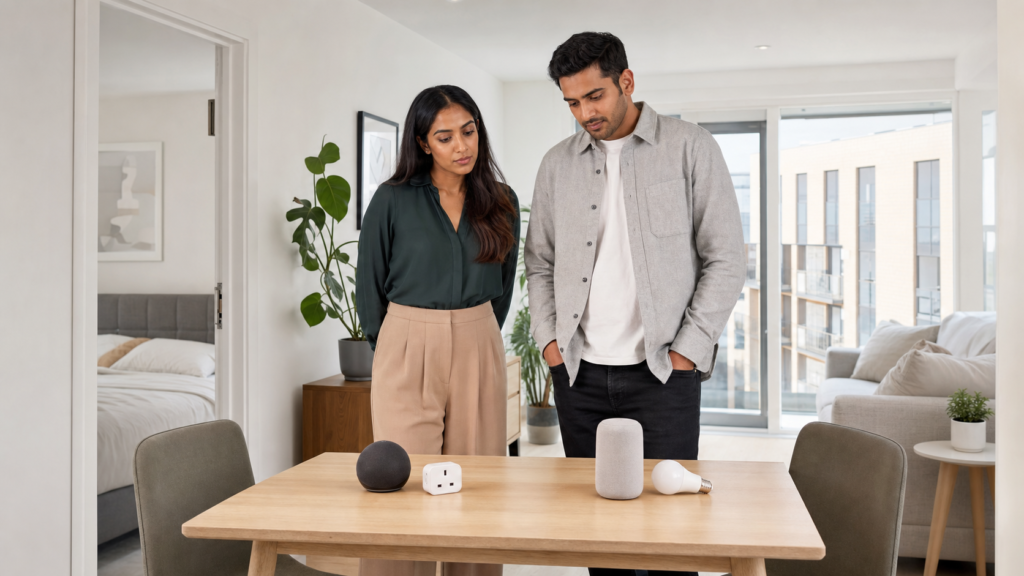
The names can be confusing because both companies use several related product and service names.
Alexa is Amazon’s voice assistant and smart-home platform. It runs on Echo speakers, Echo displays, Fire TV devices and selected third-party products.
Alexa+ is Amazon’s newer, more conversational version of the assistant. UK access began through an Early Access programme, and Amazon has continued extending Alexa+ across Echo devices, its mobile app and the web. Availability and individual features can still depend on the account and device being used.
Alexa+ is free for eligible Prime members in the UK. Availability and pricing for people without Prime should be checked before treating it as a permanent free upgrade.
Google Home is the name of Google’s connected-home ecosystem and its main control app. Google Assistant was traditionally the voice assistant used on Nest speakers and displays, but Google is transitioning compatible homes to Gemini for Home.
Gemini for Home is designed to understand more natural requests, provide richer answers and manage household tasks through conversation. Basic features include device control, media playback, questions, timers, reminders and calendars.
Some more advanced Gemini features require a Google Home Premium subscription. Availability can also vary by country, account, language and device.
Once an eligible Google home switches to Gemini for Home, compatible devices in that home use the newer assistant rather than Google Assistant. The switch cannot currently be reversed, so existing Google users should read the setup information before opting in.
This changing landscape matters when comparing Alexa vs Google Home for small flats UK households. Older reviews may compare traditional Alexa with Google Assistant, while the current choice is increasingly Alexa+ against Gemini for Home.
1️⃣ Which Is Easier to Set Up in a Small Flat?
Both systems are straightforward to begin using.
For Alexa, you plug in an Echo device, install the Alexa app, sign in with an Amazon account and follow the setup instructions. Compatible lights, plugs and other products can then be added through the Devices section.
Google Home follows a similar process. You install the Google Home app, sign in with a Google account, create or select a home and add the speaker and other compatible devices.
The physical setup is unlikely to decide Alexa vs Google Home for small flats UK users. Both require a power socket, a stable wireless connection and enough open space for the speaker to hear commands.
Alexa Setup Advantages
Alexa has a broad range of Echo devices, making it easier to find hardware for a particular surface. An Echo Dot can fit on a small bedside table, while a larger Echo model can become the main speaker in an open-plan room.
The Alexa app separates devices into groups and rooms. You can name a plug, place it in the living room and control it individually or as part of that room.
Alexa may be particularly easy for beginners because many smart products provide an Alexa skill or direct Alexa connection. However, installing too many skills can create clutter, so enable only those you genuinely need.
Our guide to the best smart plugs for small flats UK explains which features are genuinely helpful in a compact home.
Google Home Setup Advantages
Google Home provides a clean visual overview of connected rooms and devices. It is especially intuitive for people who already use Google accounts, Android phones, Google Calendar or Chromecast-compatible equipment.
The app supports personal and household routines, device controls and permissions for other home members.
Google Nest and Home speakers can also work naturally with Google Cast. This can make music playback feel familiar if you already cast content from a phone or tablet.
For a first-time user, the Alexa vs Google Home for small flats UK setup experience is effectively a draw. Alexa offers more hardware choice, while Google Home may feel cleaner and more familiar to existing Google users.
2️⃣ Which Works With More Smart-Home Devices?
Compatibility is one of the most important differences.
Alexa has traditionally had an advantage because an enormous range of plugs, bulbs, cameras, thermostats and other products advertise Alexa compatibility. This makes it easier to find devices at several price levels.
Google Home also works with products from thousands of brands. Most mainstream smart lighting, heating and security manufacturers support both major ecosystems.
The compatibility contest in Alexa vs Google Home for small flats UK is therefore closer than it once was. Alexa still offers a slight advantage for sheer choice, but many ordinary users will find all the devices they need on either platform.
If you are unsure whether plug automation provides enough value, we have also considered whether smart plugs are worth it in the UK.
Do Not Trust the Product Name Alone
A product being described as “smart” does not mean it works with both assistants.
Before buying anything, check the current compatibility information for the exact model. Product families sometimes contain several versions with different connection methods.
Look for clear support for:
- Amazon Alexa
- Works with Google Home
- Matter
- The manufacturer’s required app or hub
Also check whether the device needs a permanent connection to a separate bridge. A smart bulb may be inexpensive, but a required hub adds cost, cables and another object that must be stored.
This is particularly important in Alexa vs Google Home for small flats UK decisions because avoiding unnecessary hubs helps keep sockets and surfaces clear.
Alexa and Zigbee
Selected Echo devices contain a Zigbee smart-home hub. This allows compatible Zigbee products to connect through the Echo rather than requiring a separate manufacturer hub.
Not every Echo includes this hardware. Entry-level speakers may control Zigbee devices only when another suitable hub is present.
A built-in hub is helpful in a small flat because it can reduce the number of boxes connected to the router. However, Zigbee support should not be the only reason to buy a larger Echo if you intend to use only Wi-Fi or Matter devices.
Google Home and Compatible Hubs
Google Home uses compatible Google devices as hubs for Matter equipment. The features available depend on whether the chosen device supports the connection method required by the product.
Some Google devices can also act as Thread border routers, allowing compatible Thread products to communicate through a low-power mesh network.
Check the precise hardware specifications rather than assuming every Google speaker or display has identical hub capabilities.
🧩 Does Matter Make the Choice Irrelevant?
Matter is designed to improve compatibility between connected-home products and major platforms. A compatible Matter device may be controlled through Alexa, Google Home and other supported ecosystems.
Matter multi-admin can also allow the same suitable device to appear in more than one smart-home platform. One person might use Alexa while another uses Google Home.
This makes Alexa vs Google Home for small flats UK less restrictive, particularly when buying new bulbs, plugs and sensors. Choosing Matter-compatible equipment can reduce the risk of becoming trapped in one platform.
However, Matter does not make every product or feature identical.
Platforms can add support for device categories at different times, and some manufacturer-specific features remain available only through the original app. A smart light might support basic on, off and brightness commands through Matter while reserving specialist effects for its own application.
Matter also requires compatible controller or hub hardware. Thread-based Matter products need a suitable Thread border router somewhere in the home.
For a simple flat, do not overcomplicate the terminology. If a product clearly supports your chosen platform and performs the required job, it may be perfectly suitable without Thread.
Matter becomes more important when comparing Alexa vs Google Home for small flats UK homes that may expand over several years. It gives future purchases a better chance of working across different ecosystems.
3️⃣ Which Voice Assistant Is More Natural?
Voice assistants are moving beyond rigid commands.
Traditional Alexa works reliably when commands are phrased clearly. Requests such as switching on a named light, setting a timer or playing a particular radio station are generally straightforward.
Alexa+ aims to make these interactions more conversational. It is designed to understand incomplete thoughts, follow the context of a discussion and carry out more complicated requests.
Gemini for Home has a similar goal. It allows users to ask questions, manage tasks and control devices using more natural language than traditional Google Assistant commands.
The difference in Alexa vs Google Home for small flats UK homes may be less dramatic for basic tasks. Saying “turn off the bedroom light” should be simple on either platform when the device is named correctly.
The difference becomes clearer when asking follow-up questions, changing part of a request or seeking more detailed help.
Alexa Voice Strengths
Alexa remains excellent for direct household commands. Its familiar wake word is short, while the Echo range provides microphones designed for use across a room.
Alexa+ can offer more natural conversation and may understand requests that contain less precise wording. It can also retain useful context during a conversation.
Amazon has adapted Alexa+ for UK users, including British expressions and local interests. However, the experience can depend on Early Access availability and whether a specific feature has reached your account.
Gemini for Home Voice Strengths
Gemini for Home is built around conversational assistance. It can help with questions, household planning, reminders and connected-device control without requiring every request to follow the same structure.
It also integrates closely with supported Google services, including Calendar, Tasks, Keep and YouTube Music. This is valuable if those services already contain your appointments, lists and media preferences.
Some advanced conversational features, including Gemini Live on compatible devices, require Google Home Premium. Older speakers may support many Gemini features without supporting every newer capability.
For natural conversation, Google currently has a slight conceptual advantage. For established device commands and broad smart-home familiarity, Alexa remains extremely strong.
The voice winner in Alexa vs Google Home for small flats UK will depend on whether you primarily want to control equipment or use the speaker as a broader conversational assistant.
4️⃣ Which Platform Has Better Routines?
A routine allows one trigger to start several actions.
For example, saying “good night” could switch off compatible lights, reduce the heating and play quiet audio. A morning routine might turn on a lamp and provide the weather forecast.
Routines are especially useful in a small home because a single command can control several areas without installing physical switches or control panels.
You can also compare suitable equipment in our guide to the best smart lighting for small apartments.
Alexa routines are flexible and approachable. They can begin with a spoken phrase, schedule, device event or other supported trigger. The available actions depend on connected products and enabled services.
Google Home provides personal and household routines. Personal routines can use information associated with an individual account, while household routines are intended for eligible members of the home.
When assessing Alexa vs Google Home for small flats UK automation, Alexa generally offers the easier route for experimentation. Google Home remains capable but is most appealing when household members already share Google services.
The most effective routines are short and dependable. Avoid building a complicated chain of actions when switching off two lights and one plug would solve the problem.
For Alexa vs Google Home for small flats UK, reliable simplicity is more valuable than the number of actions displayed in the app.
These smart lighting ideas for small flats UK demonstrate how lighting schedules and voice routines can work together.
5️⃣ Which Is Better for Music and Entertainment?
Music is one of the most common reasons to buy a smart speaker. Both platforms support popular streaming services, but they approach playback slightly differently.
When comparing Alexa vs Google Home for small flats UK music listeners should first check their preferred streaming subscription. A platform can have excellent speakers and still be frustrating if it does not support the service or account features you use.
Our comparison of the best smart speakers for small flats UK can help you choose suitable hardware for either ecosystem.
Music on Alexa
Alexa works with several popular music and radio services. You can choose a default provider, request particular artists or playlists and create speaker groups using compatible Echo devices.
Amazon Music naturally fits particularly well with Alexa. Spotify, Apple Music and other supported services can also be connected, although the available features may vary according to the subscription.
Echo speakers cover several sizes and price points. An Echo Dot is suitable for spoken audio and background music, while larger Echo models provide fuller sound for a main living space.
Multi-room playback can be useful, but most small flats do not need a speaker in every area. One well-positioned Echo may cover the living room, kitchen and sleeping area of an open-plan studio.
Music on Google Home
Google Home integrates closely with YouTube Music and Google Cast. Supported services can be linked to the Google Home account and selected as the default provider.
Google Cast is particularly convenient because compatible apps can send audio directly to a speaker or speaker group. You can begin playback on your phone and then control it through the Google Home ecosystem.
Google speakers and displays can also play radio, podcasts, audiobooks and supported streaming services. Voice Match can provide personalised media results for recognised household members where the feature is supported and correctly configured.
If you already use YouTube Music, Android devices or Cast-enabled equipment, Google Home is likely to feel more natural.
Which Sounds Better?
The assistant does not determine the sound quality by itself. The particular speaker matters far more.
A small Echo Dot cannot be compared fairly with a larger premium Google speaker, just as a compact Nest speaker should not be expected to match a high-powered audio system.
For Alexa vs Google Home for small flats UK, choose the ecosystem first and then select an appropriately sized speaker within it. Clear sound at low and moderate volume is more useful in a flat than maximum loudness.
Google has a slight advantage for casting and integration with YouTube Music. Alexa has a wider range of Echo speaker sizes and prices.
What About Television Control?
Alexa works naturally with compatible Fire TV products, while Google Home works closely with Google Cast and Google TV equipment.
Both can perform supported actions such as starting content, changing volume or controlling playback. The precise features depend on the television, streaming device and linked service.
The television winner in Alexa vs Google Home for small flats UK is therefore simple: Fire TV owners should lean towards Alexa, while Google TV and Chromecast users are likely to prefer Google Home.
Do not buy another streaming device purely to make your speaker ecosystem look consistent. If your present television setup works reliably, confirm what can already be connected before replacing anything.
🔐 Which Platform Is Better for Privacy?

A voice assistant needs microphones to detect its wake phrase. This makes privacy an important part of the decision rather than a setting to consider after installation.
Neither platform should be treated as completely private simply because the speaker sits inside your home. Both rely on accounts, software and online services to provide many of their intelligent features.
The privacy question in Alexa vs Google Home for small flats UK is less about declaring one company completely safe and more about understanding the controls each platform provides.
Alexa Privacy Controls
Echo devices include a physical microphone-off button. Activating it disconnects power from the microphones and prevents normal voice interaction until the microphones are switched on again.
The Alexa app provides controls for reviewing and deleting voice history, managing how long recordings are stored and adjusting how data is used.
Alexa can also recognise different people through Voice ID. This supports personalisation, but it involves creating a voice profile. Users who do not need personalised responses can decide whether the convenience justifies enabling it.
Third-party Alexa skills deserve attention. Remove skills you no longer use and review their permissions rather than allowing old services to remain connected indefinitely.
Amazon provides further information about Alexa, Echo devices and privacy controls, including microphone controls and managing saved voice activity.
Google Home Privacy Controls
Google speakers provide a physical microphone switch or button, depending on the model. Google account settings can be used to view, delete or automatically remove eligible Assistant and Gemini activity.
Google states that audio recordings are not retained on its servers by default unless the user chooses to save audio activity. Other interaction data may still be handled according to the account settings and services used.
Google Home also supports Voice Match for personalised responses. As with Alexa Voice ID, this is useful in a shared household but should be enabled knowingly.
Guest Mode can limit personal results and prevent eligible assistant activity from being saved to the device owner’s account during that session. Availability may vary by device, language and region.
Privacy Steps for Either Platform
Whichever system you choose:
- Use a strong, unique account password
- Enable two-step verification
- Review saved voice and assistant activity
- Remove unused skills, services and integrations
- Install software updates promptly
- Check which household members have access
- Use the physical microphone control when appropriate
- Factory-reset devices before selling or giving them away
In a shared flat, tell everyone that a voice assistant is present. Do not place a camera-equipped smart display in a private area unless all occupants understand and accept how it will be used.
For Alexa vs Google Home for small flats UK, both platforms provide useful privacy controls. Neither removes the homeowner’s responsibility to review settings and connected services.
💷 Which Platform Costs Less?
The initial cost depends on the speaker or display you choose.
Amazon offers several Echo devices, including compact entry-level speakers that are frequently discounted. This gives Alexa a strong advantage for people who want to begin with one inexpensive device.
Google’s hardware range is smaller, although suitable Nest and Google Home speakers remain available at different prices. Google’s newer Home Speaker adds Gemini features and a more current audio design.
When budgeting for Alexa vs Google Home for small flats UK, include more than the speaker price. Potential costs include:
- Music subscriptions
- Premium assistant subscriptions
- Smart bulbs and plugs
- Additional hubs or bridges
- Security camera storage plans
- Replacement or additional speakers
Alexa+ Costs
Alexa+ is available without an additional charge to eligible UK Prime members. People who already pay for Prime may therefore view the newer assistant as part of an existing subscription.
Access has been rolling out, so not every Alexa account or device will necessarily receive every feature at the same time.
People without Prime should check the current Alexa+ access and pricing arrangements before choosing the platform on the assumption that all advanced features will remain free.
Google Home Premium Costs
Basic Gemini for Home features are available without a paid Google Home Premium plan. These include compatible smart-home controls, media playback, questions, alarms, timers, calendars, notes, lists and reminders.
Advanced functions are divided between Google Home Premium plans. Features such as Gemini Live require a compatible device and a paid plan, while more advanced camera search and household summaries may require the higher tier.
The Google Home Speaker may include an introductory trial, but a trial should not be mistaken for permanent access. Check the renewal date and decide whether the additional features justify another monthly or annual expense.
For Alexa vs Google Home for small flats UK, Alexa is usually cheaper to enter because of its wider selection of affordable speakers. Long-term value depends on whether you already pay for Prime, Google services or another relevant subscription.
🏢 Which Is Better for Renters?
Both platforms work well in rented flats because most basic devices require no permanent installation.
A compact speaker, smart plug and suitable lamp can create a useful setup without changing wiring or drilling into walls. When you move, the equipment can be unplugged, factory-reset if necessary and taken with you.
This makes Alexa vs Google Home for small flats UK renters a relatively low-risk decision. You can begin with one speaker and expand only when a clear need appears.
Alexa may be the easier choice for renters because affordable compatible plugs and bulbs are widely available. Google Home is equally practical when the renter already owns Nest or Cast-enabled products.
Avoid permanent smart switches, wired doorbells or heating controls unless you have permission from the landlord. Some devices may require professional installation or affect an existing system.
Keep the original fittings and packaging where practical. A smart-home improvement should not create a disagreement over the condition of the property when the tenancy ends.
The strongest renter setup in Alexa vs Google Home for small flats UK is normally simple:
✔ One centrally positioned smart speaker
✔ One or two compatible smart plugs
✔ A small number of compatible bulbs
✔ No unnecessary hub unless required
✔ No permanent changes to the property
For a complete room-by-room approach, follow our guide to creating a smart home setup for a studio flat UK.
📶 Which Is Better When Wi-Fi Is Limited?
Both platforms need reliable Wi-Fi for most voice, streaming and cloud-connected features.
Neither Alexa nor Google Home can repair a weak internet connection. If the intended speaker location is already a dead zone, improve the network before adding more equipment.
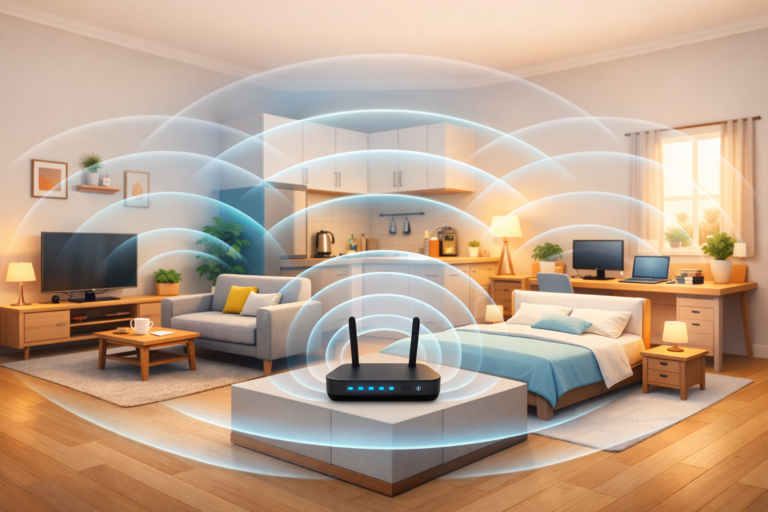
In a small flat, position the router in an open and reasonably central location. Avoid hiding it behind a television, inside a cupboard or beside large metal appliances.
If coverage remains unreliable, our mesh Wi-Fi vs Wi-Fi extender for small flats comparison explains the differences between the two solutions.
Many affordable smart devices use the 2.4GHz Wi-Fi band because it offers useful range. A growing collection of bulbs, plugs, cameras and speakers can still place additional demand on a poorly configured router.
The network question in Alexa vs Google Home for small flats UK is effectively a draw. Both can perform reliably on a sensible home network, and both can become frustrating when the connection repeatedly drops.
Matter devices can perform eligible commands locally when the required controller and network equipment are present. This may improve responsiveness, but internet access remains necessary for many assistant requests and remote services.
Do not assume that buying a mesh system is automatically necessary. In a compact flat, better router placement or a cleaner Wi-Fi channel may solve the problem more cheaply.
For Alexa vs Google Home for small flats UK, a stable network matters more than the logo on the speaker.
Try these practical ways to improve Wi-Fi in a small flat before purchasing additional connected equipment.
🗣️ Choose Alexa If…
Alexa is likely to be the better option when you:
- Want the widest choice of compatible smart-home equipment
- Prefer affordable Echo speakers
- Already subscribe to Amazon Prime or Amazon Music
- Use a Fire TV device
- Want flexible routines
- Need a compatible Echo with a built-in Zigbee hub
- Prefer the short “Alexa” wake word
- Want several speaker sizes within one ecosystem
For many beginners, Alexa provides the easiest route from one speaker to a useful small-home setup.
The abundance of compatible products is helpful, but it can also encourage unnecessary purchases. Begin with a specific problem, such as controlling a difficult-to-reach lamp, rather than collecting devices without a plan.
In Alexa vs Google Home for small flats UK, Alexa wins for broad compatibility, hardware choice and straightforward expansion.
🔵 Choose Google Home If…
Google Home is likely to be the better option when you:
- Use Google Calendar, Tasks and Keep
- Prefer YouTube Music
- Regularly use Google Cast
- Own Google Nest devices
- Want Gemini for Home conversations
- Use an Android-focused household setup
- Prefer the Google Home app
- Want close integration with supported Google services
Google Home feels particularly coherent when the household already relies on Google accounts and services. Lists, reminders, media and personal results can form part of the same familiar ecosystem.
Gemini for Home is also an important reason to choose Google. Its more natural approach may appeal to people who want an assistant for planning and questions rather than mainly operating lights.
For Alexa vs Google Home for small flats UK, Google wins for Google service integration, casting and conversational assistance.
🔄 Can Alexa and Google Home Work Together?
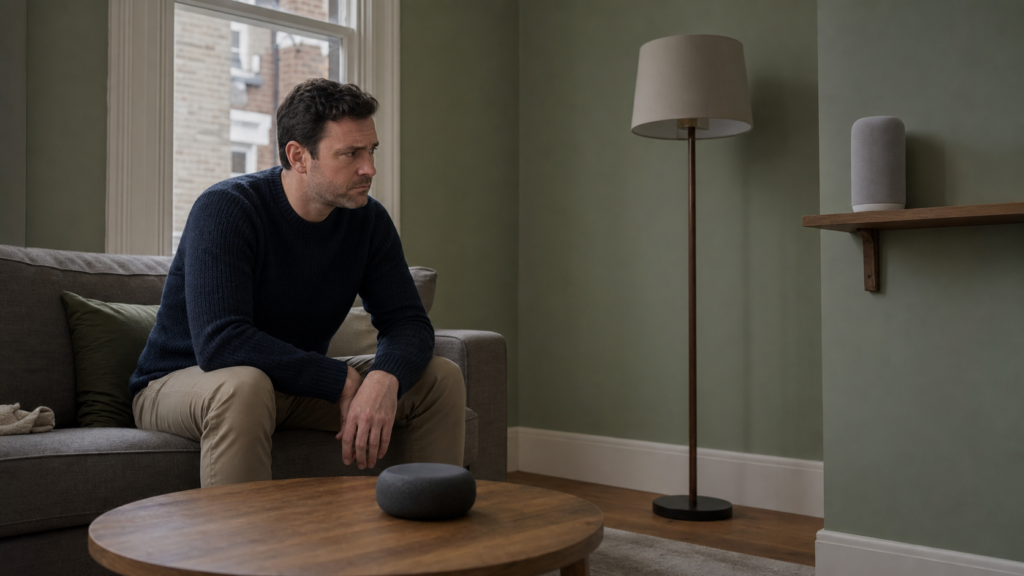
You can use both platforms in one flat, but they do not merge into a single assistant.
A Matter-compatible device may be shared between Alexa and Google Home using multi-admin support. This can allow two household members to control the same suitable light or plug through their preferred platform.
However, routines, speaker groups, announcements and account features generally remain within their own ecosystems.
Running both systems can be reasonable when two occupants have strong preferences or when existing devices already belong to different platforms.
For most small flats, using both creates more complexity than value. You may need two apps, two sets of room names and two methods for troubleshooting devices.
When deciding Alexa vs Google Home for small flats UK, choose one main platform and use cross-platform features only where they solve a genuine household need.
🚚 Can You Switch From Alexa to Google Home Later?
Yes, but the difficulty depends on your connected devices.
Products supporting both Alexa and Google Home may simply need to be linked to the new ecosystem. Matter-compatible products may be shared or transferred using the available setup process.
Platform-specific routines must usually be rebuilt. Some speakers, displays and specialist accessories will remain tied to their original ecosystem.
Before switching:
- List every connected device.
- Check Google Home or Alexa compatibility for each exact model.
- Record important routines and schedules.
- Add and test devices gradually.
- Remove old permissions and integrations.
- Factory-reset equipment you no longer intend to use.
The safest approach to Alexa vs Google Home for small flats UK is avoiding unnecessary lock-in from the beginning. Choose products supporting Matter or both major assistants when their price and features remain competitive.
❓ Frequently Asked Questions
Is Alexa or Google Home Better for a Small Flat?
Alexa is better for most first-time smart-home users because it offers more speaker choices, wide device support and flexible routines.
Google Home is better for households already using Google services or wanting the conversational Gemini for Home experience.
The answer to Alexa vs Google Home for small flats UK ultimately depends on your existing accounts and devices rather than the size of the home alone.
Which Is Cheaper: Alexa or Google Home?
Alexa is usually cheaper to begin using because Amazon offers several compact Echo speakers and regularly discounts its hardware.
Google Home can still provide good value, particularly if you already own compatible Nest equipment. Consider subscriptions and connected devices as well as the initial speaker price.
Cost should be assessed across the complete Alexa vs Google Home for small flats UK setup, not only the first speaker.
Which Is Easier for Beginners?
Both are beginner-friendly. Alexa has an advantage when adding widely supported devices, while Google Home has a clean app that may feel familiar to existing Google users.
A simple setup should take only a short time when the Wi-Fi is reliable and the product instructions are followed.
For beginners comparing Alexa vs Google Home for small flats UK, Alexa has a slight overall advantage because there are more affordable ways to start.
Which Is Better for Music?
Google Home is excellent for YouTube Music and Google Cast. Alexa works particularly well with Amazon Music and offers a broad range of Echo speaker sizes.
Spotify, Apple Music and other services may work on both, although features and availability should be checked.
Music does not produce a universal winner in Alexa vs Google Home for small flats UK because the selected speaker and streaming service matter more than the assistant name.
Does Alexa Work With Google Home Devices?
Some third-party smart devices support both platforms, but Echo and Google speakers do not become one unified system.
Matter multi-admin may allow a suitable connected product to be controlled through Alexa and Google Home. Platform-specific routines and speaker features remain separate.
Does Google Home Work With Amazon Music?
Amazon Music can be supported on eligible Google speakers and displays, depending on region and account availability. Link the service through the relevant media settings and confirm the current UK options.
If Amazon Music is your main service, Alexa may still provide a more direct experience.
Can Alexa and Google Home Control the Same Lights?
Yes, when the lights support both ecosystems or compatible Matter multi-admin functionality.
Create clear room and device names in each app. Using different names for the same light can make voice control unnecessarily confusing.
This flexibility makes Alexa vs Google Home for small flats UK less restrictive than it was before Matter support became common.
Do I Need More Than One Smart Speaker?
Usually not. One speaker can often hear commands throughout an open-plan studio or compact one-bedroom flat.
A second speaker may help in a separate bedroom, but it adds another cable, socket and source of neighbour noise. Start with one and test its coverage.
Which Platform Is Better for Families?
Alexa offers household profiles, child profiles, announcements and dedicated Echo Kids devices. Google Home provides Voice Match, household permissions, parental controls and content filtering for supported Gemini experiences.
The better choice depends on the services already used by the family. Review child settings before placing any voice assistant in a bedroom.
Are Alexa and Google Home Always Listening?
Both wait for an activation phrase while their microphones are enabled. When the device detects its wake phrase, the relevant request may be processed through online services.
Both platforms provide physical microphone controls and settings for reviewing or deleting eligible activity. False activations can happen, so review privacy history periodically.
Does Matter Mean It Does Not Matter Which Platform I Choose?
No. Matter improves device compatibility, but it does not make Alexa and Google Home identical.
Voice assistants, routines, music services, apps and platform-specific features remain different. Matter simply makes suitable connected products easier to use across supported ecosystems.
It improves the flexibility of Alexa vs Google Home for small flats UK, but you should still choose a primary platform.
✅ Final Verdict
For most first-time buyers, Alexa narrowly wins Alexa vs Google Home for small flats UK.
Alexa offers more affordable speaker options, wide smart-device compatibility and flexible routines. It is particularly attractive for Prime members, Fire TV users and anyone who wants to build a connected setup gradually.
Google Home is the stronger choice for people whose lives already revolve around Google. Gemini for Home, Google Calendar integration, YouTube Music and Google Cast create a coherent experience that Alexa cannot fully reproduce.
Neither platform requires a flat full of gadgets. One compact speaker, one or two useful devices and a reliable Wi-Fi connection can deliver most of the everyday benefits.
Choose Alexa when smart-home compatibility and hardware choice come first. Choose Google Home when Google services and conversational help matter more.
The final decision in Alexa vs Google Home for small flats UK should follow what you already own, which subscriptions you pay for and which daily tasks you want to simplify.
Avoid buying duplicate speakers, unnecessary hubs or connected products without a clear purpose. A small, dependable setup will serve a compact home better than a complicated system that constantly needs attention.
For Alexa vs Google Home for small flats UK, Alexa is the best general recommendation, while Google Home is the best choice for a committed Google household.