
How Often Should You Defrost A Fridge Freezer?
How Often Should You Defrost A Fridge Freezer and What Are the Warning Signs?
If you are asking How Often Should You Defrost A Fridge Freezer, the answer depends on whether your appliance is manual-defrost or frost-free. A manual-defrost model may need attention every six to twelve months, or whenever ice reaches around half a centimetre thick. A frost-free model should not need regular manual defrosting at all.
Heavy ice is not just inconvenient. It reduces storage space, blocks airflow, makes drawers harder to open and can force the appliance to work harder than necessary. In a compact kitchen, even a small amount of wasted freezer space can become frustrating very quickly.
⚡ Quick Answer
How Often Should You Defrost A Fridge Freezer? Manual-defrost models usually need defrosting every six to twelve months, or sooner if ice becomes thicker than around 5mm. Frost-free models should rarely need a full manual defrost. If heavy ice keeps returning, check the door seal, airflow and defrost system.
❄️ Manual-Defrost vs Frost-Free Models
The first step is identifying which type of appliance you own.
Manual-defrost fridge freezers
These allow frost to build naturally over time. You need to switch the appliance off and remove the ice yourself.
Manual-defrost models are common in:
- Older fridge freezers
- Compact appliances
- Budget models
- Small under-counter freezers
- Basic rental-property appliances
Frost-free fridge freezers
These use fans, heaters and sensors to prevent ice building up around the evaporator.
A properly working frost-free appliance should not develop thick layers of ice.
If you are checking How Often Should You Defrost A Fridge Freezer, the answer changes completely depending on the appliance type.
A manual-defrost model needs planned maintenance. A frost-free model that repeatedly ices up may have a fault.
📏 How Much Ice Is Too Much?
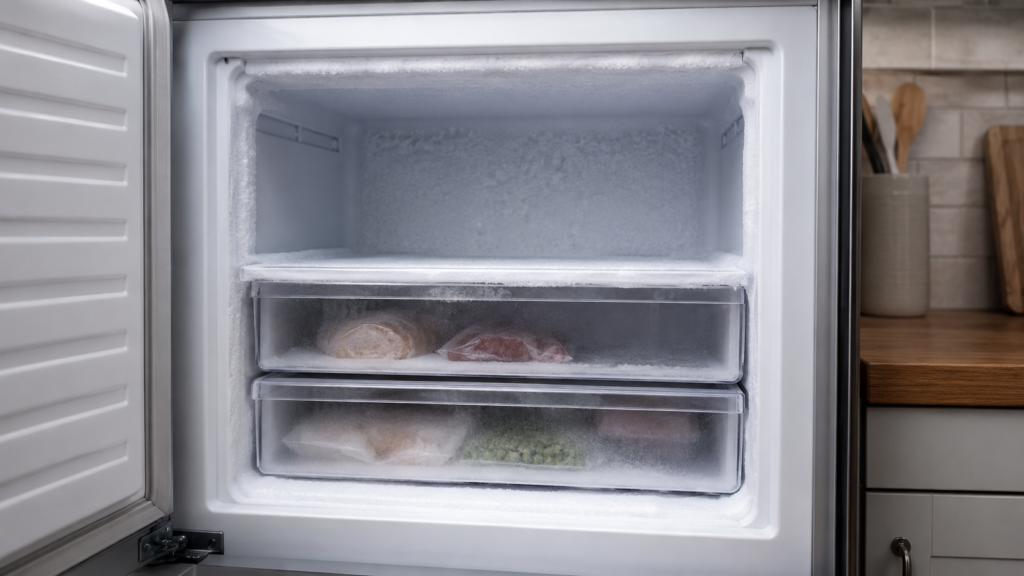
When deciding How Often Should You Defrost A Fridge Freezer, the thickness of the frost is usually more useful than relying on a fixed calendar date.
A thin dusting of frost is usually not a problem.
You should plan a defrost when ice reaches roughly:
- 5mm thick
- The thickness of a £1 coin
- Enough to restrict a drawer
- Enough to cover vents or shelves
Do not wait until the ice becomes several centimetres thick.
Heavy ice can:
- Reduce usable capacity
- Prevent drawers closing
- Trap food in place
- Block cold-air vents
- Increase running time
- Cause uneven temperatures
- Damage plastic drawers
For most manual-defrost appliances, How Often Should You Defrost A Fridge Freezer is better answered by the thickness of the ice than by the date on the calendar.
🗓️ Is Every Six Months A Good Rule?
For many households, yes.
Defrosting every six months is a sensible starting schedule for a manual-defrost fridge freezer.
For many households, How Often Should You Defrost A Fridge Freezer depends on door use, humidity and how quickly the first 5mm of ice develops.
However, some appliances may need it:
- Every three to four months
- Once a year
- After a humid summer
- After repeated door problems
- Before a large food shop
- Before moving house
The actual frequency depends on how much warm air and moisture enters the freezer.
A household that opens the door frequently may see frost building much faster than someone who uses the freezer less often.
If you are unsure How Often Should You Defrost A Fridge Freezer, check the ice monthly and defrost once it reaches around 5mm.
🚪 Door Opening Affects Ice Build-Up
Every time the freezer door opens, warm humid air enters.
That moisture freezes onto the cold interior.
Frequent opening is common in busy family homes, shared flats and kitchens where food is not organised clearly.
You can reduce frost by:
- Deciding what you need before opening the door
- Labelling containers
- Keeping everyday items near the front
- Organising drawers by food type
- Avoiding long searches
- Checking children close the door properly
Door opening alone may not create severe ice, but it can shorten the answer to How Often Should You Defrost A Fridge Freezer.
A well-organised freezer is easier to use and usually stays frost-free for longer.
🧽 Check The Door Seal
A damaged or dirty door seal allows warm air to leak into the appliance continuously.
If a damaged seal is also causing moisture to collect, Why Is My Fridge Freezer Leaking Water covers the main condensation and drainage checks.
This can cause frost to build much faster than normal.
Inspect the seal for:
- Cracks
- Splits
- Loose corners
- Warping
- Food residue
- Sticky spills
- Sections that do not sit flat
Clean the rubber with warm water and a soft cloth.
You can also test the seal with a sheet of paper:
- Place the paper between the seal and cabinet.
- Close the door.
- Pull gently.
- Repeat around the edge.
The paper should meet resistance.
If it slides out easily, the seal may not be gripping properly.
When How Often Should You Defrost A Fridge Freezer becomes every few weeks, a weak seal should be one of the first things you check.
🌡️ Is The Temperature Set Too Cold?
A freezer should normally operate at around -18°C.
Setting it much colder does not necessarily improve food storage.
It may increase energy use and make frost problems worse if moisture is already entering the appliance.
Use a freezer thermometer rather than relying only on the control dial.
If the setting has been moved to maximum or fast-freeze mode, return it to normal after the food has frozen.
Avoid making several adjustments in quick succession.
An overly cold setting may not be the main reason behind How Often Should You Defrost A Fridge Freezer, but it can increase the amount of ice once moisture enters.
For guidance on the correct everyday settings, read What Temperature Should A Fridge Freezer Be UK before adjusting the controls.
📦 Can Overfilling Cause More Frost?
Yes.
An overfilled freezer can block air vents, stop drawers closing correctly and prevent the door seal sitting flat.
Common problems include:
- Bags pressing against vents
- Containers stopping drawers closing
- Food pushing against the door
- Frost forming around blocked air outlets
- Uneven freezing between drawers
A reasonably full freezer is efficient, but it should not be packed so tightly that airflow stops.
Leave small gaps between items and keep flexible food bags away from the rear panel.
If your answer to How Often Should You Defrost A Fridge Freezer has suddenly become “far too often”, overcrowding may be contributing.
🥘 Avoid Adding Warm Food
Warm food releases steam.
Inside a freezer, that steam quickly turns into frost.
Allow cooked food to cool until it is no longer steaming, then transfer it into sealed freezer-safe containers.
Avoid freezing:
- Uncovered pans
- Warm casseroles
- Hot soup
- Freshly cooked rice
- Large hot meal-prep batches
Several warm containers can create a visible layer of frost in a small appliance.
This is especially important in compact fridge freezers where there is less air volume.
For many households, How Often Should You Defrost A Fridge Freezer depends partly on how much warm moisture is being added with the food.
🧊 What If A Frost-Free Model Needs Defrosting?
A frost-free fridge freezer should not need regular manual defrosting.
A one-off defrost may help if:
- A door was left open
- Food blocked an air vent
- Ice formed around the fan
- The appliance was overloaded
- A drawer prevented the door closing
However, repeated ice usually points to a fault.
Possible causes include:
- A damaged door seal
- A blocked drain
- A faulty defrost heater
- A failed temperature sensor
- A damaged fan
- A control-board problem
If you are asking How Often Should You Defrost A Fridge Freezer about a frost-free model and the answer is “every few months”, something is probably wrong.
If ice keeps returning in a frost-free appliance, Why Does My Fridge Freezer Keep Icing Up explains the most common airflow and component faults.
🧼 What Is The Safest Way To Defrost It?
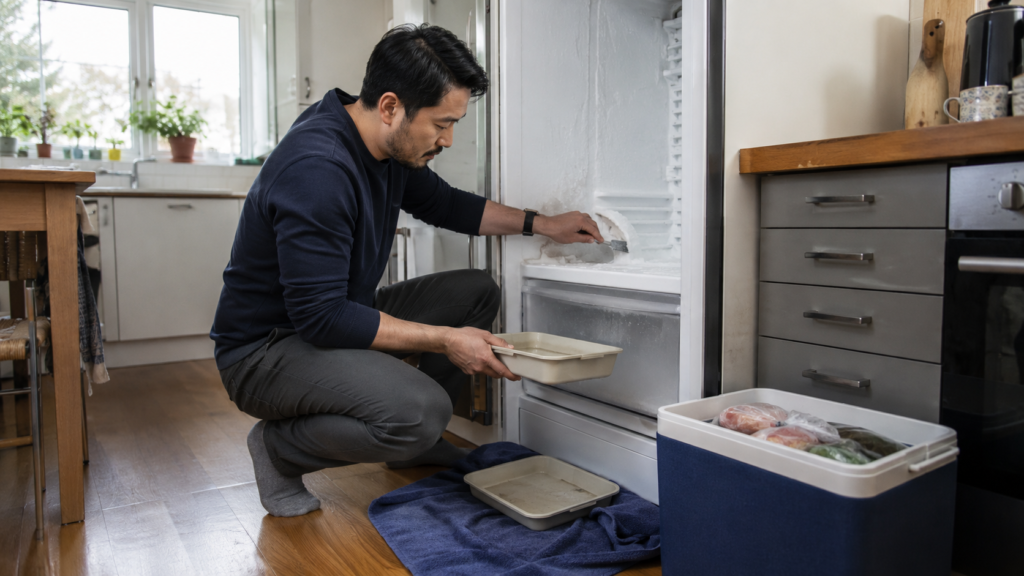
Planning food storage before switching off the appliance makes How Often Should You Defrost A Fridge Freezer easier to manage without risking chilled or frozen food.
Start by planning where the food will go.
Use:
- Another freezer
- An insulated cool box
- Frozen ice packs
- Freezer bags
- A neighbour’s freezer
Then:
- Switch off the appliance.
- Unplug it safely.
- Remove all food.
- Remove drawers and shelves.
- Place towels around the base.
- Add shallow trays to catch water.
- Leave the doors open.
- Allow the ice to melt naturally.
Do not use knives, screwdrivers or metal tools to remove ice.
Do not pour boiling water directly onto the interior.
A bowl of warm water may help speed the process, but keep it stable and away from plastic surfaces.
When considering How Often Should You Defrost A Fridge Freezer, remember that doing it safely matters more than doing it quickly.
⏱️ How Long Does Defrosting Take?
A light frost layer may melt within a few hours.
Heavy ice can take much longer.
Typical times include:
- 2–4 hours for light frost
- 6–12 hours for moderate ice
- Overnight for severe build-up
Room temperature affects the process.
Keep the doors open and replace wet towels as needed.
Once all ice has melted, clean and dry the interior thoroughly.
Do not restart the appliance while water remains near electrical parts.
If you are planning How Often Should You Defrost A Fridge Freezer, choose a day when you have enough time to complete the job properly.
🧴 Should You Clean It During Defrosting?
Yes.
Defrosting is the best opportunity to clean areas that are normally difficult to reach.
Use warm soapy water on:
- Drawers
- Shelves
- Door seals
- Interior walls
- Drainage channels
- Door compartments
Avoid strong chemicals or heavily scented cleaners.
Dry everything thoroughly before refitting the drawers.
Cleaning removes food residue that can block drains or damage the seal.
It also helps you spot cracks, warping or other problems that may explain why the appliance needs frequent defrosting.
A careful clean can extend How Often Should You Defrost A Fridge Freezer by improving the seal and drainage.
🔌 When Can You Switch It Back On?
Once the interior is fully dry, plug the appliance back in and set it to the normal temperature.
For safe shutdown and restarting advice, read Can You Switch Off A Fridge Freezer Without Damaging It before beginning a full defrost.
Keep the doors closed while it cools.
The fridge section may need several hours, while the freezer can take up to 12–24 hours to reach around -18°C.
Do not immediately refill it with warm food.
Return frozen items only when the freezer is properly cold.
If some food softened during the process, assess whether it is still safe before refreezing.
When planning How Often Should You Defrost A Fridge Freezer, include enough time for the appliance to cool again after the ice has melted.
Our guide How Long Does A Fridge Freezer Take To Get Cold explains how long to wait before returning chilled and frozen food.
🛠️ When Is Frequent Ice Build-Up A Fault?
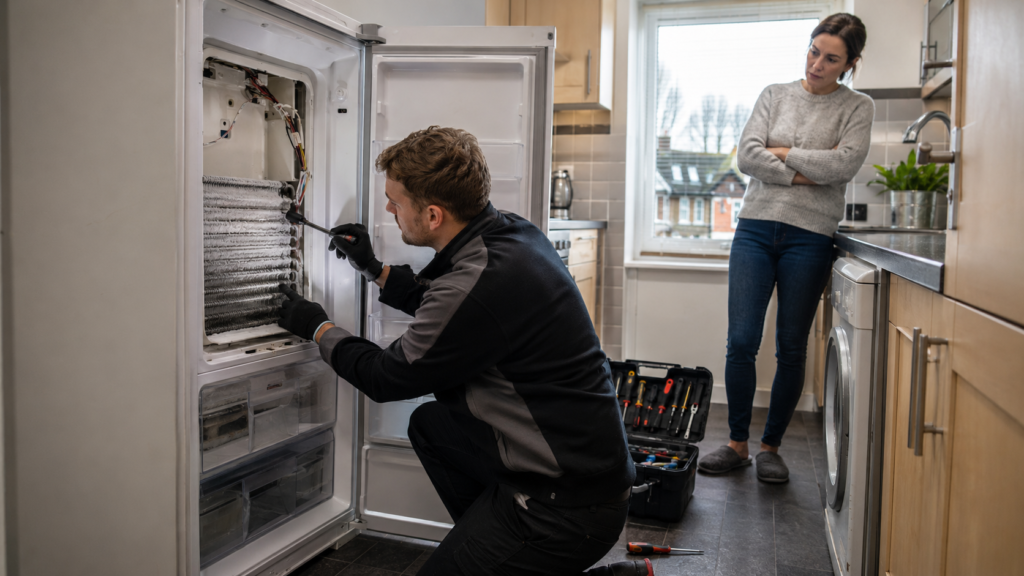
Ice returning soon after a complete defrost is not normal, particularly in a frost-free appliance.
You may have a fault if:
- Thick ice returns within days or weeks
- Frost covers the rear panel
- The fan makes scraping noises
- The fridge section becomes too warm
- Water collects beneath the drawers
- The compressor runs almost constantly
- The door seal no longer grips
- The controls do not respond properly
A failed defrost heater, sensor or fan can allow ice to build behind the internal rear panel.
Eventually, the ice may block airflow between the freezer and fridge compartments.
If How Often Should You Defrost A Fridge Freezer has changed from once or twice a year to every few weeks, professional inspection is sensible.
If restricted airflow is making the fridge compartment too warm, Why Is My Fridge Freezer Not Cold Enough covers the most likely causes.
💷 Does Regular Defrosting Save Electricity?
Removing heavy ice can help a manual-defrost appliance operate more efficiently.
Thick frost reduces usable space and can interfere with normal heat transfer and airflow. The appliance may then run for longer to maintain its target temperature.
Defrosting can also help you:
- Remove expired food
- Improve organisation
- Clear blocked vents
- Check the door seal
- Restore drawer space
- Reduce unnecessary door opening
However, defrosting a frost-free appliance repeatedly is not an efficient long-term solution.
If ice keeps returning because of a component fault, the appliance may continue using unnecessary electricity until the fault is repaired.
This means How Often Should You Defrost A Fridge Freezer should not become a substitute for fixing a persistent problem.
To understand the wider running costs, read How Much Electricity Does A Fridge Freezer Use for typical UK energy estimates.
🗂️ How Can You Reduce Future Ice Build-Up?
A few simple habits can reduce how often manual defrosting is needed.
Try to:
✅ Keep the door seal clean.
✅ Check that drawers close fully.
✅ Avoid overfilling the freezer.
✅ Keep food away from vents.
✅ Cool cooked food before freezing it.
✅ Use sealed containers.
✅ Keep the door open for as little time as possible.
✅ Maintain a temperature of around -18°C.
✅ Remove small spills before they freeze.
✅ Check frost thickness once a month.
Organising food by category can also help because you spend less time searching with the door open.
For most households, How Often Should You Defrost A Fridge Freezer can be extended by reducing the amount of warm, moist air entering the appliance.
⚠️ When Should You Call An Appliance Engineer?
Arrange professional help if:
- A frost-free appliance repeatedly develops thick ice
- The rear panel freezes solid
- The fan is noisy or stops running
- The fridge becomes warm while the freezer stays cold
- Water repeatedly freezes beneath the drawers
- The seal needs replacing
- The appliance stops reaching -18°C
- Heavy frost returns shortly after defrosting
An engineer can test the defrost heater, sensor, thermal fuse, fan and electronic controls.
Do not remove internal electrical panels unless you are qualified to repair refrigeration appliances.
A full defrost may temporarily restore airflow, but it will not repair a failed component.
If How Often Should You Defrost A Fridge Freezer is becoming an increasingly frequent question, diagnosing the cause is better than repeatedly melting the same ice.
✅ Quick Defrosting Checklist
Use this order:
✅ Identify whether the appliance is manual-defrost or frost-free.
✅ Check whether ice is around 5mm thick.
✅ Store food safely in a cool box or another freezer.
✅ Switch off and unplug the appliance.
✅ Remove drawers and shelves.
✅ Place towels and trays around the base.
✅ Allow the ice to melt naturally.
✅ Never use knives or sharp tools.
✅ Clean the interior and door seals.
✅ Dry everything thoroughly.
✅ Restart the appliance.
✅ Wait until the freezer reaches around -18°C.
✅ Monitor how quickly the ice returns.
Following this checklist gives you a safe answer to How Often Should You Defrost A Fridge Freezer without damaging the appliance or exposing food to unnecessary temperature changes.
🏆 Final Verdict
So, How Often Should You Defrost A Fridge Freezer?
A manual-defrost model will usually need defrosting every six to twelve months, or whenever the frost reaches around 5mm thick.
A frost-free model should not require regular manual defrosting.
If thick ice repeatedly returns in a frost-free appliance, check the door seal, internal vents, drainage system and automatic defrost components.
Do not wait until drawers are trapped or storage space has been significantly reduced. Defrosting earlier makes the process quicker and protects the appliance from unnecessary strain.
For most homes, the best answer to How Often Should You Defrost A Fridge Freezer is to check the frost monthly and respond to the amount of ice rather than following a rigid calendar date.
Frequently Asked Questions
How Often Should You Defrost A Fridge Freezer if it is manual-defrost?
Most manual-defrost models need defrosting every six to twelve months, or sooner when ice reaches around 5mm thick.
Does a frost-free fridge freezer ever need defrosting?
It may need a one-off defrost after a door has been left open or vents have been blocked. Repeated ice usually indicates a fault.
Can I defrost a fridge freezer overnight?
Yes, provided food is stored safely elsewhere and towels or trays are positioned to catch the water.
Can I use a hairdryer to defrost a freezer?
No. Using electrical equipment near melting water creates a safety risk and may damage the appliance.
Why does my freezer ice up so quickly?
Common reasons include a poor door seal, frequent opening, warm food, blocked vents or a faulty automatic defrost system.
How thick should freezer ice be before defrosting?
Plan to defrost once the frost reaches roughly 5mm thick or begins restricting drawers and airflow.
How Often Should You Defrost A Fridge Freezer in a busy family home?
Check it monthly. Frequent door opening may mean a manual-defrost appliance needs attention more often than the usual six-to-twelve-month schedule.
The Food Standards Agency provides official guidance on safe fridge temperatures and chilled-food storage during defrosting.