
Why Does WiFi Struggle Through Brick Walls UK? Easy Fixes That Actually Work
🧱 Why Does WiFi Struggle Through Brick Walls UK?
If you’re searching for why does WiFi struggle through brick walls UK, you’re probably dealing with:
- Weak WiFi in certain rooms
- Slow speeds upstairs
- Buffering or dropouts
- Dead zones in bedrooms
- Laggy gaming
- Poor signal in older UK homes
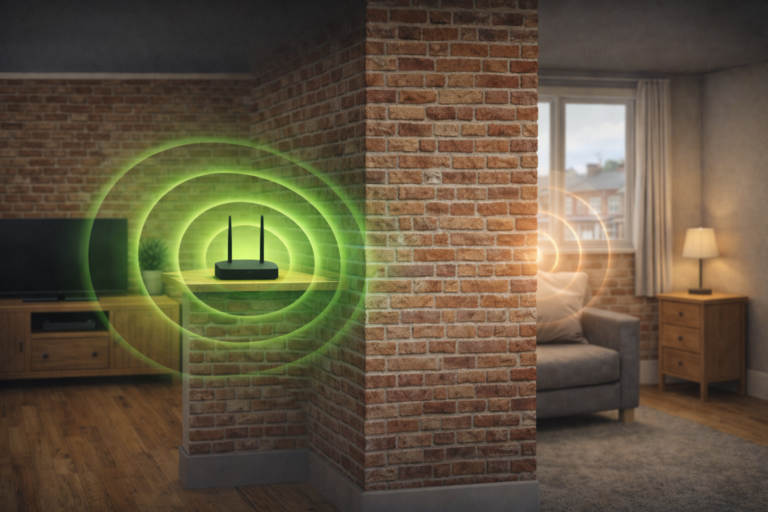
Thick brick, concrete and older UK walls can block wireless signals far more than most people realise.
The good news is — with the right setup, you can massively improve your WiFi coverage and speeds.
For the complete guide to improving connectivity in smaller homes, read wifi in small flats uk
🔥 QUICK PICKS
- Best Overall Mesh WiFi: Check Latest Price on Amazon ➜
- Best Budget Setup: Check Latest Price on Amazon ➜
- Best For Flats: Check Latest Price on Amazon ➜
- Best Premium Router: Check Latest Price on Amazon ➜
Affiliate Disclosure: This article contains affiliate links. If you click a link and make a purchase, we may earn a small commission at no extra cost to you.
| WiFi Problem | Most Common Cause | Best Solution | Difficulty |
|---|---|---|---|
| Weak WiFi in bedrooms | Thick internal brick walls | Add mesh WiFi node | Easy |
| Slow upstairs signal | Floors and dense walls blocking signal | Move router higher | Easy |
| Dead zones in flats | Poor router placement | Centralise router position | Easy |
| Buffering smart TVs | Weak 5GHz signal through walls | Use 2.4GHz band | Easy |
| Evening slowdowns | Neighbouring WiFi interference | Change wireless channel | Medium |
| Laggy gaming | Signal instability through walls | Use Ethernet connection | Medium |
| Poor WiFi in older homes | Dense Victorian construction | Upgrade ISP router | Easy |
| Weak signal in one room | Router hidden behind furniture | Place router in open space | Easy |
🧱 Why Thick Brick Walls Cause WiFi Problems
WiFi signals weaken when they pass through:
- Brick walls
- Concrete walls
- Stone walls
- Chimney breasts
- Dense insulation
- Metal structures
Older UK homes are especially difficult because many were built using dense materials that absorb wireless signals.
👉 This is why one room may have perfect WiFi while another struggles badly.
For full thick-wall setup advice, read best wifi setup for thick walls uk
🏠 Why WiFi Usually Feels Worse In Older UK Homes
A lot of UK homes were never designed for modern wireless internet.
Victorian terraces, converted flats and older houses often contain:
- Thick internal walls
- Narrow room layouts
- Concrete flooring
- Fireplace structures
- Dense brick construction
This makes it much harder for your router to spread signal evenly around the property.
That is why many people experience:
- Weak upstairs WiFi
- Bedroom dead zones
- Buffering smart TVs
- Unstable video calls
- Random signal drops
👉 Thick walls are one of the biggest causes of poor WiFi in UK homes.
For WiFi 6 performance advice, read does wifi 6 work better through walls uk
🚪 Router Placement Makes A Huge Difference
One of the biggest mistakes people make is hiding the router.
A lot of routers end up:
- Behind TVs
- Inside cupboards
- On the floor
- Beside thick walls
- Tucked into hallway corners
That massively weakens signal coverage.
For stronger WiFi performance, place your router:
- Higher up
- In a more central position
- Away from metal objects
- Out in the open
- Away from microwaves and electronics
👉 Even moving the router slightly can dramatically improve speeds.
For router optimisation advice, read best router settings for thick walls uk
📡 2.4GHz vs 5GHz Through Brick Walls
Most modern routers use:
- 2.4GHz
- 5GHz
5GHz is usually faster, but it struggles much more through thick brick walls.
2.4GHz is slower, but normally travels further and handles walls better.
This is why your WiFi may feel:
- Fast beside the router
- Weak in distant rooms
- Worse upstairs
- Unstable through several walls
👉 Many UK homes benefit from using both WiFi bands correctly.
For wall penetration advice, read how to get wifi through concrete walls uk
🔄 Mesh WiFi Usually Works Better Than Extenders
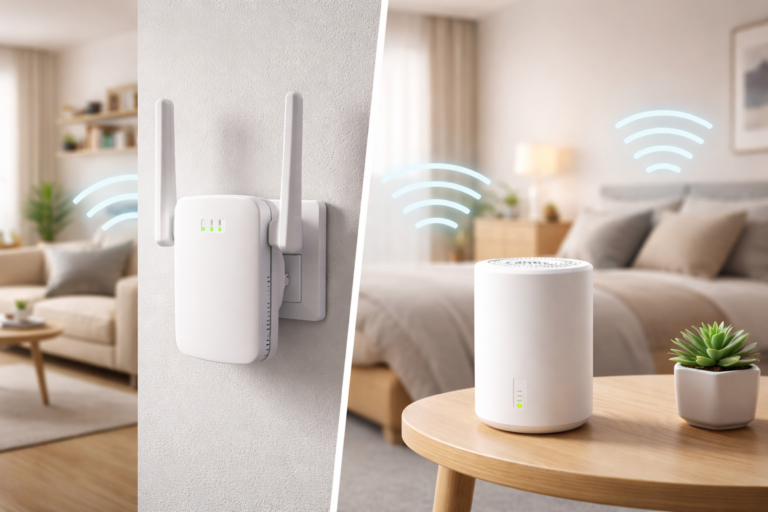
If thick walls are causing dead zones, mesh WiFi is usually far more effective than standard extenders.
Basic extenders often repeat an already weak signal.
Mesh systems work differently by placing multiple WiFi nodes around your home to spread coverage more evenly.
Benefits include:
- Better whole-home coverage
- Fewer dead zones
- More stable speeds
- Improved upstairs signal
- Better coverage through walls
👉 Mesh WiFi is often the best long-term fix for older UK homes.
For mesh placement tips, see best mesh node placement for thick walls uk
⚡ Neighbouring WiFi Can Also Cause Problems
If you have ever wondered why does WiFi struggle through brick walls UK, the answer is usually a combination of dense building materials, poor router placement and wireless interference from nearby devices or neighbouring flats.
Nearby routers often compete on the same wireless channels.
This can cause:
- Evening slowdowns
- Buffering
- Gaming lag
- Random dropouts
- Unstable video calls
Interference becomes much worse during busy evening hours when everyone is streaming or gaming.
👉 Interference is extremely common in apartment buildings.
🚀 Fastest Upgrade Path For Better WiFi
If your WiFi constantly struggles, the best upgrade path is usually:
- Improve router placement
- Upgrade an old ISP router
- Add mesh WiFi nodes
- Reduce interference
- Fine-tune router settings
👉 Most people fix the issue before needing faster broadband.
For stronger router placement advice, read best place to put router for thick walls uk
🏆 Final Verdict
So, why does WiFi struggle through brick walls UK?
Because thick brick, concrete and dense building materials weaken wireless signals before they reach your devices.
This is extremely common in:
- Older UK houses
- Victorian homes
- Flats and apartments
- Converted properties
- Multi-floor homes
The best fixes are usually:
- Better router placement
- Mesh WiFi coverage
- Reduced interference
- Modern router upgrades
- Proper WiFi settings
With the right setup, even older UK homes with thick walls can achieve fast, stable and reliable WiFi coverage.
Many people searching for why does WiFi struggle through brick walls UK are actually dealing with the same issue — dense walls weakening wireless signals between rooms. In most UK homes, improving router placement and using mesh WiFi can make a massive difference to coverage and stability.
For broadband and wireless advice, see Ofcom